


Motorcycle blind spot detection has lagged behind the car industry for years. Cars have had radar-based BSD as standard equipment since the early 2010s, yet motorcycles — where rearward awareness arguably matters more — have been left with mirrors and shoulder checks. The CHIGEE SR-1 closes that gap. It's an automotive-grade 77 GHz millimeter-wave radar system, purpose-built for motorcycles, that adds blind spot detection, lane change assist, rear collision warning, and active overtake alerts to virtually any bike. The sections below break down how the system works, what makes 77 GHz radar different from earlier motorcycle radar attempts, and how the SR-1 fits into a broader rider-safety setup.
What Is the CHIGEE SR-1?
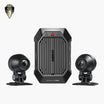
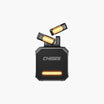
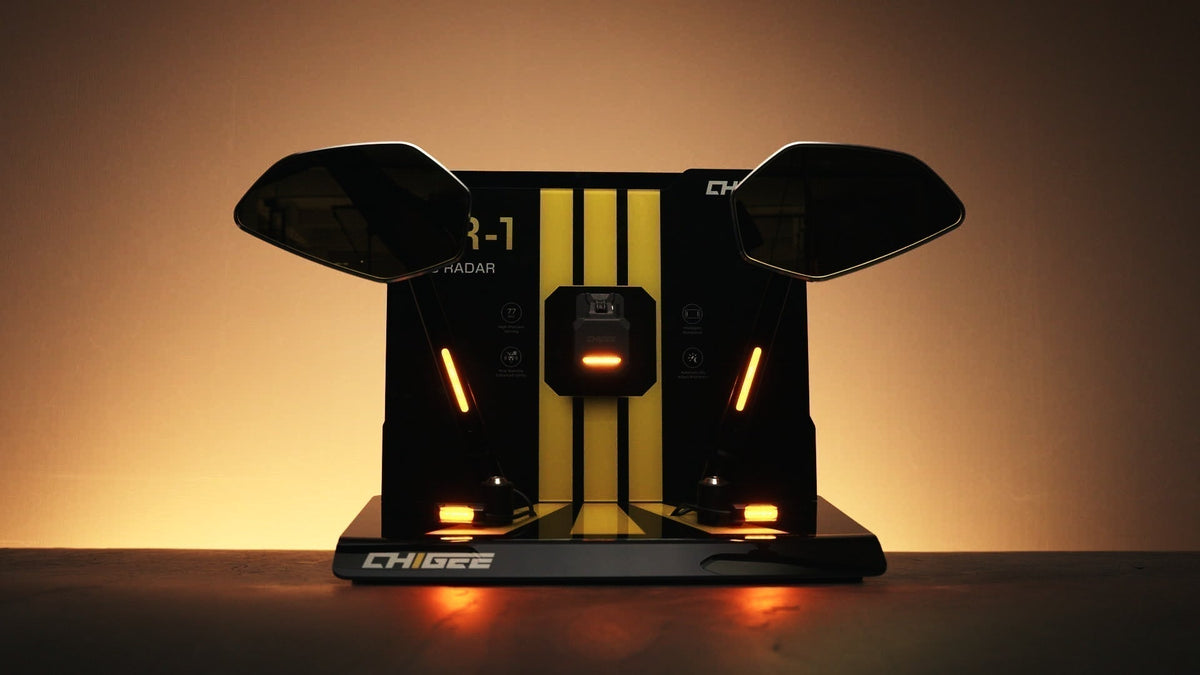
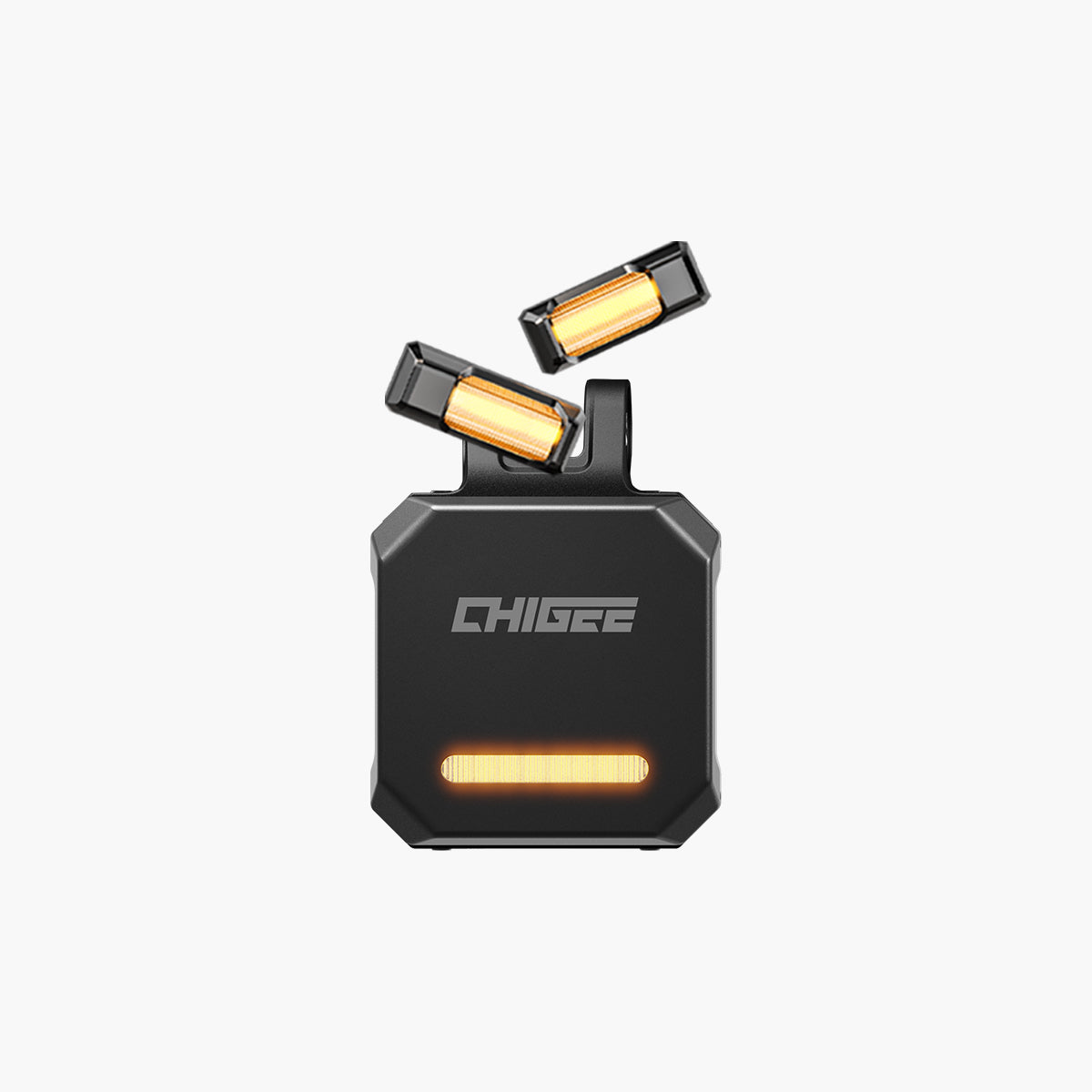
At its core, the SR-1 is a rear-facing millimeter-wave radar built specifically for motorcycles, rather than a car system retrofitted onto two wheels. A radar module mounts to the tail of the bike, two warning lights mount to the rearview mirrors, and a single wiring harness ties the system into the motorcycle's 12 V electrical circuit. Once the bike clears roughly 10 km/h, the radar activates and continuously monitors the space behind the motorcycle.
What sets radar apart from camera-based blind spot solutions is its indifference to the conditions that defeat optical sensors. Where cameras struggle with darkness, glare, rain, and fog, radar continues working — emitting 76–77 GHz radio waves and reading the reflections to identify vehicles by their radar cross-section, distance, and relative speed. That weather-and-light independence is the central reason CHIGEE chose radar for the SR-1 rather than adding more cameras.
Why 77 GHz Radar Matters for Motorcycles
Not all radar is the same. Most early motorcycle blind spot accessories used 24 GHz radar — the same band found in older automotive systems and many industrial sensors. The SR-1 instead uses the 77 GHz band, the standard now adopted across the automotive industry for advanced driver-assistance systems, and that choice has practical consequences for the rider.
First, accuracy. At 77 GHz, the radar can resolve distance and relative speed at millimeter-level precision, which translates directly into more confident judgments about whether a vehicle is genuinely closing in or simply pacing alongside. Second, interference rejection. Higher frequencies are far less susceptible to noise from roadside infrastructure — signs, lampposts, guardrails — and from other electronic signals in dense traffic. The result is fewer false positives and alerts that the rider can actually trust.
Beyond frequency choice, the SR-1's hardware itself is built to automotive-grade standards rather than consumer-electronics specifications. Development began as a CHIGEE project in 2025 with a deliberately narrow brief: build a radar system that feels right on a motorcycle. From early 2025 through April 2026, the CHIGEE R&D and testing team took the SR-1 onto real roads in different parts of the world, refining alert timing, false-positive filtering, and reliability under actual riding conditions rather than in a lab.
How Does Motorcycle Blind Spot Detection Work?
A blind spot detection system has three jobs: see what's behind the bike, decide whether it's a threat, and tell the rider — fast.
The SR-1 starts with sensing. A 2Tx/4Rx antenna array sweeps a 110° horizontal and 90° vertical field behind the motorcycle, with a detection range of up to 70 meters. From that raw radar data, onboard processing then classifies which targets are vehicles, where they sit relative to the rider's lane, and how fast they're closing in. Finally, two LED warning lights on the rearview mirrors light up or flash, depending on which of four detection scenarios has been triggered. The whole pipeline runs continuously above 10 km/h, and because the alert lives in the rider's peripheral vision, information reaches the rider without ever pulling their eyes off the road ahead.
What Does the SR-1 Detect?
The SR-1 doesn't run a single, all-purpose detection mode. It runs four strategies in parallel, each tuned to a different real-world scenario where motorcyclists most often get hit.
The first and most familiar is BSD, or Blind Spot Detection. Within roughly 10 meters behind the motorcycle in the left and right adjacent lanes, BSD watches for the classic "car next to you" situation — being overtaken, riding alongside at a similar speed, or otherwise lurking in a hard-to-see area. When that happens, the warning light on the corresponding side stays solid on.
Where BSD covers the immediate blind spot, LCA — Lane Change Assist — looks much farther back, out to roughly 70 meters in the adjacent lanes. Crucially, LCA doesn't use a fixed alert distance. Instead, the timing scales with closing speed: at low closing speeds below 20 km/h, the system alerts when collision risk is detected within roughly 3 seconds; in the 20–60 km/h range, that window widens to about 5 seconds; and above 60 km/h, an early alert fires when risk is detected within around 10 seconds. This is the mode that protects the rider from changing lanes into a car closing fast on the highway.
RCW, or Rear Collision Warning, narrows the focus again — this time to roughly 10 meters directly behind the bike. RCW is the "someone is about to rear-end you" alert. When a vehicle approaching from behind hits the time-to-collision (TTC) threshold, every warning light on the system flashes rapidly to demand the rider's attention.
Finally, AOA — Active Overtake Alert — handles the moments after the rider overtakes a vehicle. Within the same 10-meter adjacent-lane zone as BSD, AOA continues monitoring the vehicle that was just passed. If it lingers alongside instead of falling cleanly behind, the corresponding warning light illuminates. Because AOA is a more situational tool than the other three, it's hidden by default and can be enabled when the rider wants it.
Together, these four modes layer near-field, far-field, rear-axis, and post-overtake awareness into a single alert

SR-1 extends rear awareness beyond the immediate blind zone, helping riders detect vehicles earlier across a broader rear and rear-side area
From Passive Detection to Active Safety
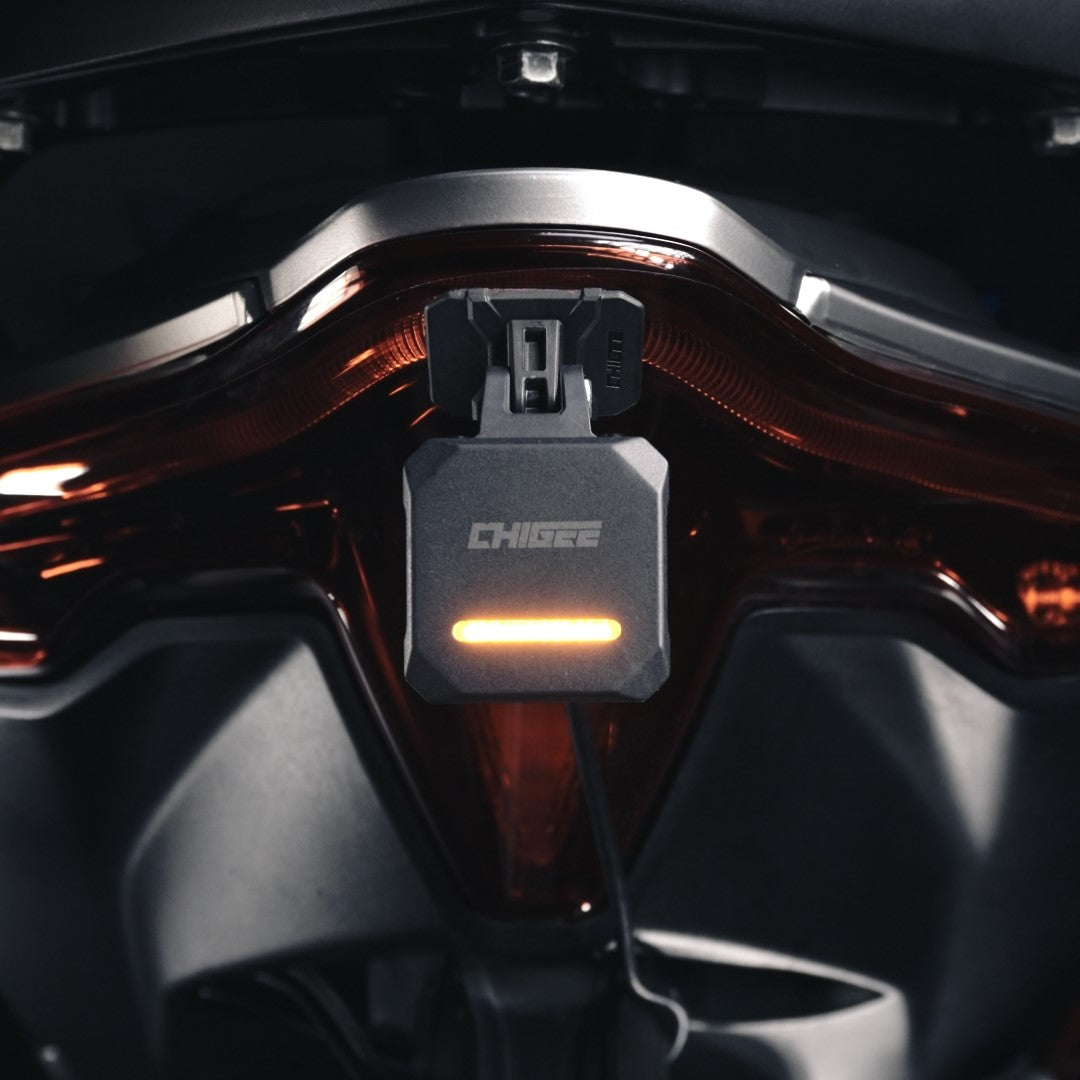
Most blind spot systems stop at telling the rider. The SR-1 goes one step further. Beyond illuminating the rider-facing warning lights, the system can also activate a rear-facing warning light that alerts approaching drivers to the motorcyclist's presence, helping them notice the bike sooner. The benefit is most pronounced at night and in low-visibility conditions — exactly the situations where motorcycles are hardest to see and where rear-end collisions are most likely. In effect, the SR-1 doesn't just protect the rider from what's behind; it makes the bike itself easier for the vehicles behind to read.
How Does the SR-1 Alert the Rider?
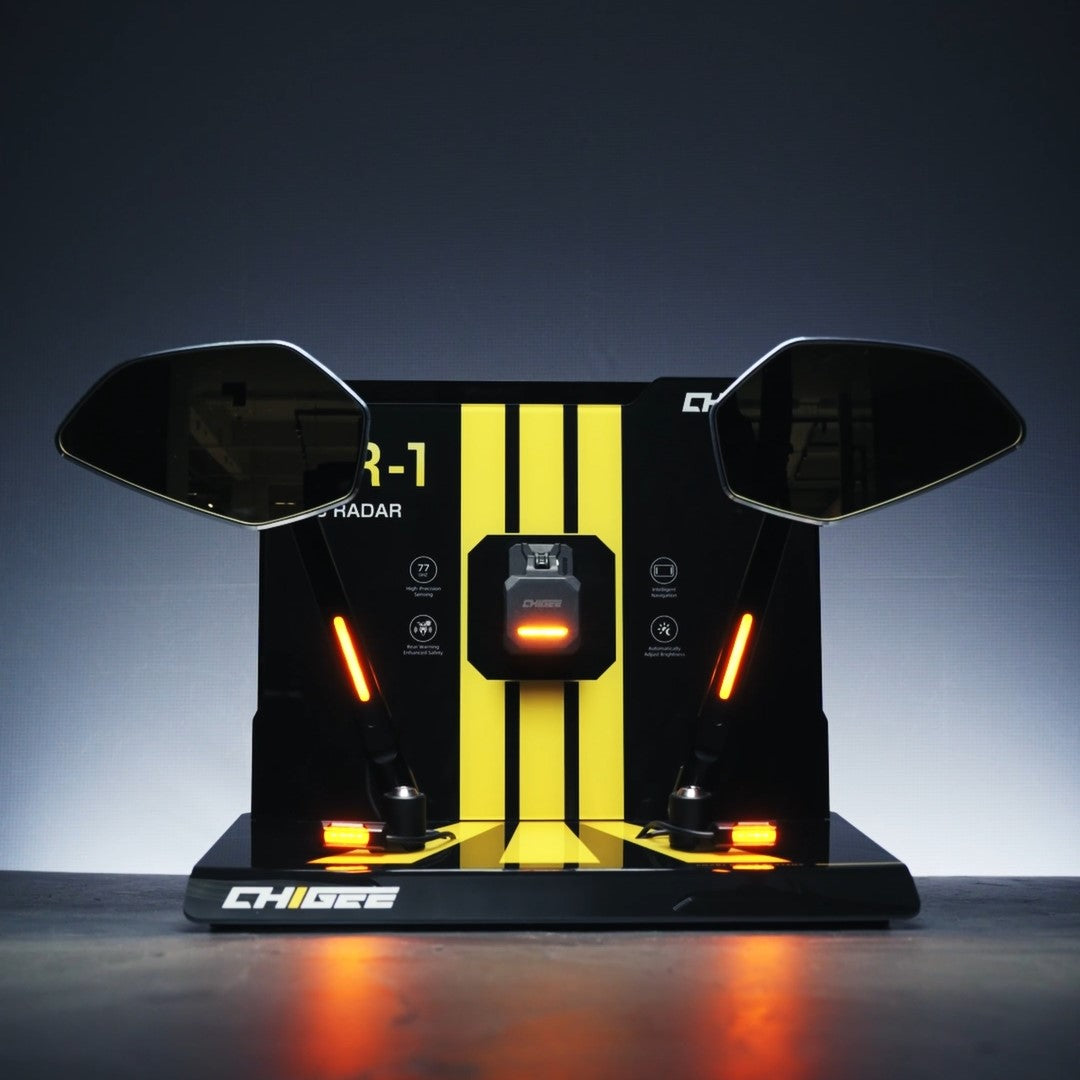
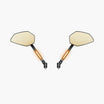
The system's primary output is intentionally minimal: two warning lights mounted on the rearview mirrors, installed either with the supplied 3M adhesive or via the included M10 bracket on the mirror's threaded stem. The alert logic is just as simple. If a vehicle enters the BSD, LCA, or AOA zone on one side, the light on that side stays solid on. If RCW triggers, every light on the system flashes rapidly.
There is no buzzer, no screen, and no haptic vibration on the radar unit itself — and that restraint is deliberate. Audio alerts from a roof-mounted speaker get drowned out by wind and engine noise, screens require focal shift, and haptic feedback through riding gear is unreliable. Peripheral-vision LEDs, by contrast, deliver information the moment the rider's eyes naturally pass the mirrors. The lights also adjust their brightness automatically, so they stay readable under direct sunlight without becoming glaring at night.
Furthermore, considering the differences in traffic regulations between countries or regions, the modification of the module may require vehicle modification registration or even conflict with traffic regulations. To address this issue, the taillight module can be turned off.
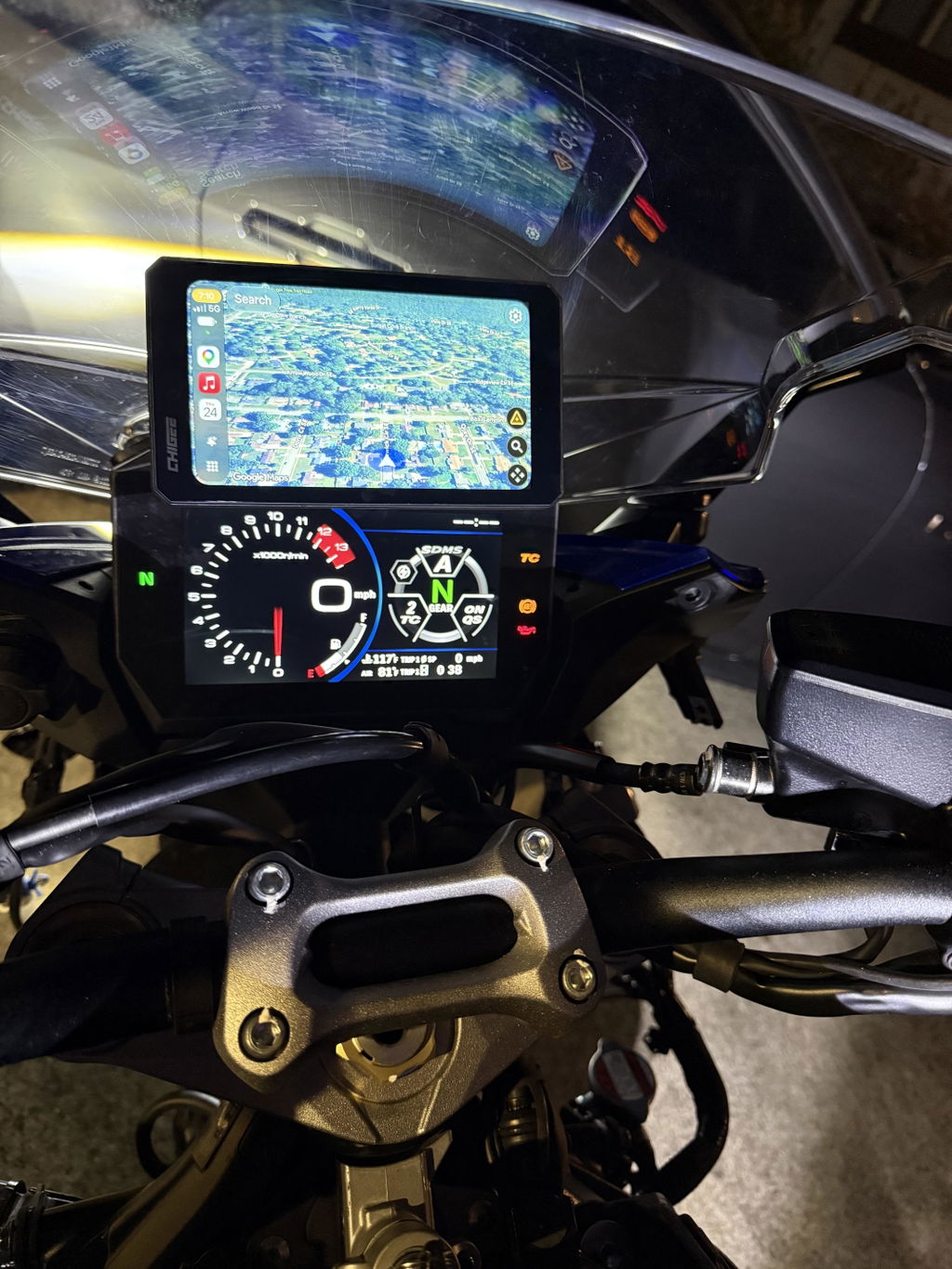
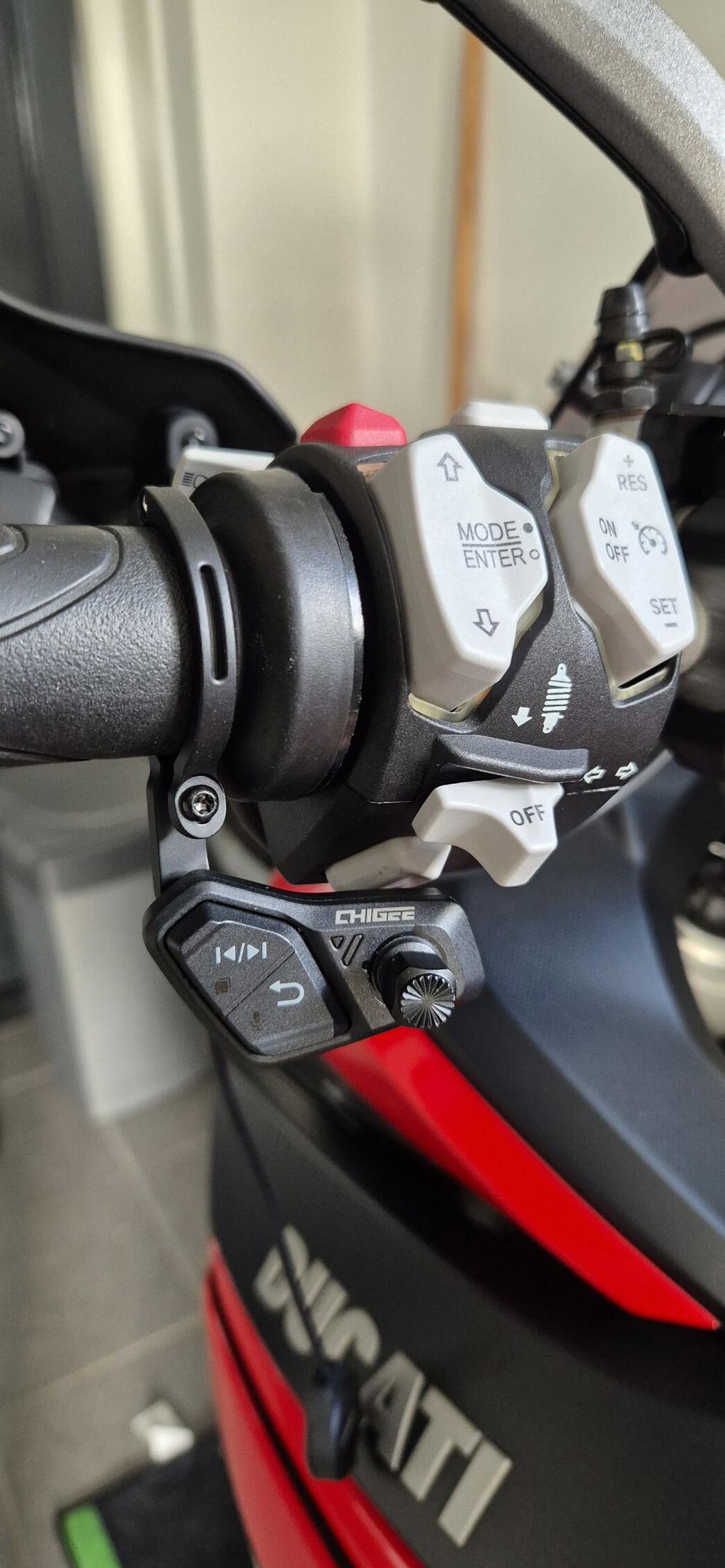
For riders who do want audible alerts, pairing the SR-1 with a compatible CHIGEE display unlocks them — sounds play through the display's speakers when warnings fire. (One thing worth knowing: those alert sounds play only through the display itself and won't transmit to a Bluetooth headset.)
Tuning the SR-1 to How You Ride
Out of the box, the SR-1 ships with default settings tuned for general road use. Beyond that, riders who want a more personalized setup can fine-tune three key parameters — alert sensitivity, activation speed, and alert intensity — through either a compatible CHIGEE display or the CHIGEE mobile app. Lowering sensitivity reduces alerts in dense city traffic where vehicles in farther lanes would otherwise trigger constant warnings, while raising it sharpens the system for highway riding. Activation speed sets the threshold at which the radar comes online, and alert intensity controls how aggressive the LED behavior feels.
These adjustments matter because no two riders move through traffic the same way. A commuter weaving through stop-and-go traffic wants different behavior than a touring rider on a long highway sweep, and the SR-1 lets both setups coexist on the same hardware.

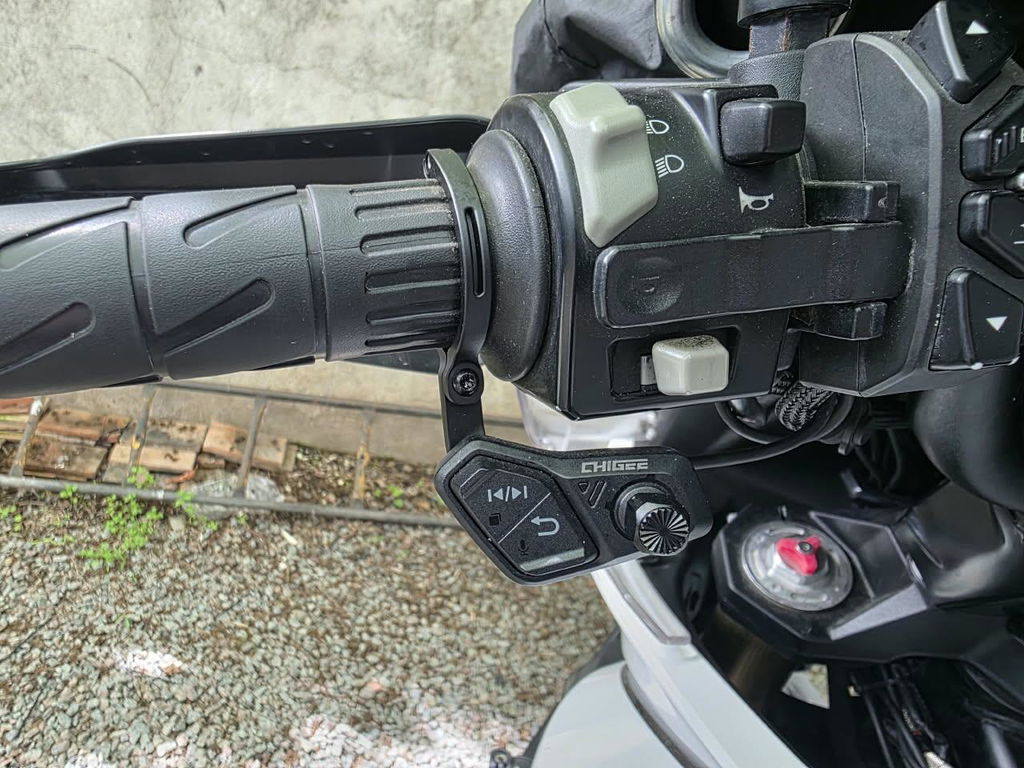
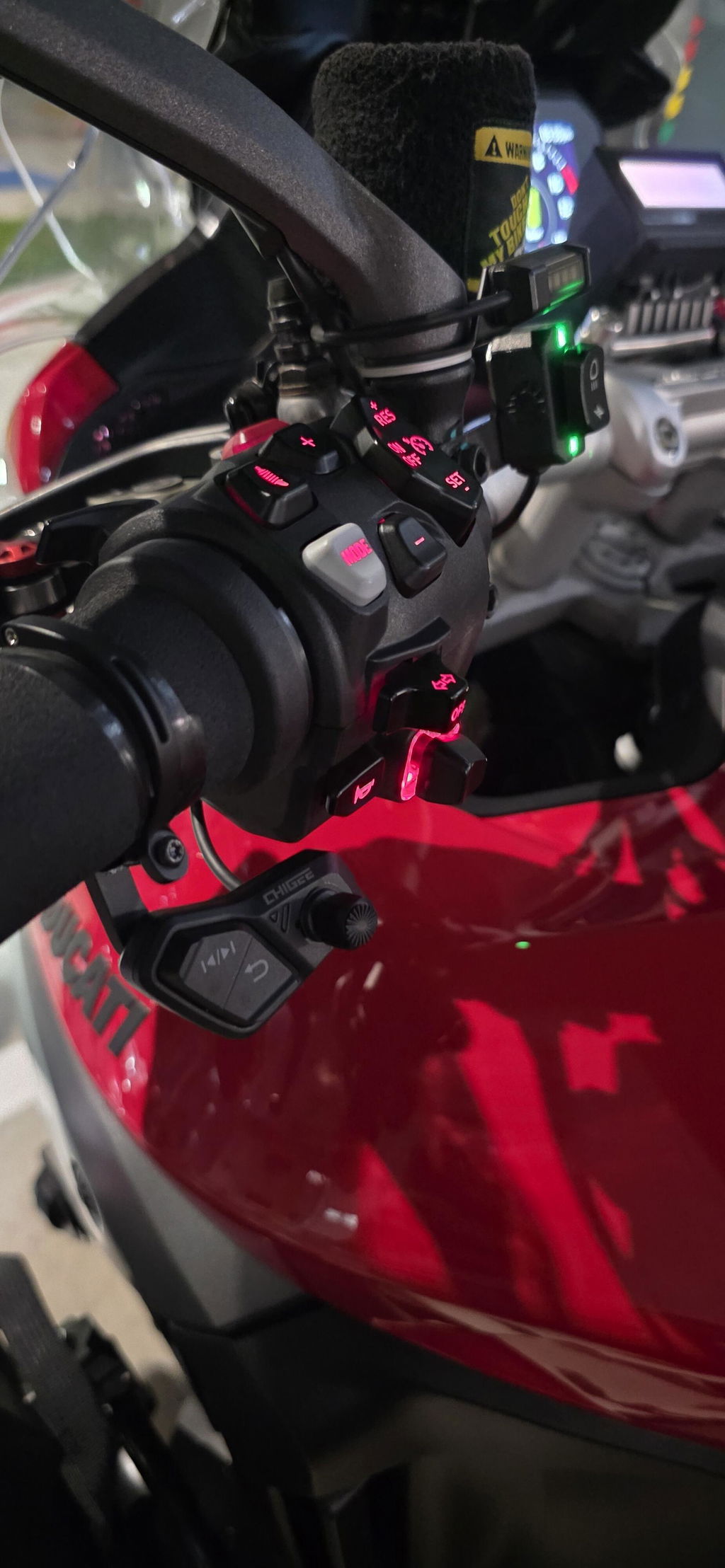
Pairs with Compatible CHIGEE Displays
Installing the SR-1 on Your Motorcycle
The SR-1 ships as a complete kit — radar module with bracket, two warning lights, two M10 mirror brackets, the main wiring harness with a 3 A fuse box, ACC wire tap clips, Torx keys, 3M adhesive, and an assortment of cable ties — and most riders complete the install in a weekend with basic hand tools.
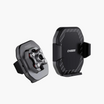
Work begins at the rear of the bike. The radar module mounts horizontally, 30–100 cm above the ground, in any location with a clear rearward line of sight: under the tail, on a license plate bracket, or integrated with a luggage rack all work. Once the radar is in place, the two warning lights attach to the left and right rearview mirrors, either directly with 3M adhesive or via the M10 bracket method for bikes whose mirrors don't offer a flat adhesive surface.
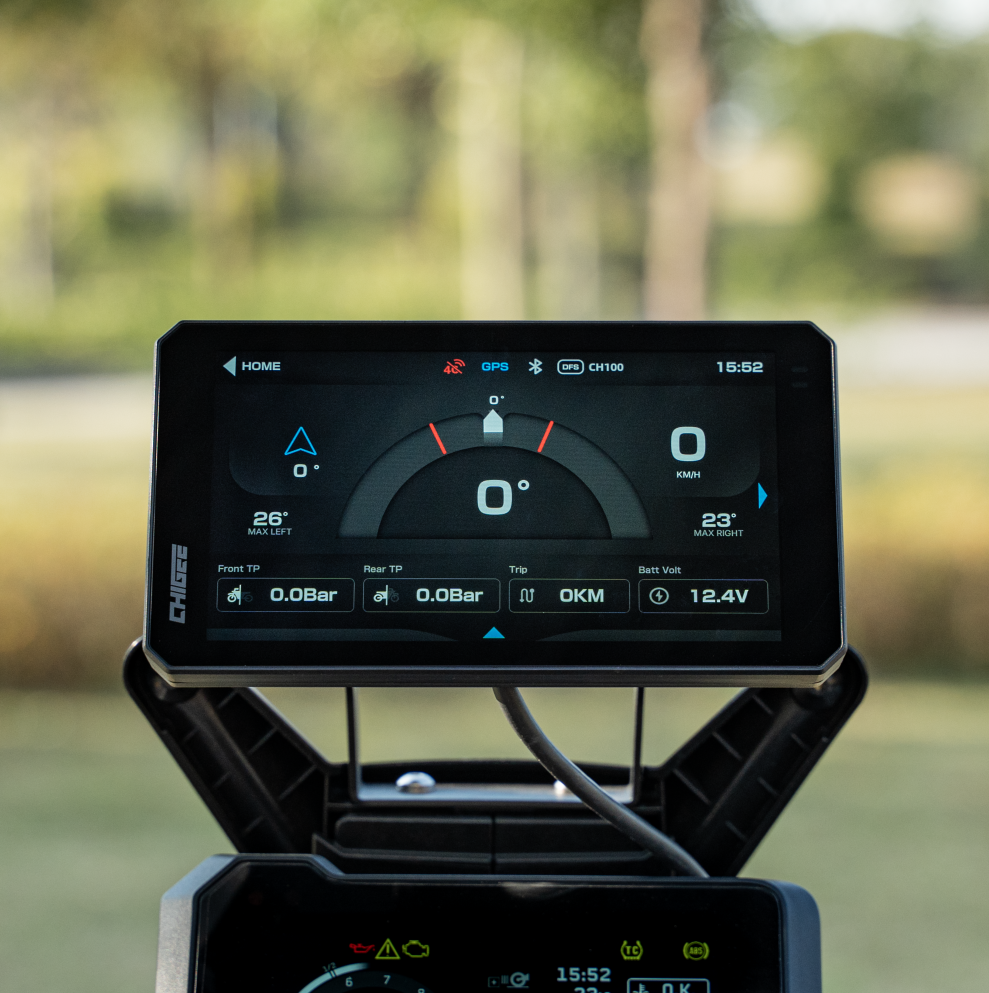
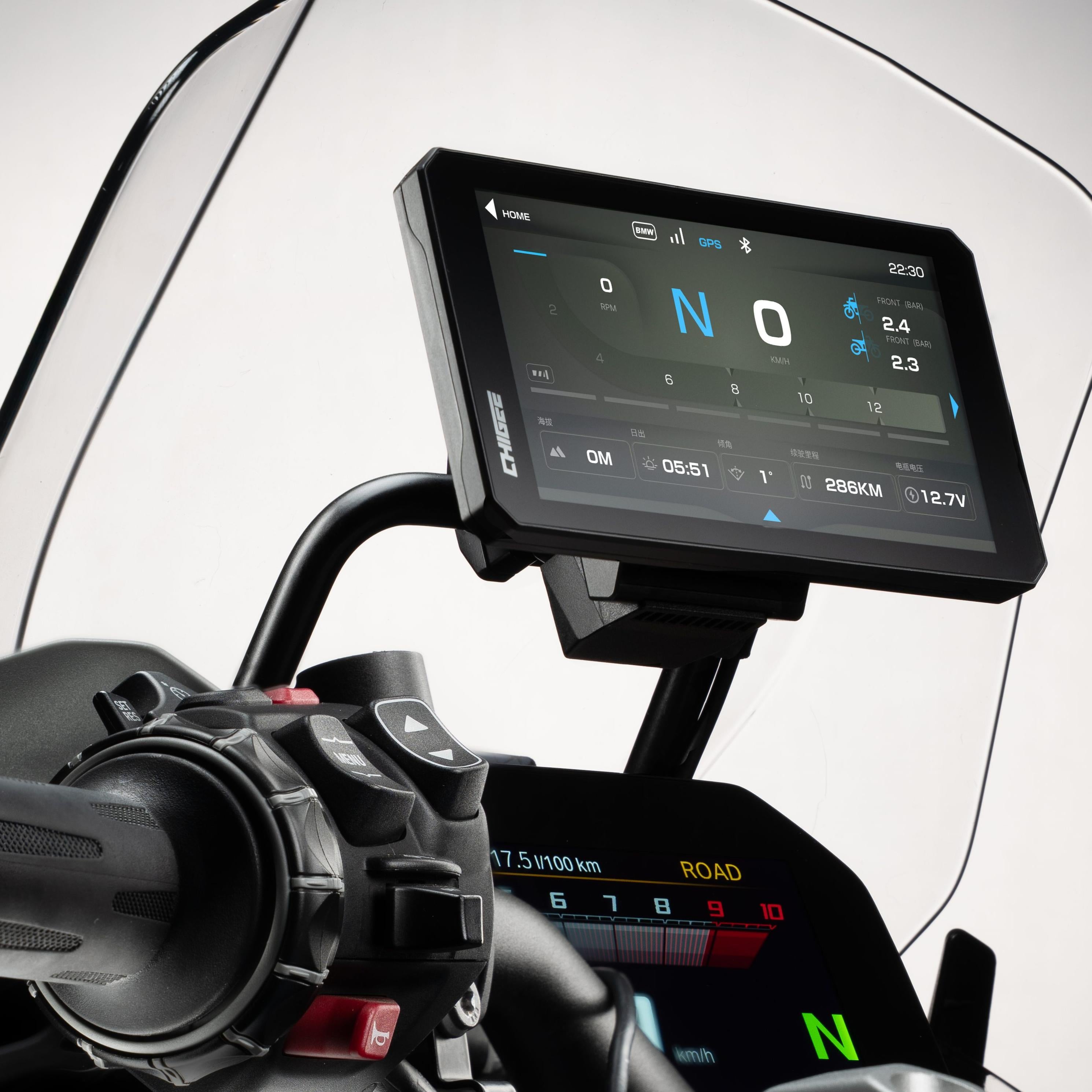
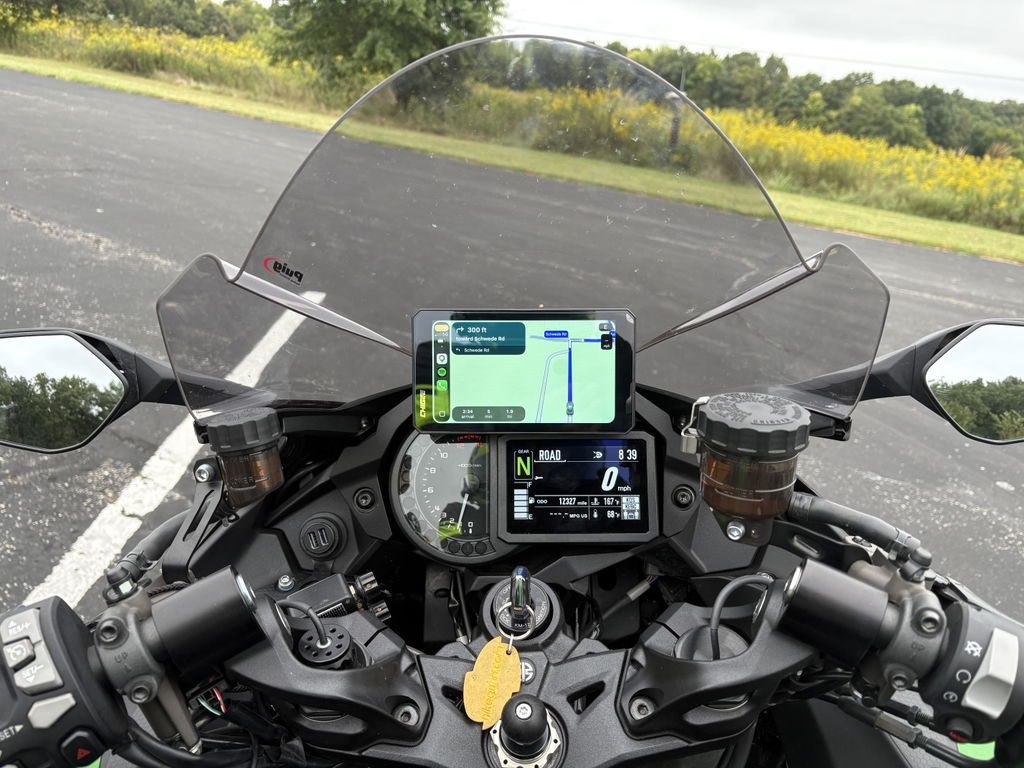
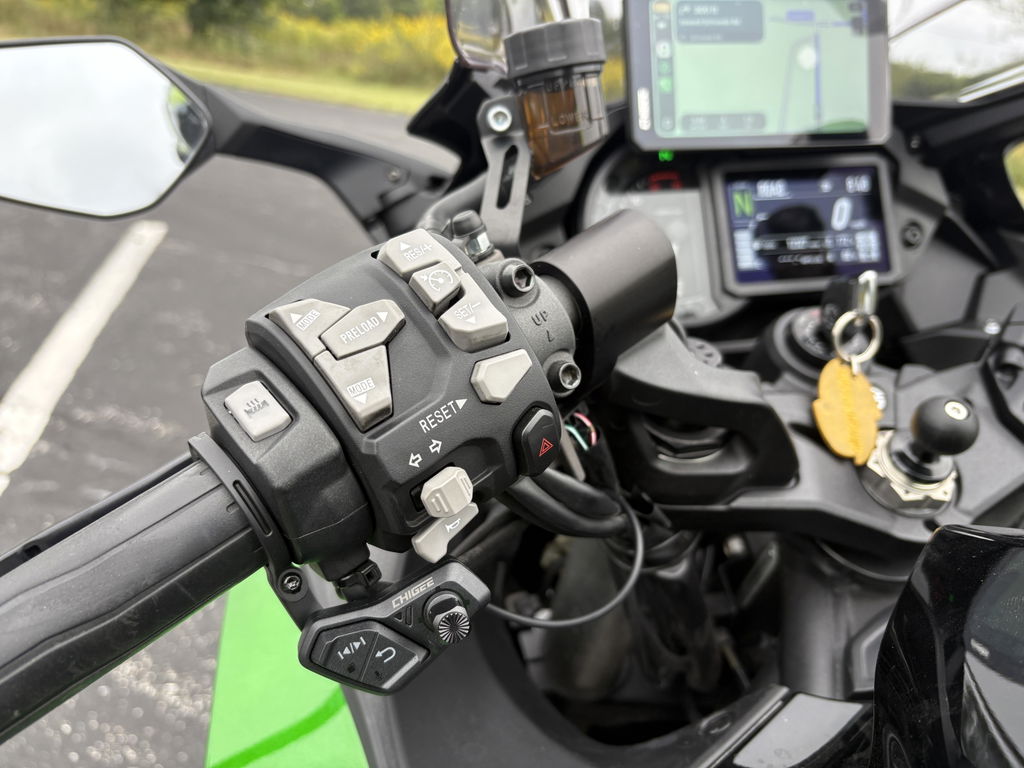
With the hardware mounted, the harness ties everything into the motorcycle's electrical system: red to battery positive, black to battery negative, and yellow to the ACC circuit, with the supplied 3 A fuse box inline. Riders who already own a CHIGEE display can take one further step by pairing the SR-1 to it through Settings → Function → Blind Spot Monitoring → Millimeter-wave Radar. Once paired, the display automatically switches from camera-based to radar-based blind spot detection for higher accuracy, exposes settings for sensitivity and activation speed, and unlocks the audible alert option.
Bikes with large panniers, top cases, or aftermarket exhausts that block the radar's rearward view may need slight mounting adjustments, but the kit's modular design accommodates most setups without permanent modification to the motorcycle.
Standalone, Display-Paired, or Integrated Mirrors: Three Ways to Run the SR-1
The SR-1 is built to scale with the rest of the rider's setup. In its simplest form, it runs as a fully self-contained safety system — the included indicator lights provide the core warning function on their own, no display required. This standalone configuration is ideal for riders who want radar-based awareness without committing to a full smart-display ecosystem.
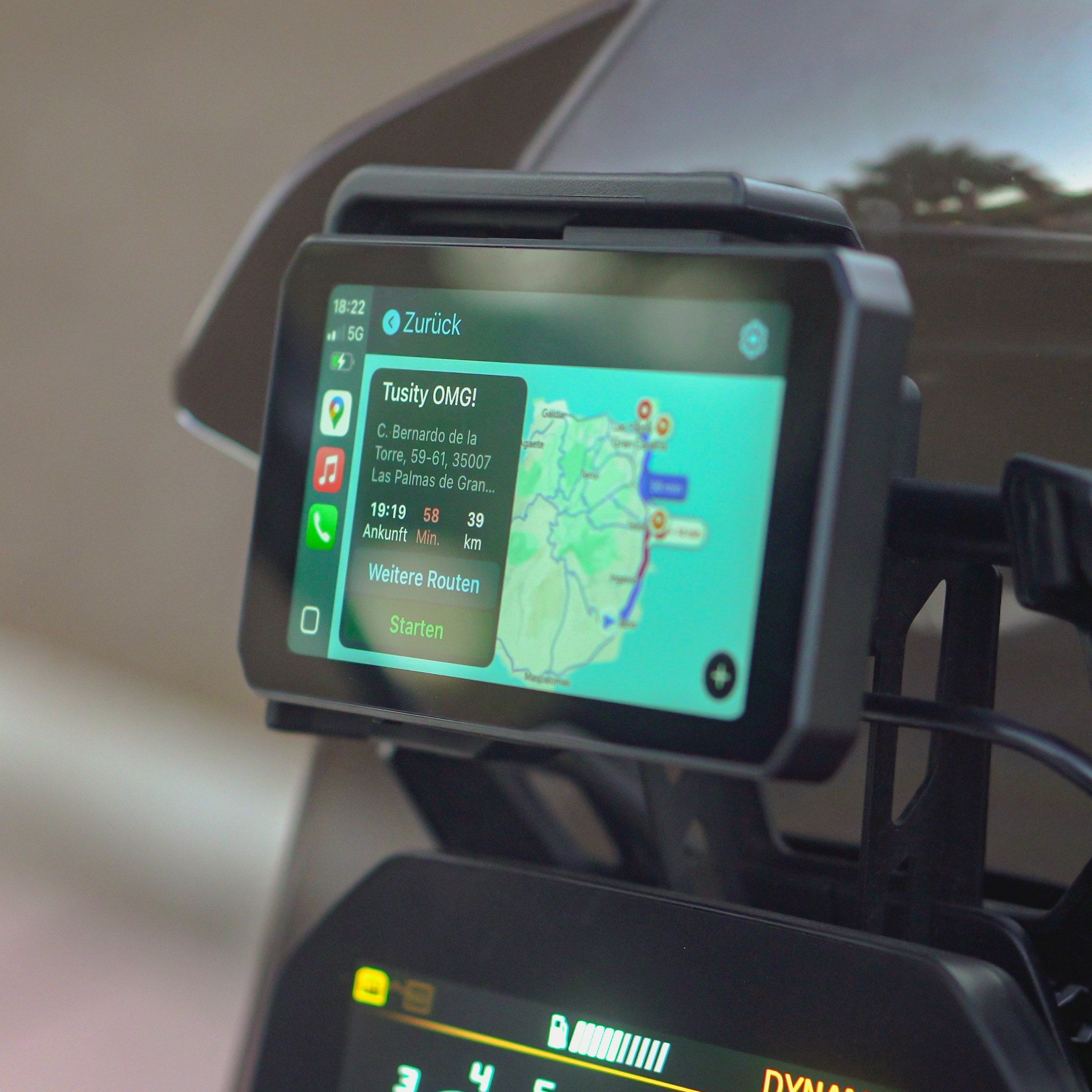
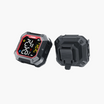
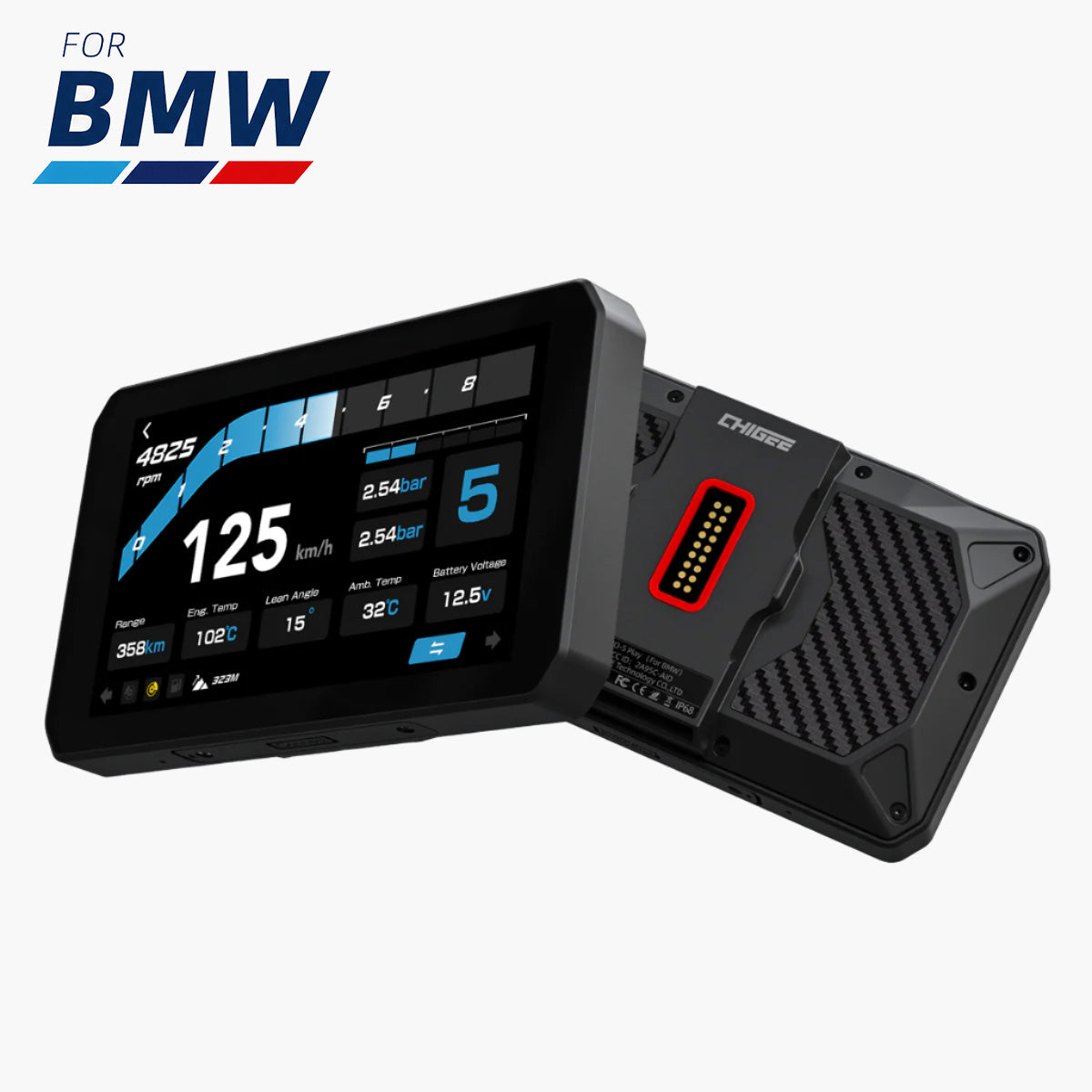
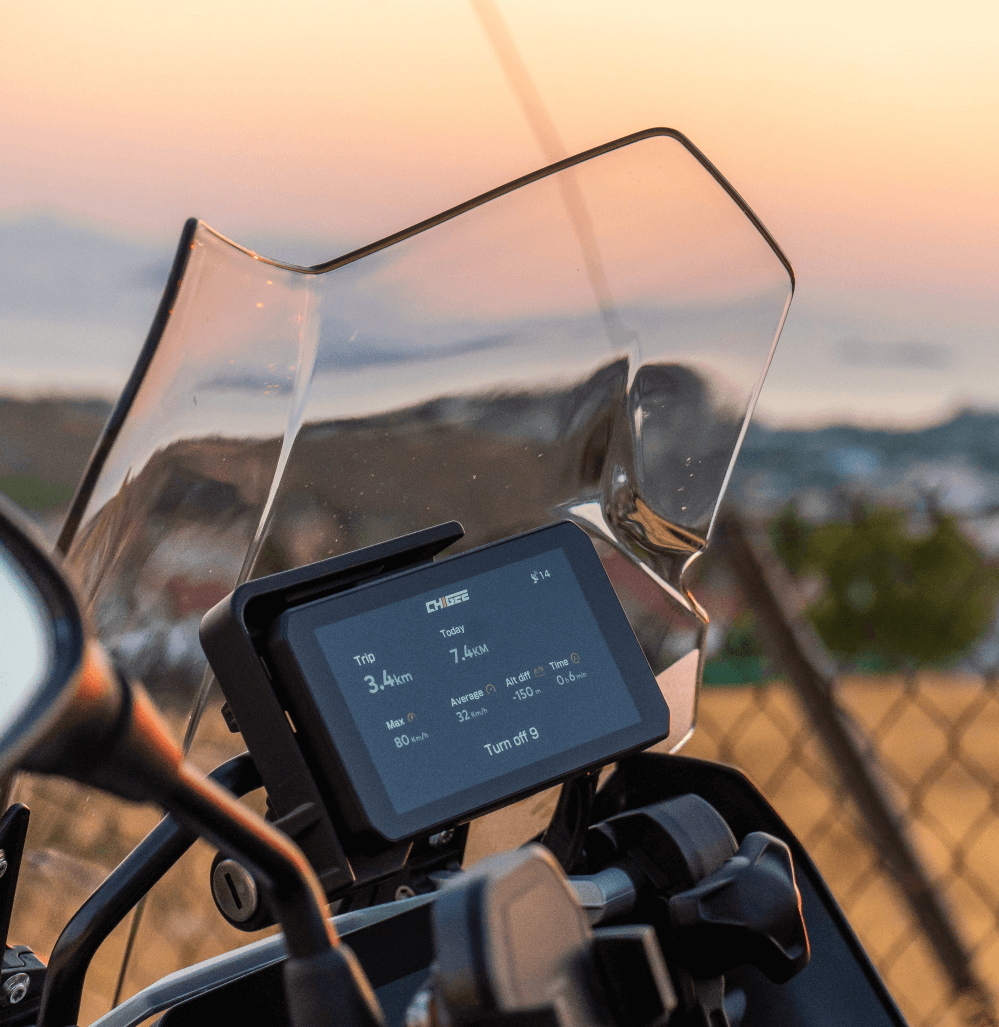
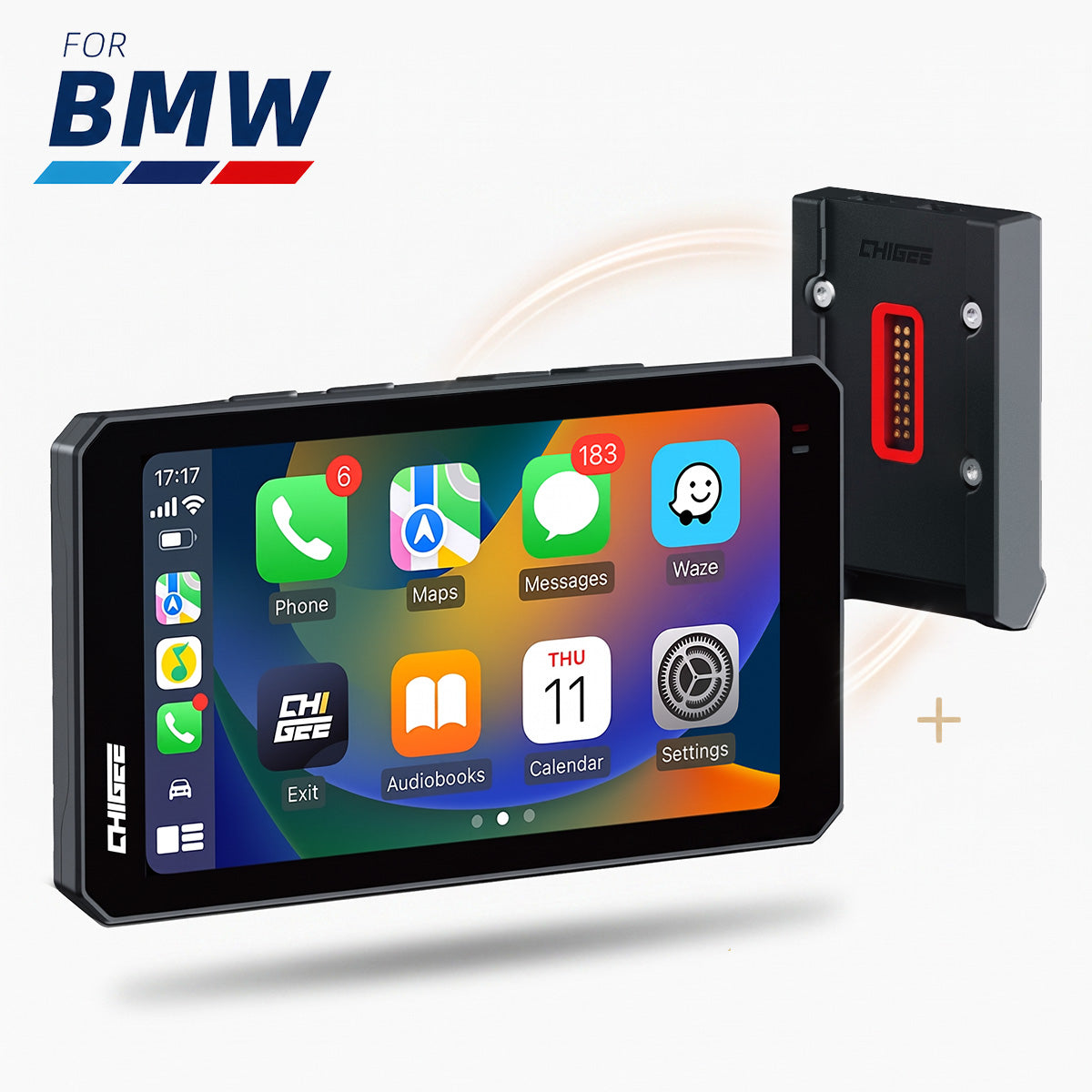
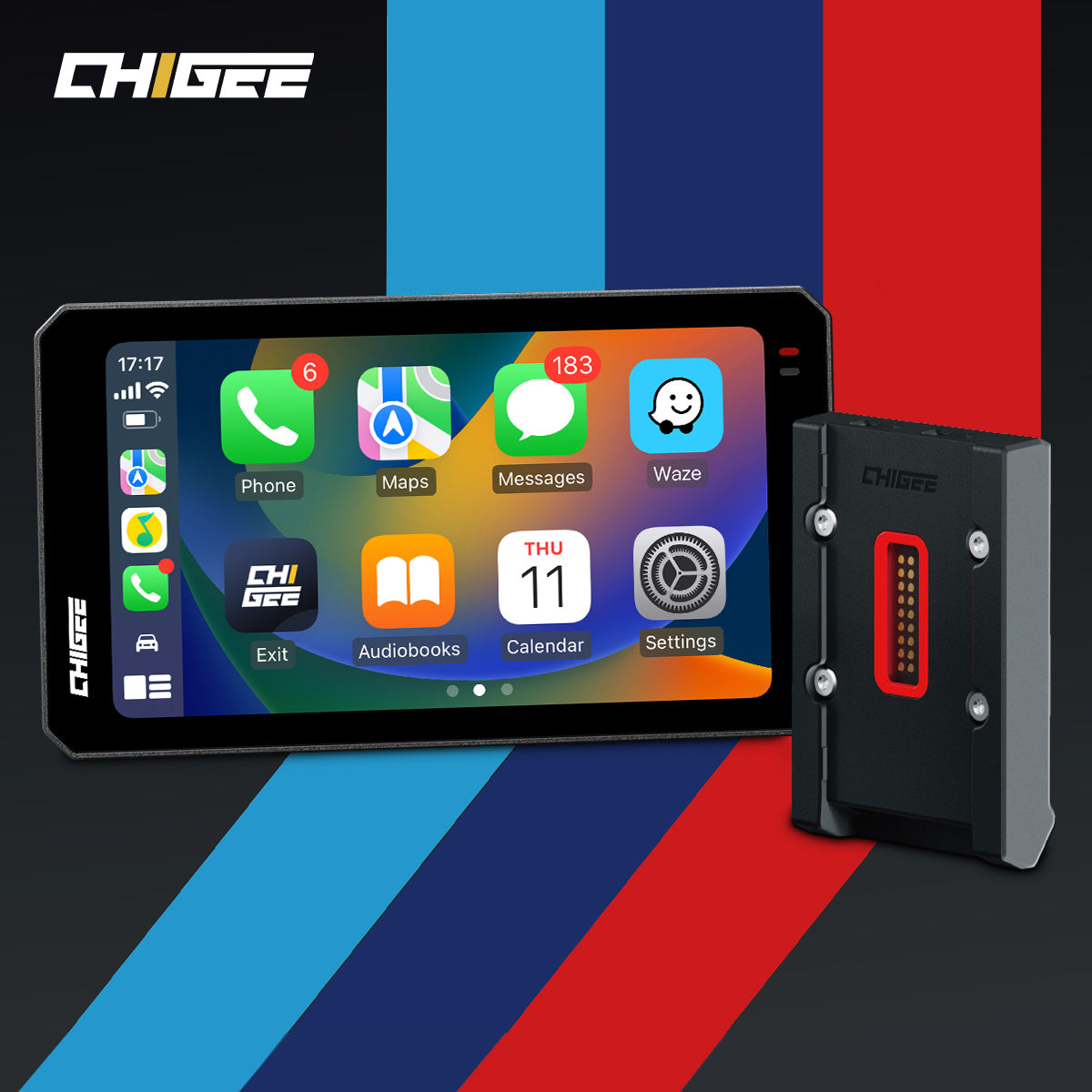
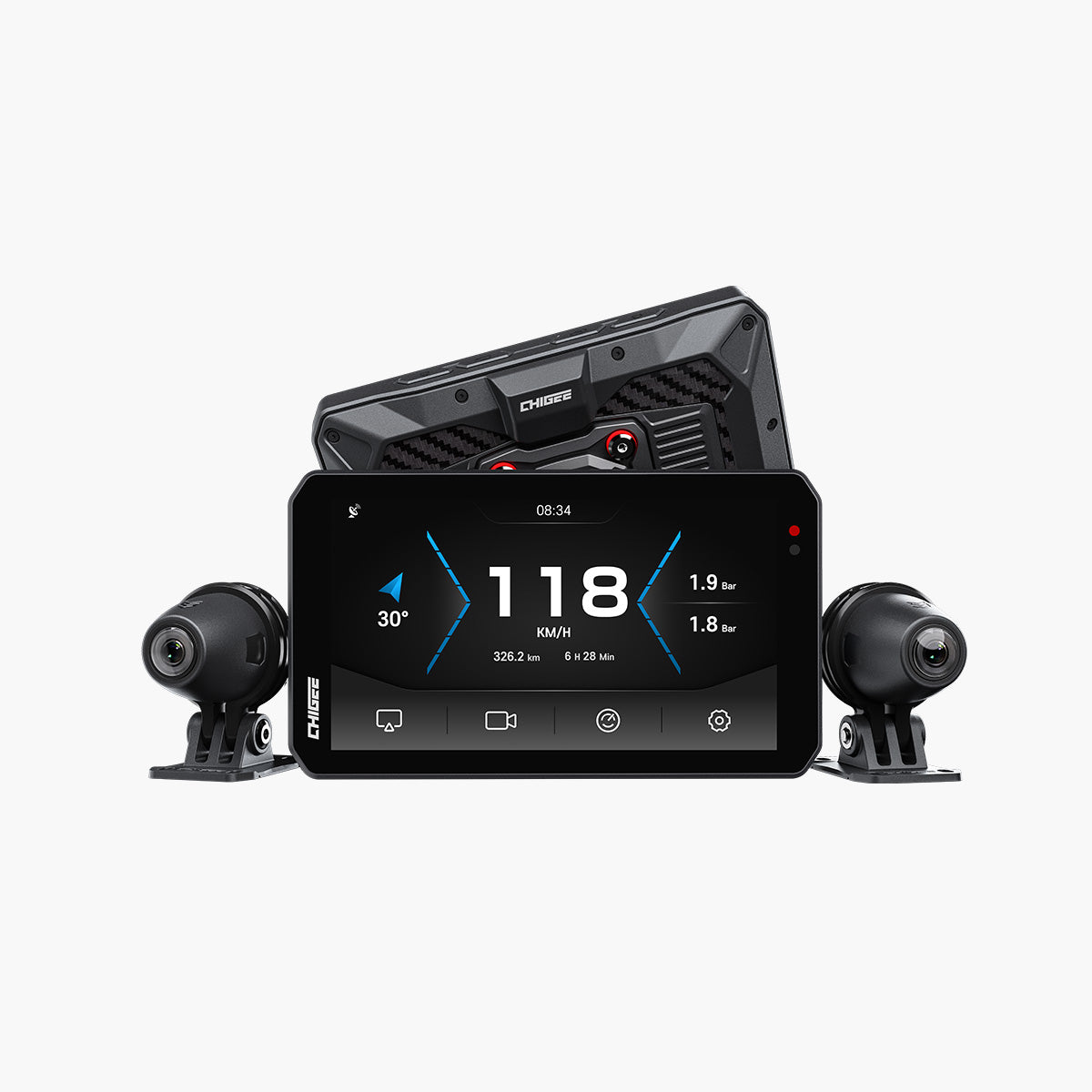
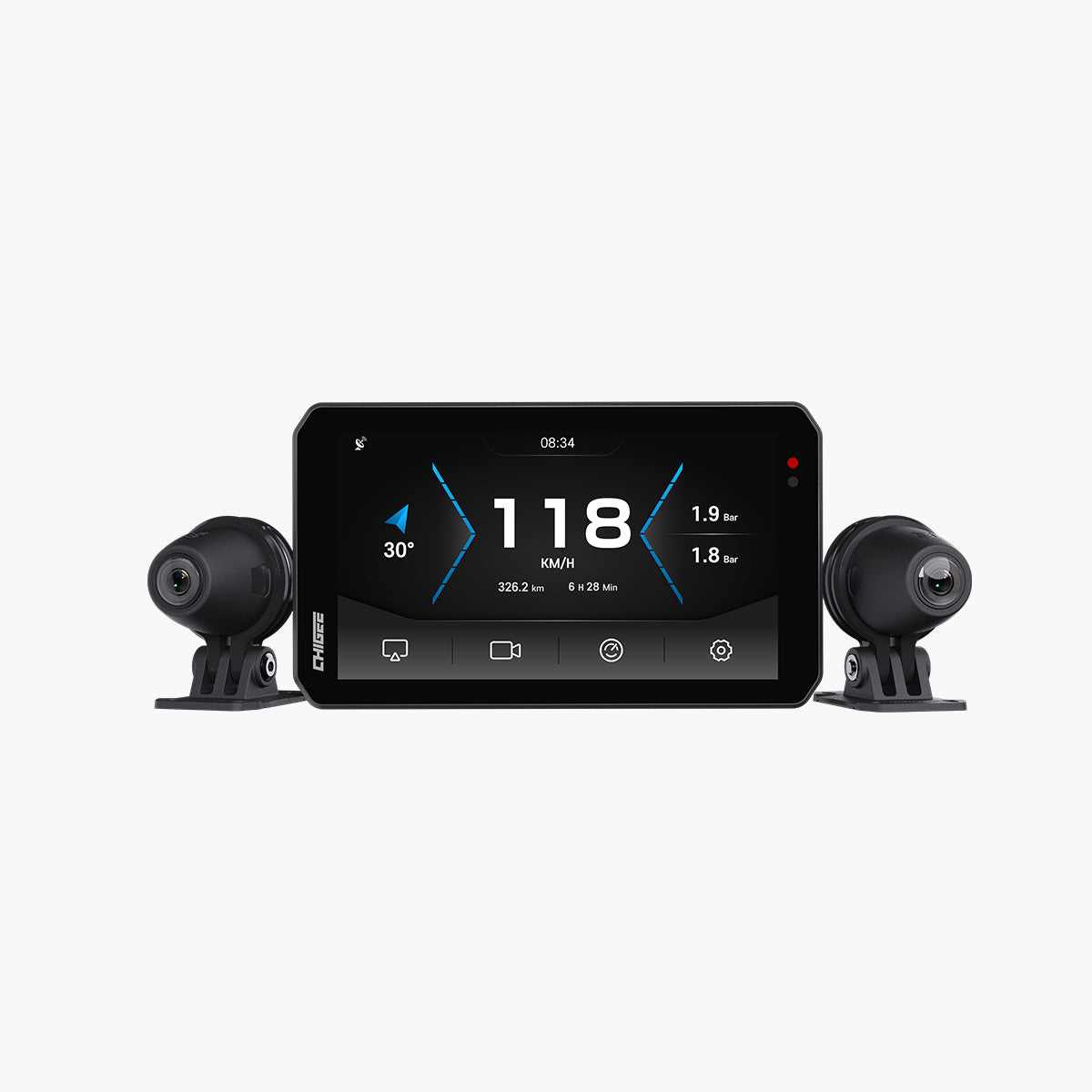
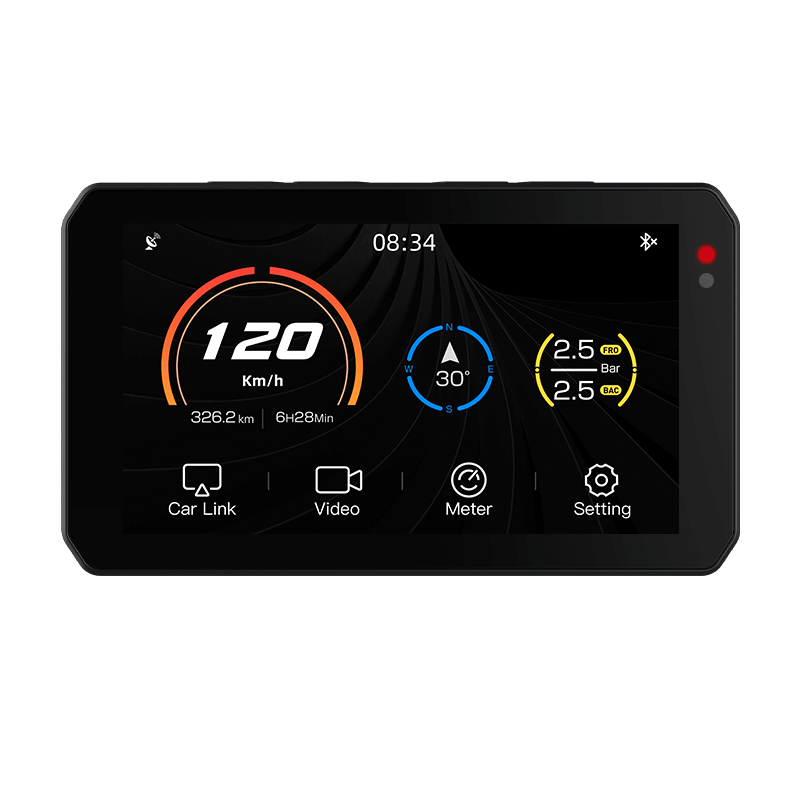
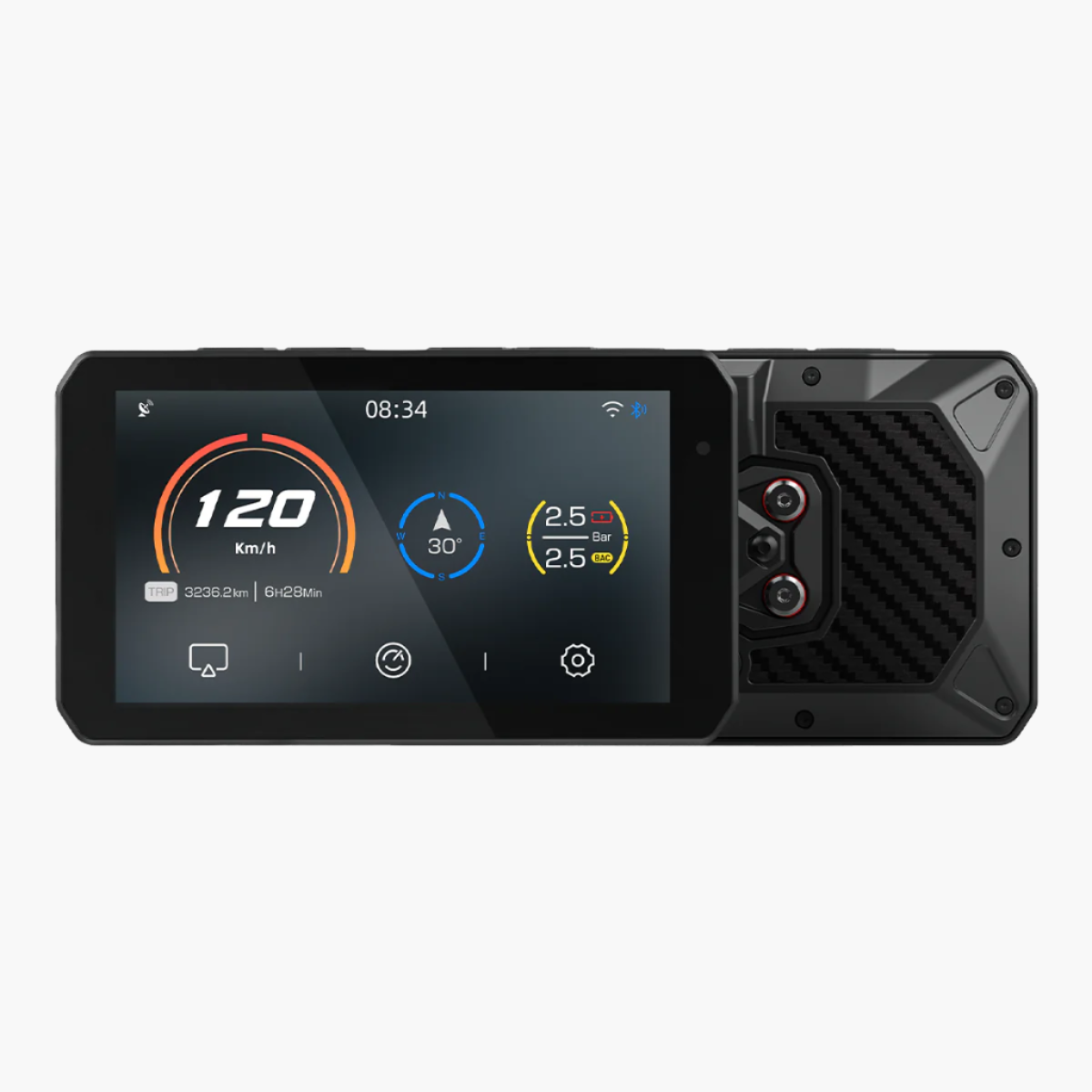
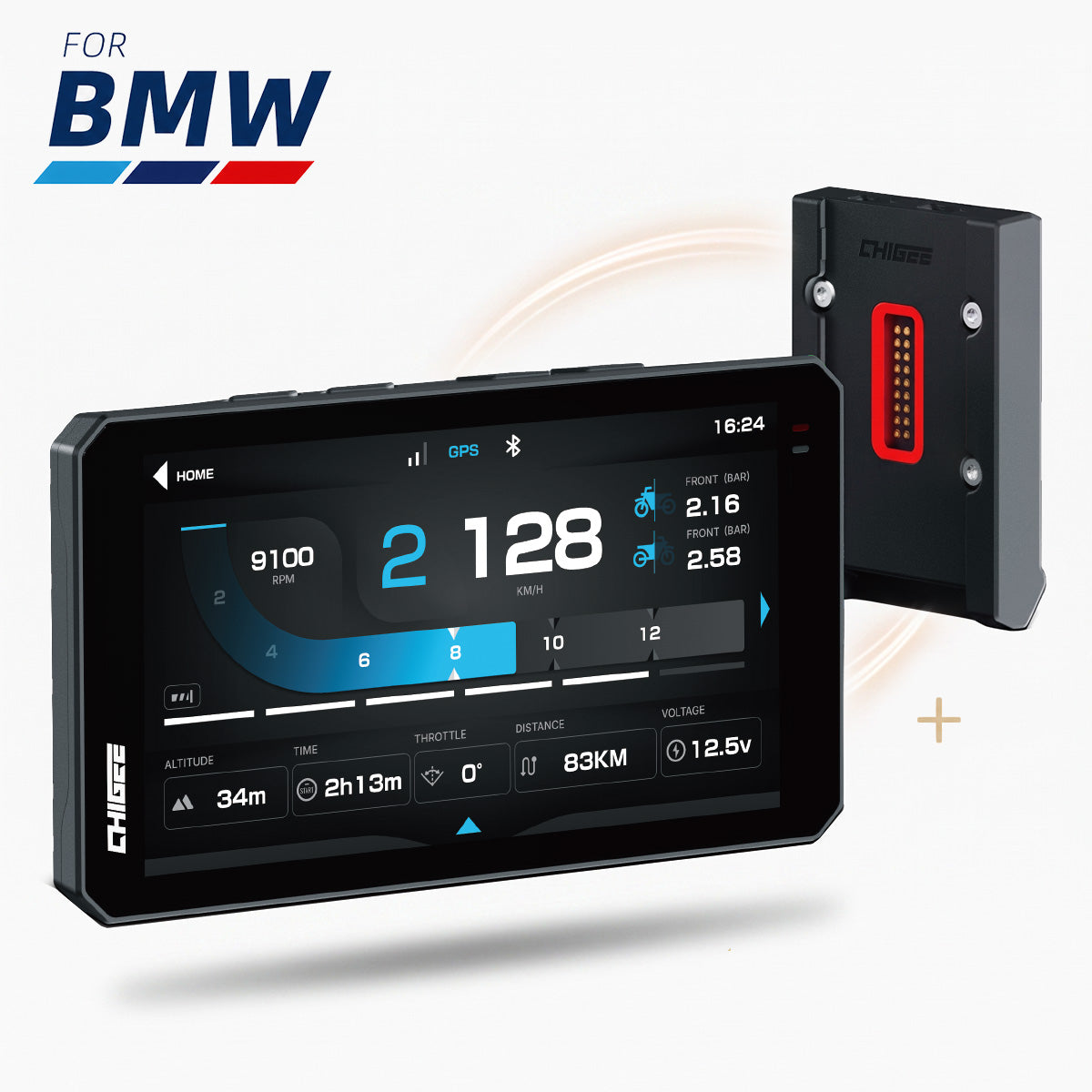
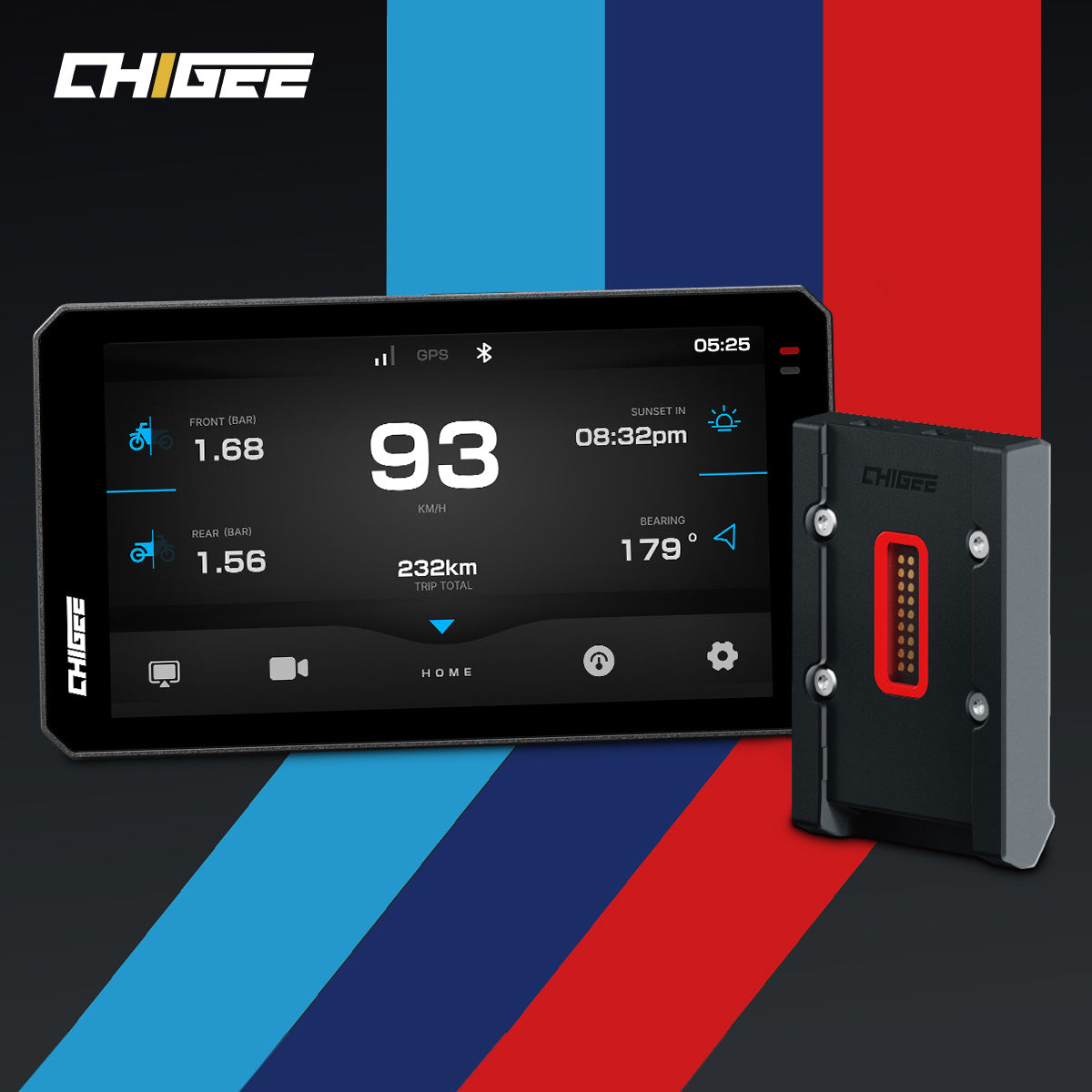
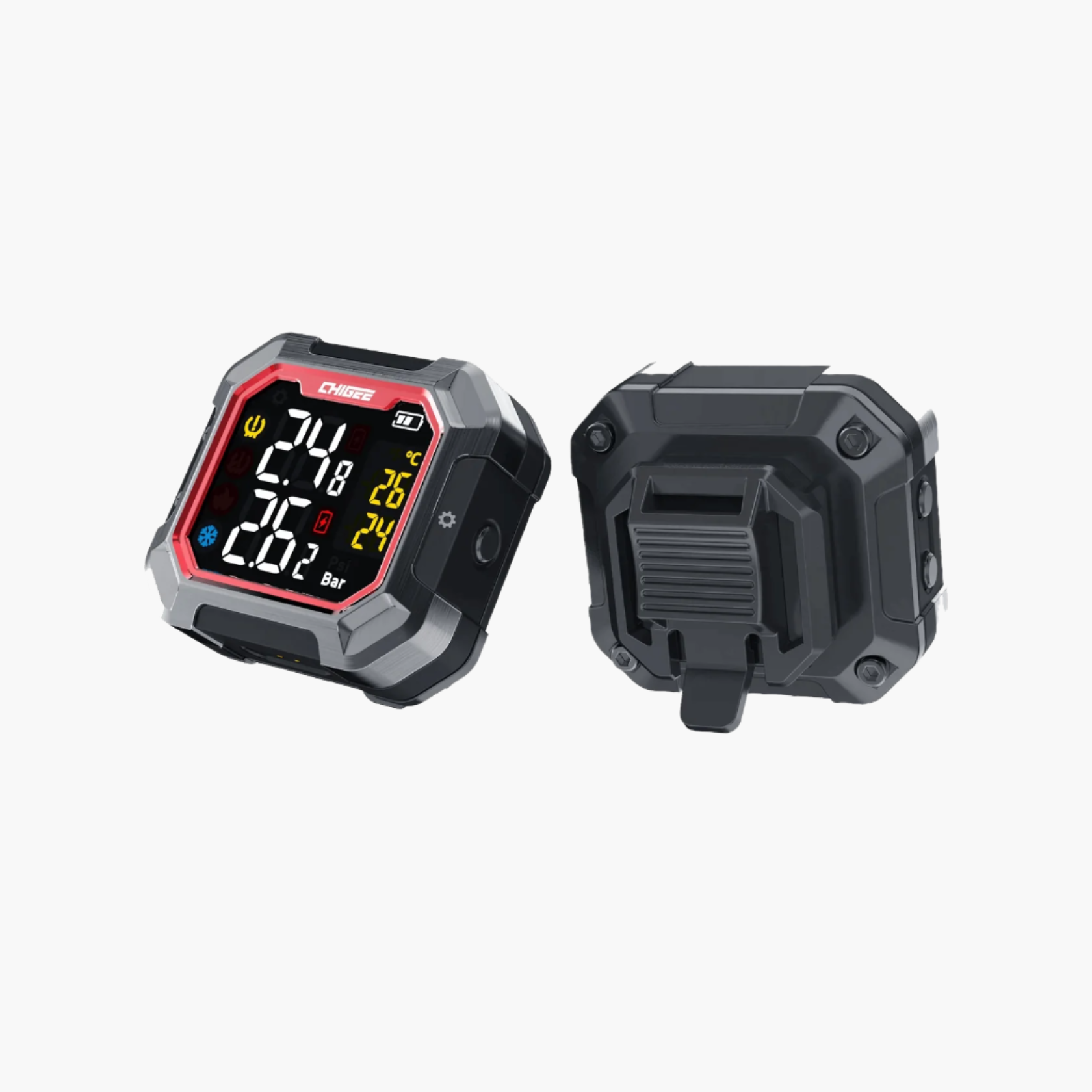
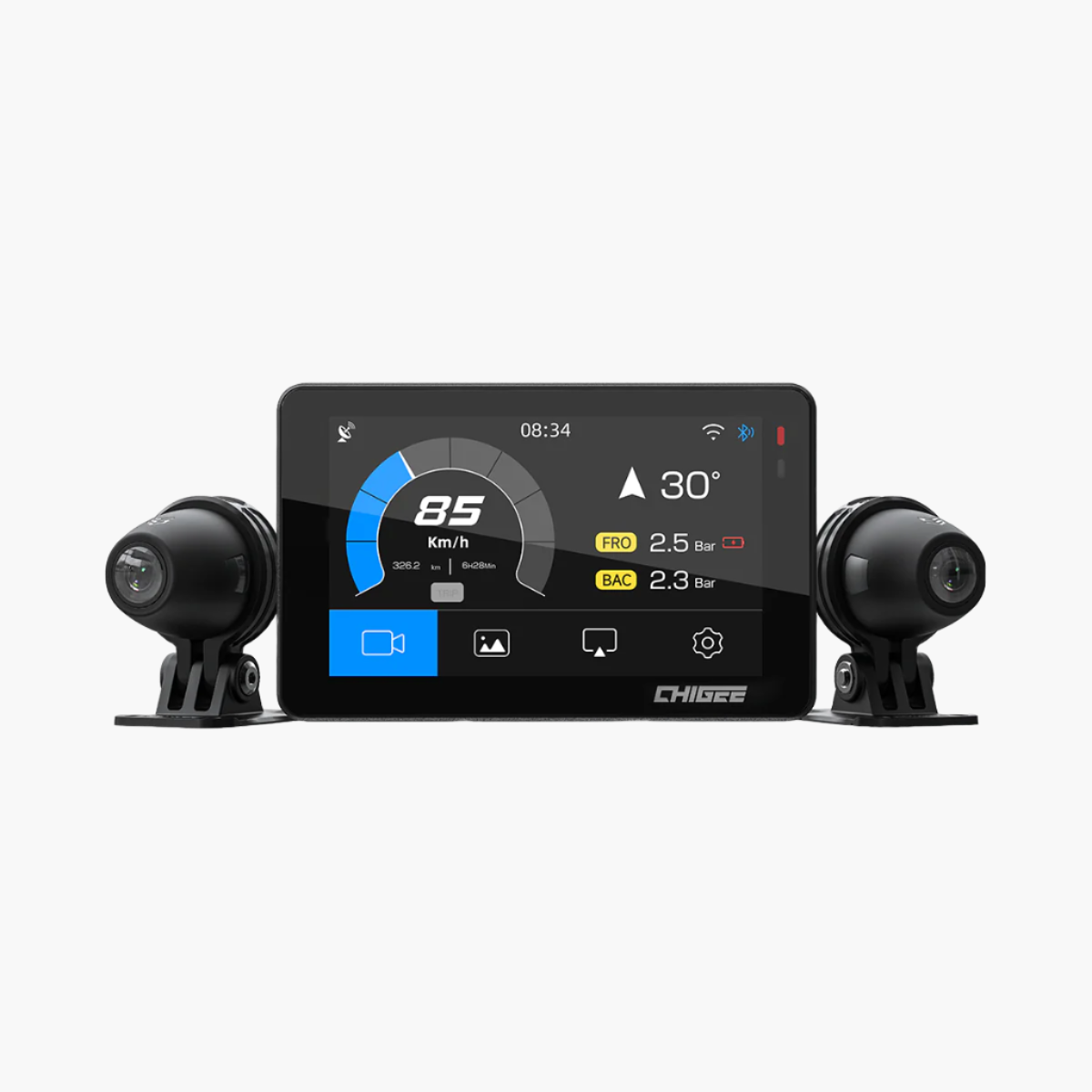
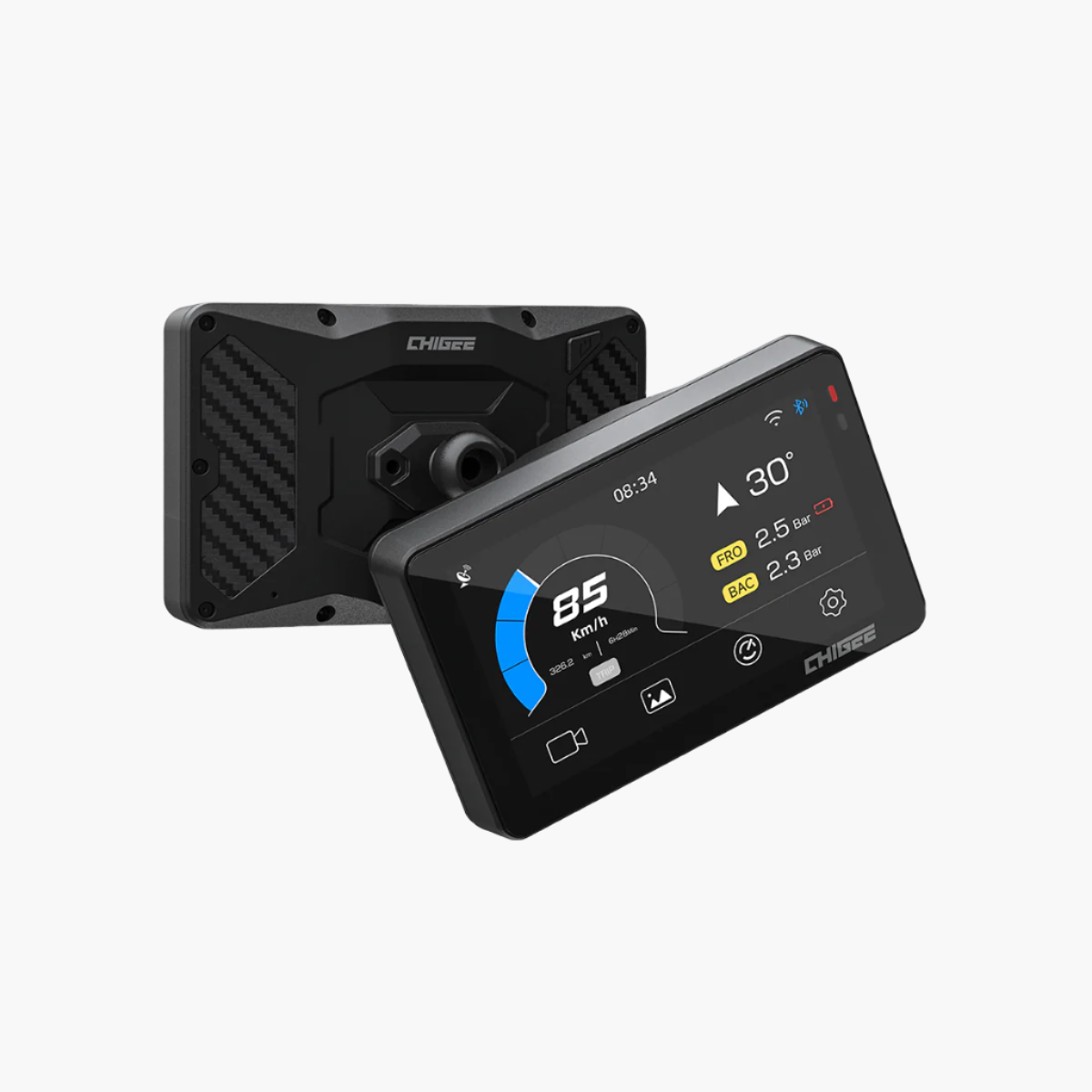
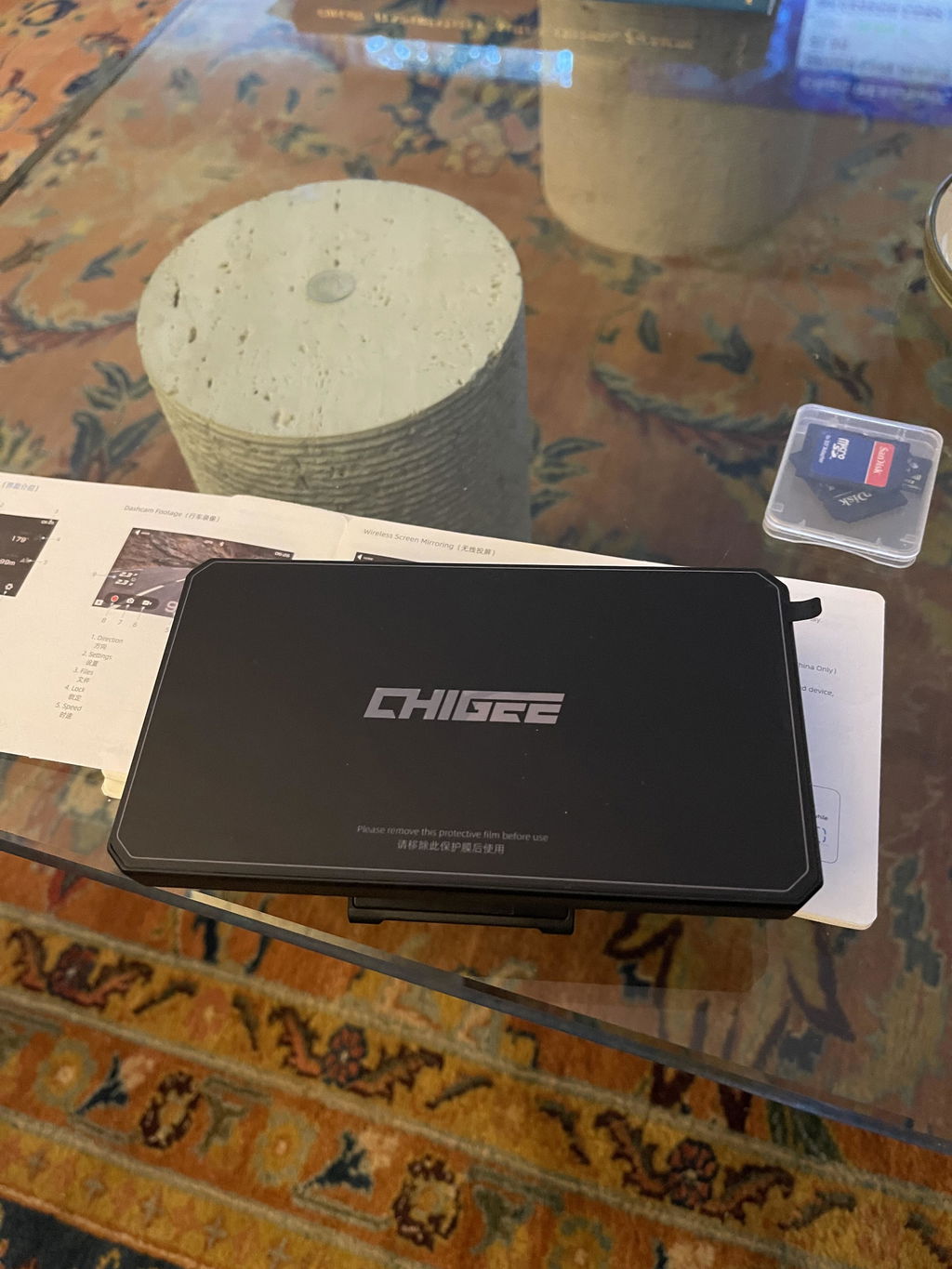
Adding a compatible CHIGEE display, such as the AIO-5 or AIO-6, layers in three additional capabilities: real-time on-screen radar visualization, audible alerts through the display speakers, and finer control over sensitivity and alert behavior. For riders who already run a CHIGEE display, this is the natural pairing.
Finally, riders chasing the cleanest cockpit can opt for the CG Radar Mirror, which integrates the warning indicator directly into the mirror glass at the rider's natural sightline. The result is a factory-style installation without an external indicator module — for many bikes, the most elegant way to run the SR-1.
One pairing rule worth knowing: a single CHIGEE display can be paired with only one SR-1 at a time. Riders with multiple bikes, each fitted with its own SR-1, will need to delete the existing pairing in the display's settings before pairing the second radar.

Designed as an optional upgrade for the SR-1, the CG Radar Mirror combines the mirror and warning indicator in one clean, integrated design.
Detection Limits You Should Know About
No radar system is magic, and being clear about what the SR-1 won't do is just as important as describing what it will. Detection range and reliability depend on the radar cross-section of the approaching vehicle — trucks reflect more energy than small cars, which in turn reflect more than motorcycles, so larger vehicles are detected at longer ranges. Performance also varies with closing speed: very slow-moving traffic doesn't generate as clear a signature as a vehicle rapidly closing in. Road geometry plays a role too, since tight curves narrow the effective scanning arc to whatever falls within the radar's field of view. And while the system handles ordinary rain without trouble, dense fog and heavy downpours can attenuate millimeter-wave signals at the longest ranges.
Equally important, the SR-1 is designed for motor-vehicle traffic. Bicycles, pedestrians, and stationary low-reflectivity objects may not register reliably, and the system should be understood as rider-assistance — not a replacement for mirrors, shoulder checks, or basic defensive riding.
How the SR-1 Fits Into a Motorcycle Safety Setup
Stepping back, motorcycle safety upgrades broadly fall into three categories: gear that makes the rider more visible (auxiliary lighting, hi-vis clothing, brake-light modulators), gear that makes the rider better protected (airbag vests, armored jackets, quality helmets), and gear that makes the rider more aware (mirrors, dash cameras, and now radar-based BSD).
The SR-1 sits firmly in the third category — and arguably bridges into the first as well, thanks to its rear-facing warning light that signals approaching drivers. It's most valuable in exactly the situations where mirrors fail riders most often: low-light riding, dense multi-lane traffic, and long fatiguing stretches where shoulder checks get less consistent. Because the system is universal in design, it's compatible with most street bikes, adventure bikes, cruisers, and tourers, provided the tail of the motorcycle offers clear line of sight for the radar module.

In direct sunlight the lights punch through the glare; at night they dim to avoid dazzling you or traffic behind. No manual adjustment needed.
If you have read this far and still cannot quite grasp the transformative impact this radar can have on your experience, perhaps this first-person account of its usage: CHIGEE SR-1 Review: The Radar That Watches Your Back So You Don’t Have To—penned by a loyal CHIGEE user and avid riding enthusiast—will offer you a fresh perspective. The video featured below also captures the experience from his point of view.
Frequently Asked Questions
Do motorcycles come with blind spot detection?
A handful of new motorcycles offer factory radar-based blind spot detection — some BMW, Ducati, and KTM flagship models. For example — but the feature remains rare on production bikes. Aftermarket systems like the CHIGEE SR-1 are designed to bring the same capability to virtually any motorcycle, regardless of make, model, or year.
Why does the SR-1 use 77 GHz radar instead of 24 GHz?
77 GHz is the higher-frequency band now standard across automotive ADAS systems. Compared to older 24 GHz solutions, it delivers millimeter-level precision in distance and relative speed measurement, and it's far less susceptible to interference from roadside signs, lampposts, and other electronic sources. For the rider, that means more accurate alerts and fewer false positives.
Is radar better than camera-based blind spot detection?
Radar and cameras each have their strengths. Radar continues working in darkness, fog, and rain where cameras struggle, and it directly measures distance and closing speed rather than inferring them. Cameras, on the other hand, recognize object types more clearly but depend heavily on lighting conditions. The CHIGEE SR-1 uses radar specifically for that weather-and-light reliability.
Does the SR-1 work at low speeds or in stop-and-go traffic?
The system activates at roughly 10 km/h and above. The low-speed cutoff is intentional — at walking-pace speeds, alerts about adjacent vehicles would fire constantly and become noise rather than useful information.
Will I hear radar alerts through my Bluetooth helmet headset?
No. The SR-1's audible alerts are played only through a paired CHIGEE display's speakers and cannot be routed to a Bluetooth headset. Riders who don't have a CHIGEE display will receive visual alerts only, through the warning lights.
Can I share one CHIGEE display between two bikes that each have an SR-1?
Not simultaneously. A single CHIGEE display can be paired with only one SR-1 at a time. To switch between bikes, the existing pairing must be deleted in the display's settings before pairing the second radar.
Will the SR-1 work on my motorcycle?
The SR-1 is designed as a universal aftermarket system. As long as the bike runs on a 12 V DC electrical system,it has an ACC circuit to tap into, and offers a clear rearward line of sight at the tail, it will fit. Bikes with bulky panniers or top cases may simply require slight adjustments to the radar module's mounting position.
Do I need a CHIGEE display to use the SR-1?
The SR-1 functions independently, with the warning lights providing alerts on their own. Pairing it with a compatible CHIGEE display such as the AIO-5 or AIO-6 is entirely optional, but doing so adds visual blind spot indicators on the display itself, audible alerts, replaces the display's camera-based BSD with more accurate radar-based BSD, and unlocks finer control over sensitivity and activation speed.
What does IP68/IP69 mean for outdoor riding?
IP68 means full dust protection along with resistance to prolonged water immersion, while IP69 adds protection against high-pressure, high-temperature water jets — the standard typically used for vehicles that get steam-cleaned. In practical terms, the SR-1 handles heavy rain, road spray, and pressure-washing without issue.







Leave a comment
All comments are moderated before being published.
This site is protected by hCaptcha and the hCaptcha Privacy Policy and Terms of Service apply.