


If you bought a new car in the last decade, there's a good chance the side mirrors light up when something is sitting beside you that you can't see. Volvo introduced the first production blind-spot detection system on the 2005 S60, V70, and XC70 — door-mirror cameras watching the lanes alongside the car. Within ten years the technology had migrated from luxury sedans to economy cars; by the early 2020s, blind-spot monitoring had become a standard or near-standard feature in much of the U.S. and European new-car market. Motorcycle blind-spot radar took a much longer road to get there.
The first production motorcycle with factory front-and-rear radar — the Ducati Multistrada V4 — only entered production in late 2020, roughly fifteen years after Volvo's first system. Even today, in 2026, factory radar is found on a short list of premium flagships: BMW's R 1300 GS with the optional Riding Assistant package, KTM's 1390 Super Adventure, a few Ducatis. The vast majority of motorcycles on the road — basically everything below the $20,000 mark — leaves the factory with no radar at all.
That's not because riders don't need it. It's because, until recently, the engineering didn't make sense outside a tightly integrated factory build.

The 15-year gap between when blind-spot detection became standard in cars (2005) and when motorcycles got their first factory radar (2020). Aftermarket systems are now closing that gap.
Why Motorcycles Are Harder Than Cars
A car is, from a sensor's point of view, an easy place to live. Radar units bolt into the rear bumper, sealed against the weather, drawing a few watts off the 12V system, with mirrors and seats and speakers ready to deliver any alert the system wants to issue.
A motorcycle has none of those luxuries. The rear of the bike is exposed to rain, road salt, pressure washes and the kind of vibration that would shake an automotive sensor loose in a week. Power budgets are tighter. And the rider's "dashboard" is mostly peripheral vision and audio — both already competing with wind noise and engine bark.
For a long time, the only way to solve all of this was a fully integrated factory system: automotive-grade millimeter-wave radar, custom housings, a CAN bus most bikes don't have, and a tier-one supplier (Bosch, Continental) on the bill of materials. That's why early motorcycle radar lived only on €20,000+ flagships. The hardware itself shrank quickly — the Bosch radar Ducati uses on the Multistrada is roughly the size of an action camera and weighs 190 grams — but the system around it, the wiring and the software and the dashboard integration, stayed expensive.
Why the Safety Case Is Real
Crash databases generally don't tag accidents as "blind-spot involved," so the headline number for blind-spot crashes doesn't really exist. What does exist is the broader picture, and it's stark.
Across the major motorcycle accident studies — the U.S. Hurt Report and the European MAIDS study (921 in-depth case investigations across five countries) — the same finding keeps showing up: in about two-thirds of motorcycle-vs-car crashes, the car driver violated the rider's right of way, most often because they didn't see the motorcycle in time. MAIDS specifically found that 87.5% of all PTW accidents involved human error, and the single most frequent error was a failure to perceive the motorcycle.
Not all of those crashes happen in the rider's blind zone — many are intersection violations, gap misjudgments, or visibility problems no sensor can fix. But a meaningful fraction involves a vehicle either too far back to read in a mirror or closing faster than a shoulder-check cycle can catch. Those are precisely the cases radar is good at.
What's Actually Available Today
For a rider who wants radar-assisted awareness right now, there are three real options. They occupy very different price points.
Factory systems are the gold standard for integration. Adaptive cruise control, blind-spot detection, rear collision warning, all surfaced through the bike's dash and mirrors. The catch is the bike. A BMW R 1300 GS Adventure with the radar package starts around $26,000 in the U.S. once the (effectively unavoidable) Premium Package is included. A Ducati Multistrada V4 S, which ships with the radar hardware standard, starts around $24,000. If you weren't already shopping in this segment, the entry ticket is high.
Adapted bicycle radar has filled some of the gap. The Garmin Varia RCT715 — radar, tail light and 1080p camera in one unit — was designed for cyclists but plenty of motorcyclists have strapped one on. At $399 it detects approaching vehicles up to 140 meters back and pushes alerts to a Garmin head unit or phone. The trade-offs are predictable: it's battery-powered (six hours with the camera running), it warns of approach, not lane occupancy, and it talks ANT+ rather than living on the bike's electrical system. Useful, but it's not a true blind-spot system.
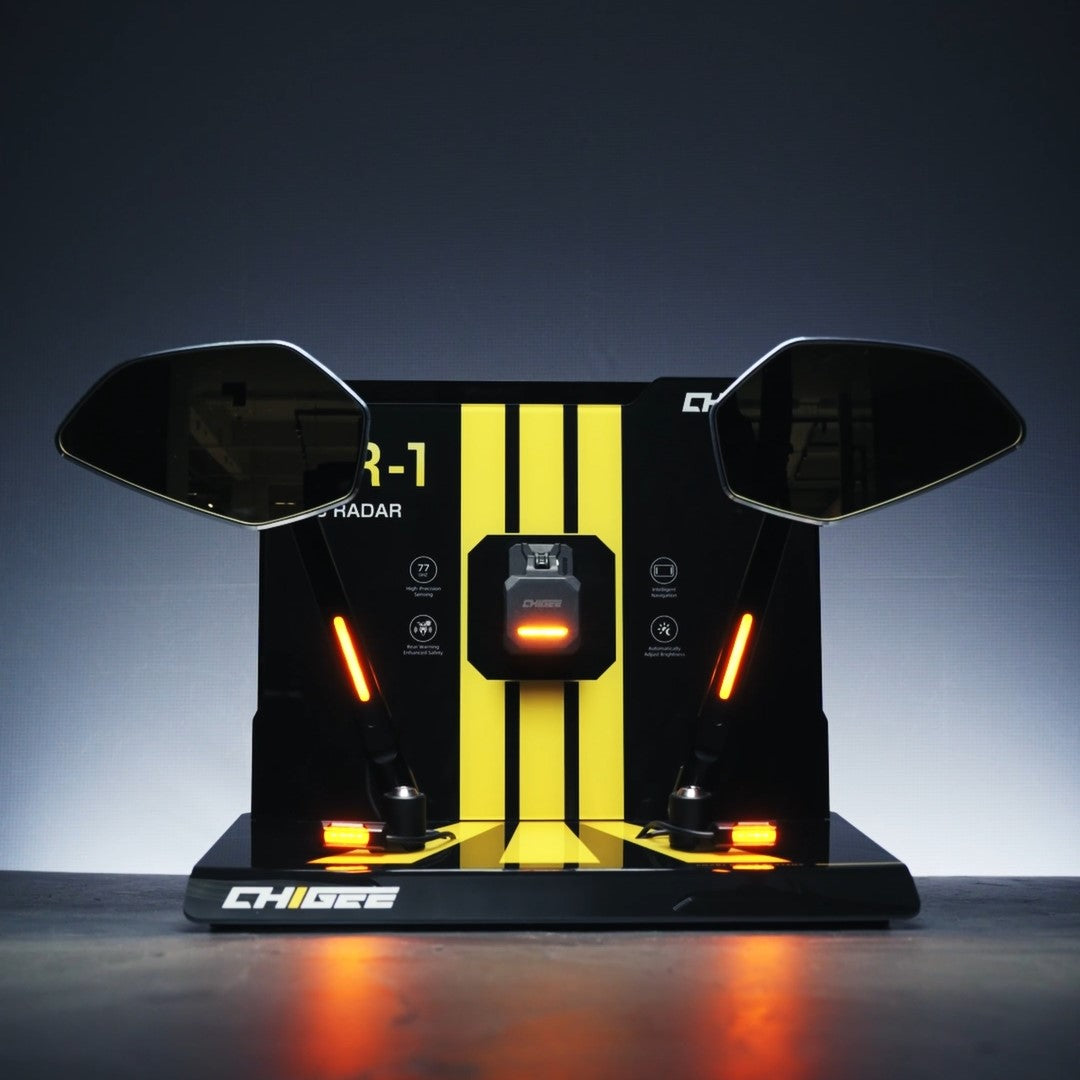
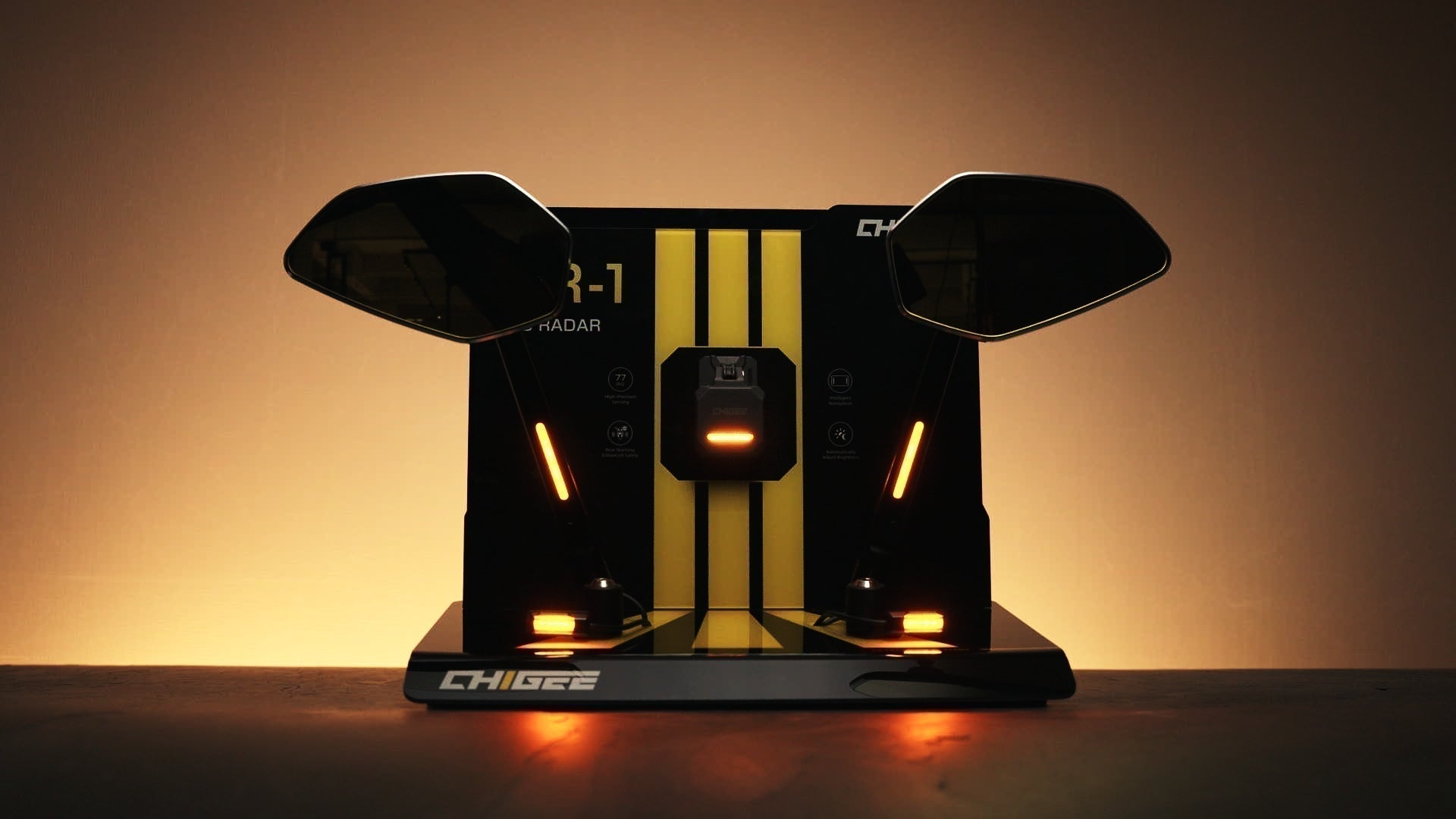
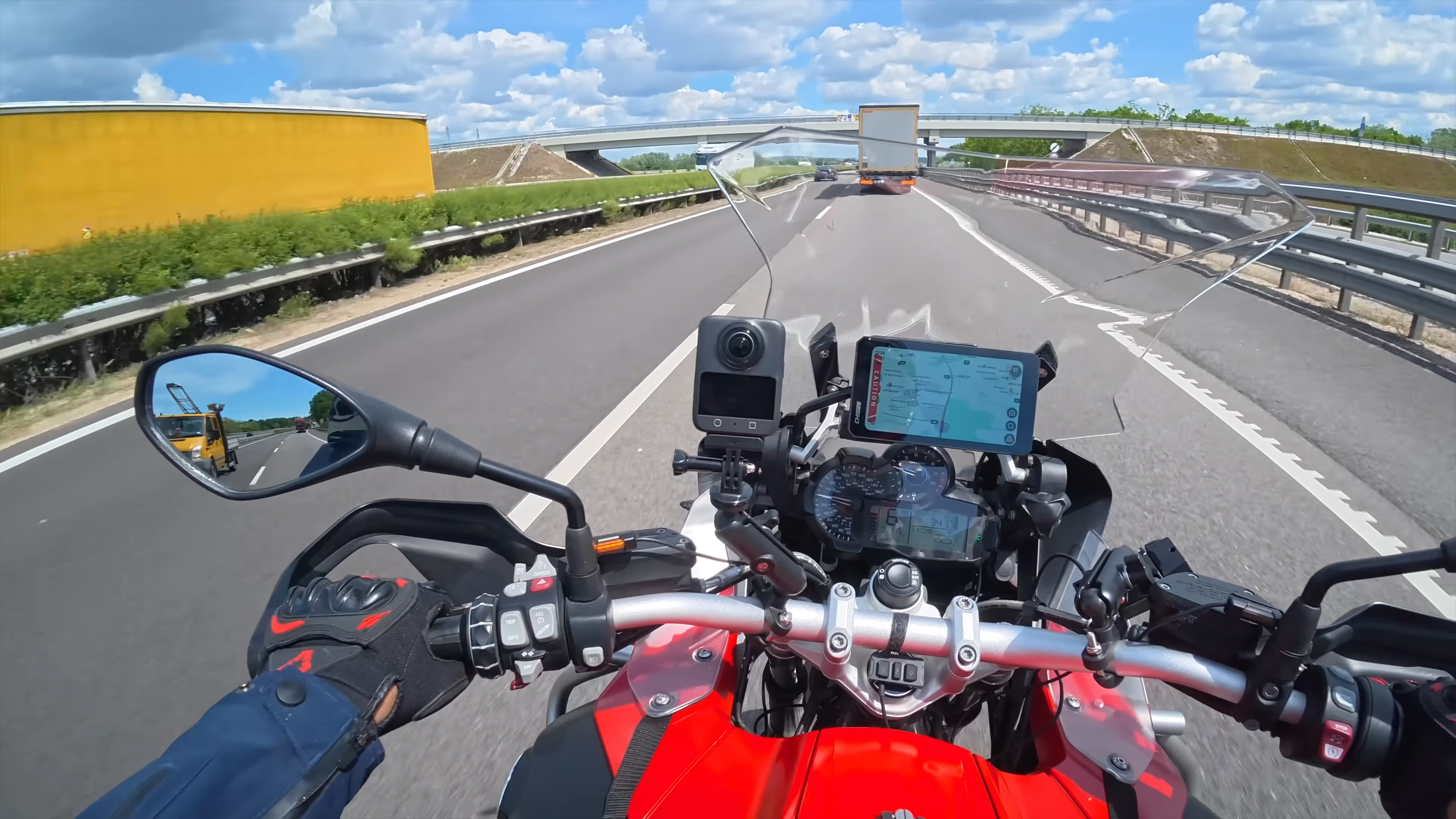
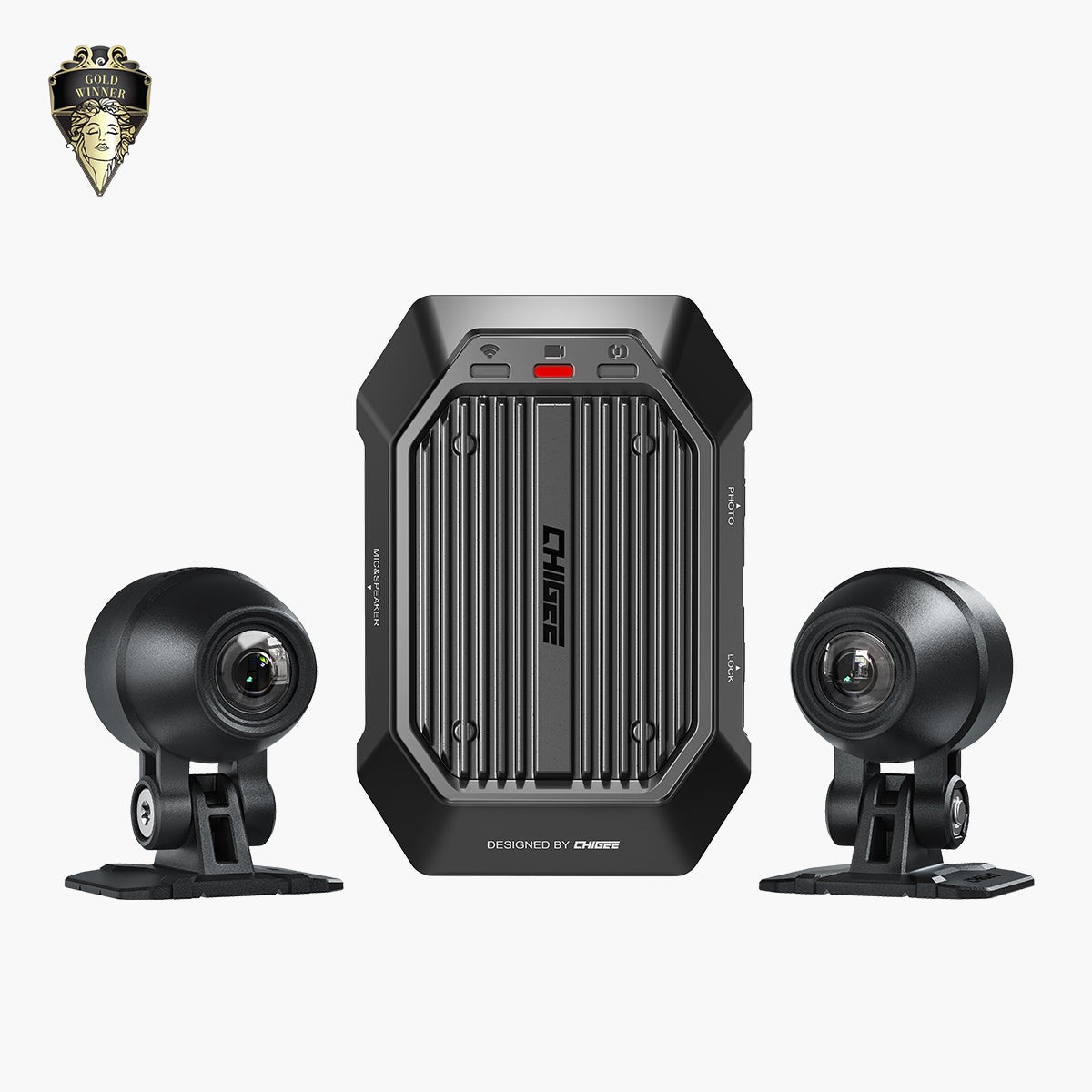
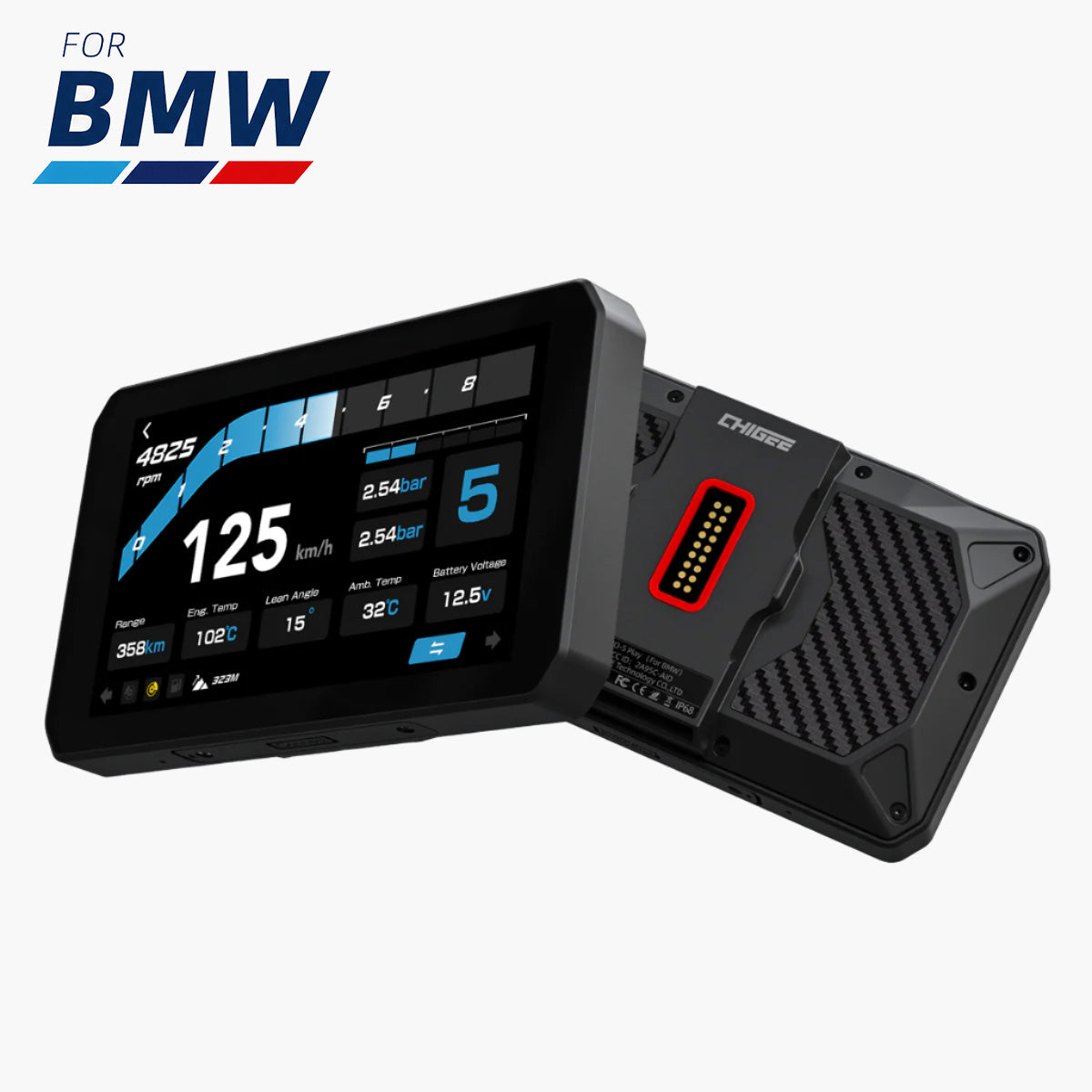
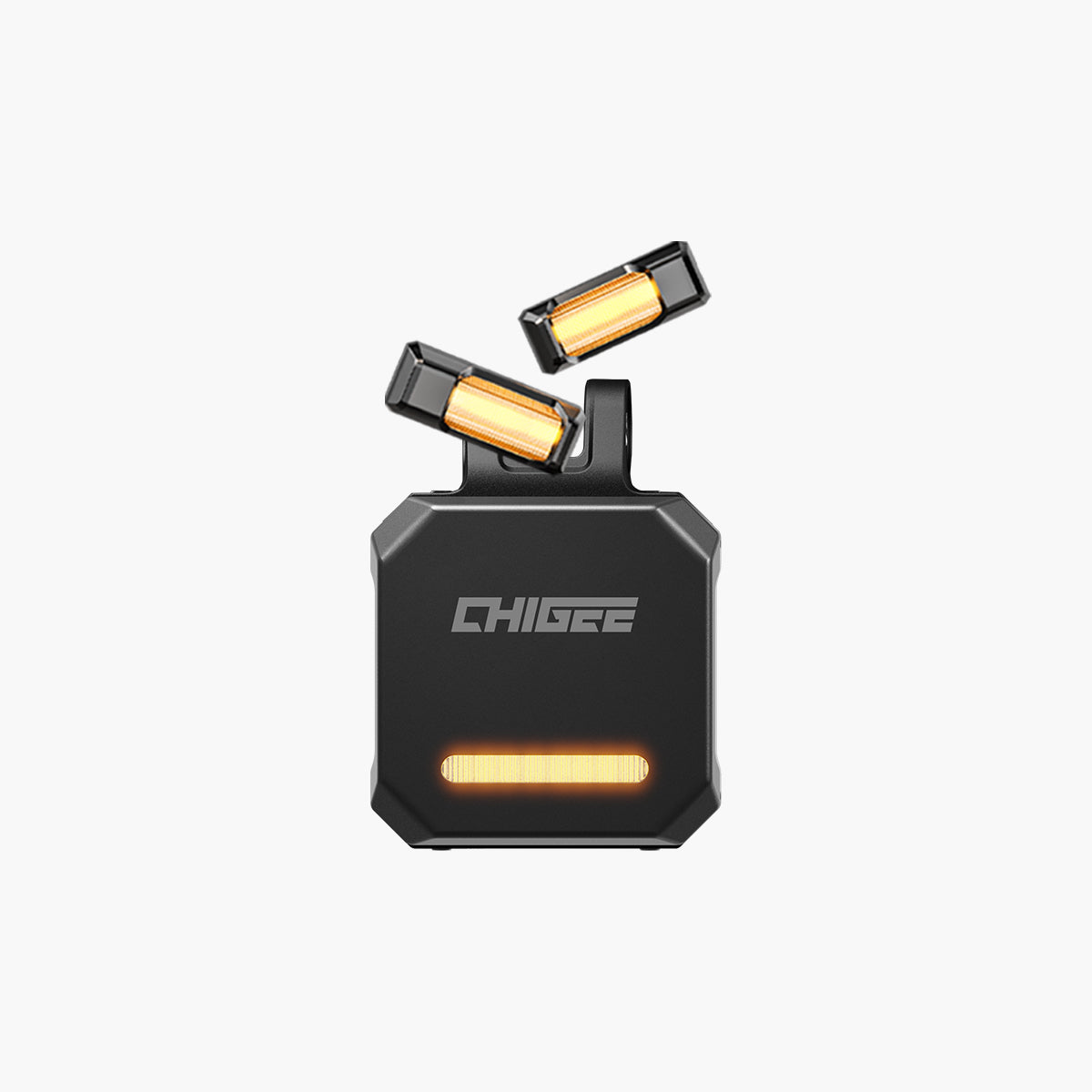
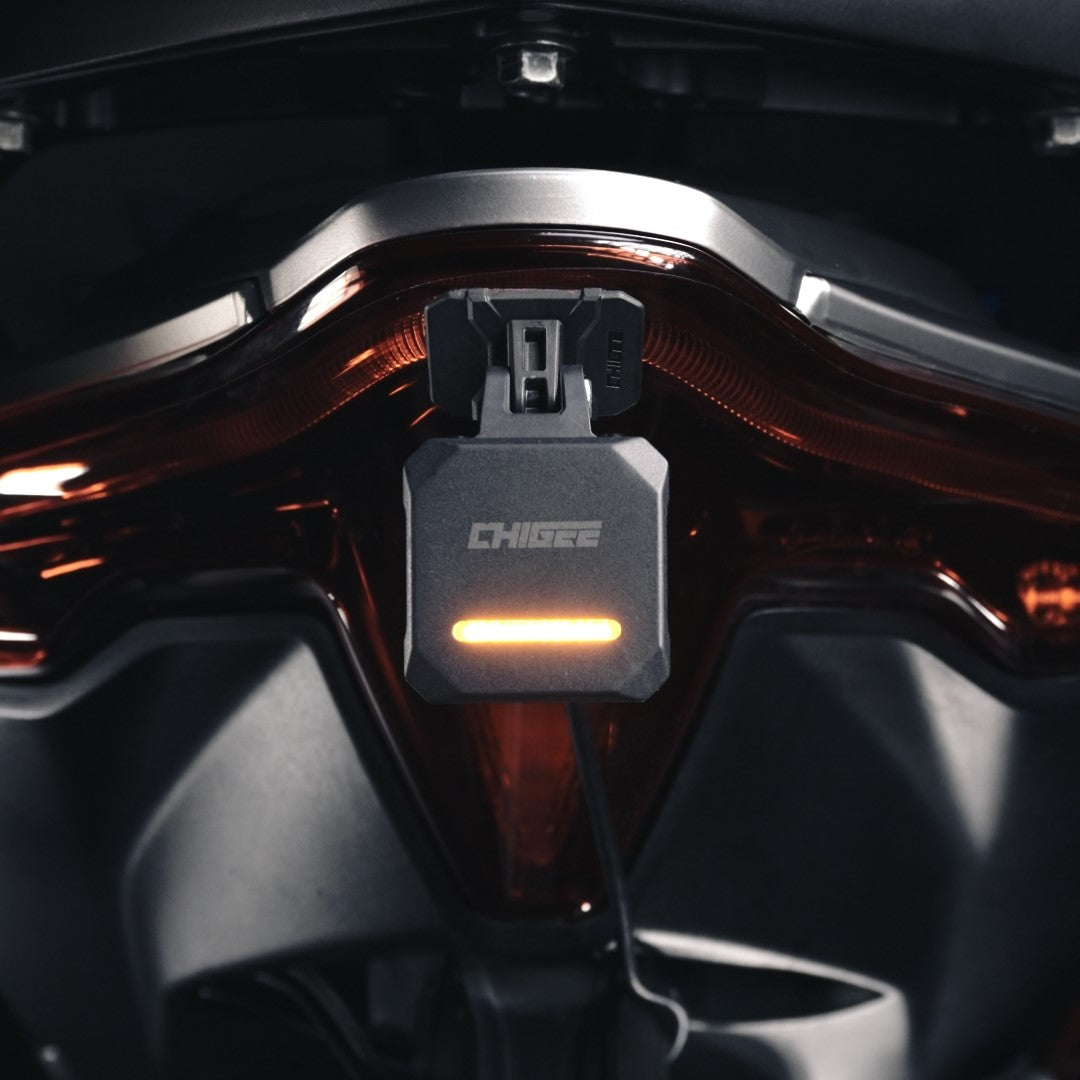
Aftermarket motorcycle radar is the newest and most interesting category. Over the last two or three years, a small group of brands — including specialist motorcycle electronics makers — has started shipping millimeter-wave radar modules built specifically for motorcycle use: hardwired to the bike's 12V system, sealed for weather, paired with handlebar-mounted LED indicators. They offer lane-specific blind-spot detection and closing-speed-based rear collision warning, with detection ranges comparable to automotive systems. Prices typically run a few hundred dollars rather than several thousand, which puts the technology within reach of riders on bikes that will never get a factory radar option.
The category is young. Installer familiarity varies. Long-term reliability — how the housings hold up after three winters of salt and pressure washes — is still being written. But the engineering approach is fundamentally sound, and it's what's actually closing the gap for everyone outside the flagship segment.
What Radar Can and Can't Do
It's worth being precise about what a rear-facing radar gives you, because the marketing tends to oversell.
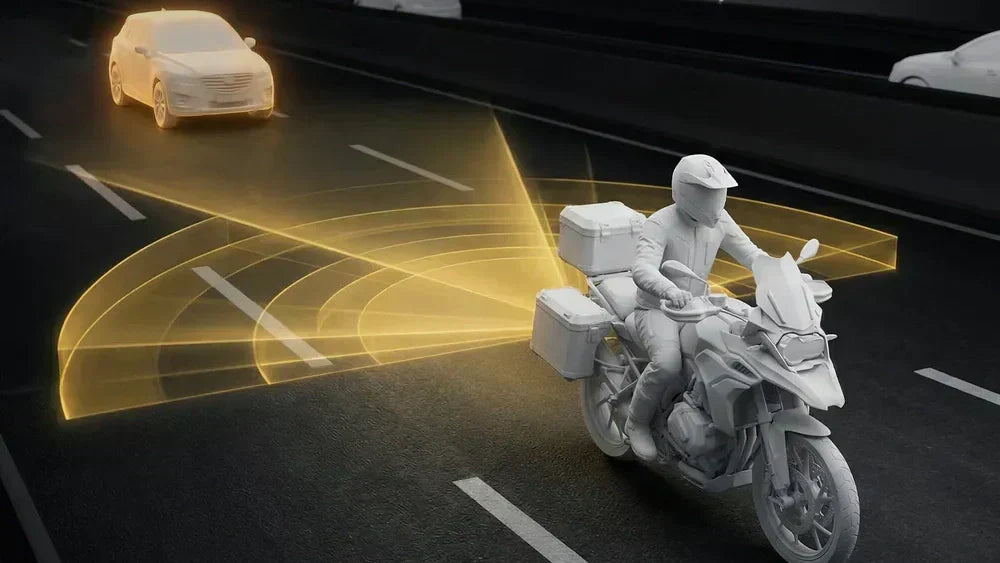
Two things, basically. Blind-spot detection tells you whether there's a vehicle alongside or just behind you, in the zone your mirrors don't cover. Rear collision warning tells you when something behind you is closing faster than traffic flow — which buys time to move out of its trajectory.
Modern motorcycle radars typically operate at 77 GHz (the automotive standard; older 24 GHz systems are being phased out by regulators in Europe and the U.S.), with detection ranges of 150–200 meters and a wide horizontal field of view. They work through rain and fog better than cameras, and they don't care about ambient light.
What they can't do is anticipate the driver next to you. They don't see around curves — radar is line-of-sight. They don't replace a shoulder check before a lane change; a radar that says "clear" is a supplement, not a substitute. And on motorcycles, they don't intervene — there's no autonomous braking, no haptic alert in the bars. The system informs; the rider decides.
That distinction is what radar actually does for you: it narrows the gap between I think the lane is clear and I know the lane is clear. Not zero risk. Less uncertainty.

Two distinct radar functions. BSD watches the lanes alongside; RCW watches the lane directly behind for fast-approaching vehicles.
Where This Goes Next
The honest comparison is ABS. BMW offered the first motorcycle ABS as an option in 1988, on the K100. The EU made it mandatory on new bikes over 125 cc in January 2016 — twenty-eight years from "exotic option" to "required equipment."
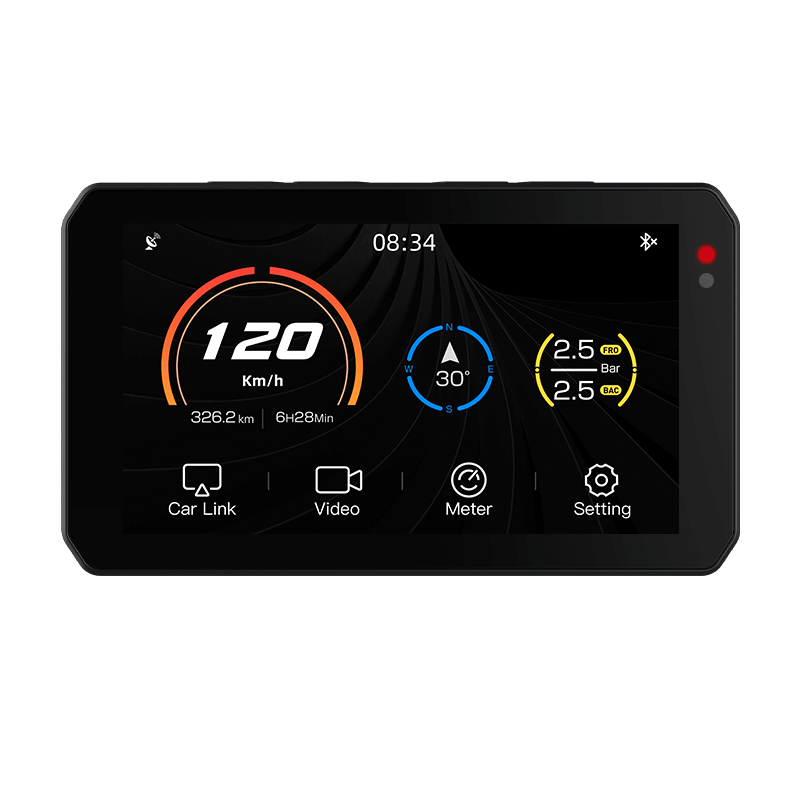
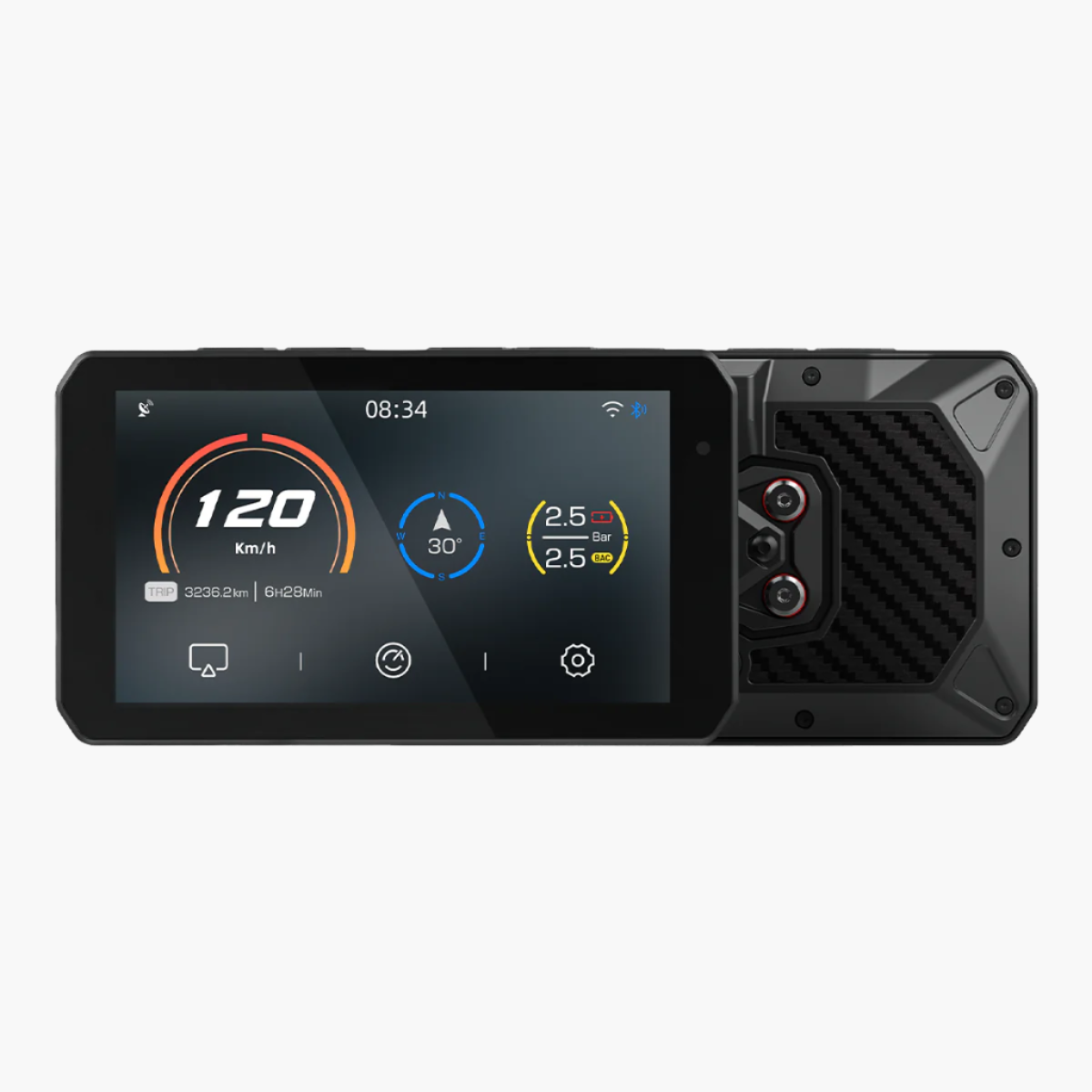
Radar is moving along the same curve, but it started later, and the dynamics are different. ABS adoption was driven primarily by the OEMs and eventually by regulation. Radar adoption has a third channel that ABS never really had: a credible aftermarket. Millimeter-wave modules are getting smaller and cheaper every year, pulled along by automotive volume and now by industrial robotics. The next generation of motorcycle radars will likely be smaller, with better false-positive filtering, and possibly tied into navigation displays or helmet HUDs.
For a rider whose bike will never get a factory radar option — which is most riders — the meaningful change has already happened. The hardware is good enough, the price is reasonable, and a weekend of installation closes most of the gap that took car drivers two decades to receive as standard. Mainstream? Not yet. But for anyone who spends real time on multi-lane roads, in dense traffic, or on long tours where fatigue starts eating awareness, the distance between what a mirror can show and what a sensor can detect is finally short enough to bridge.
Sources: MAIDS (ACEM, 2009); Hurt Report; IIHS / HLDI advanced driver assistance research; Volvo Cars press archive; Ducati press releases (Oct–Nov 2020); BMW Motorrad product documentation; Garmin Varia RCT715 specifications. Pricing reflects publicly listed MSRPs as of early 2026 and may vary by market.






Leave a comment
All comments are moderated before being published.
This site is protected by hCaptcha and the hCaptcha Privacy Policy and Terms of Service apply.