

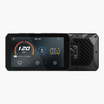
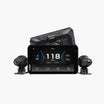
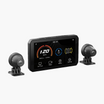
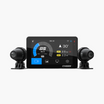
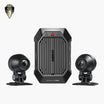
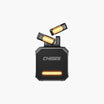
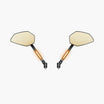
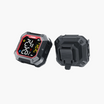
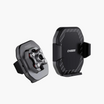
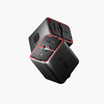

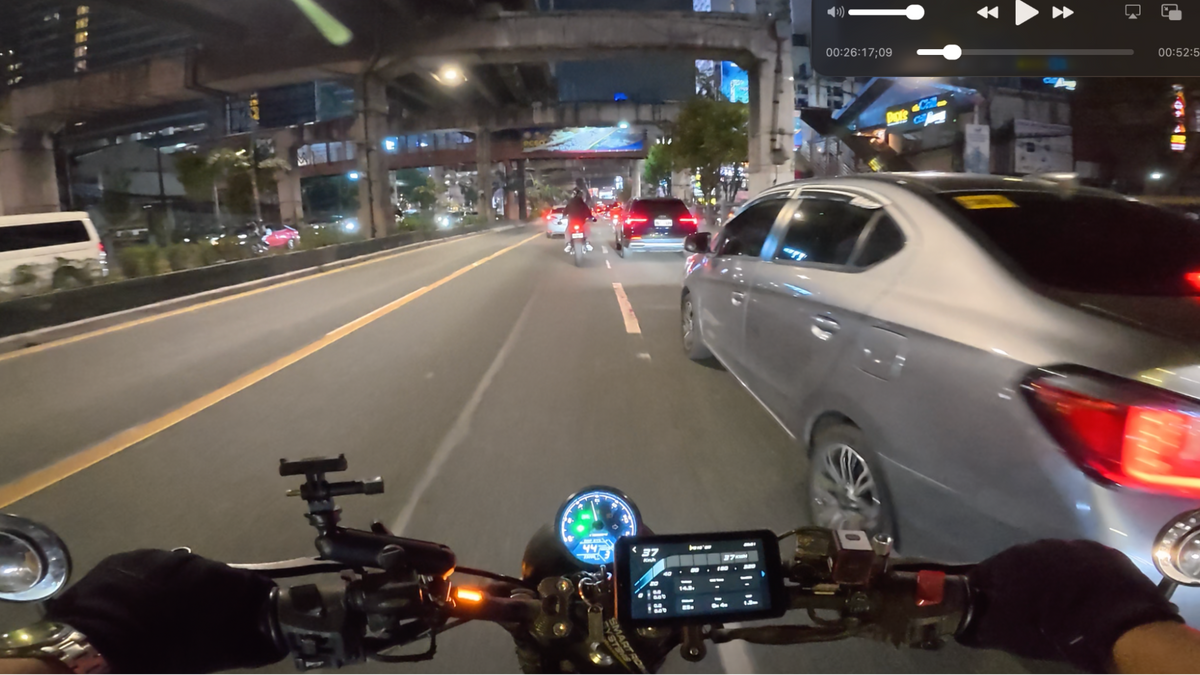
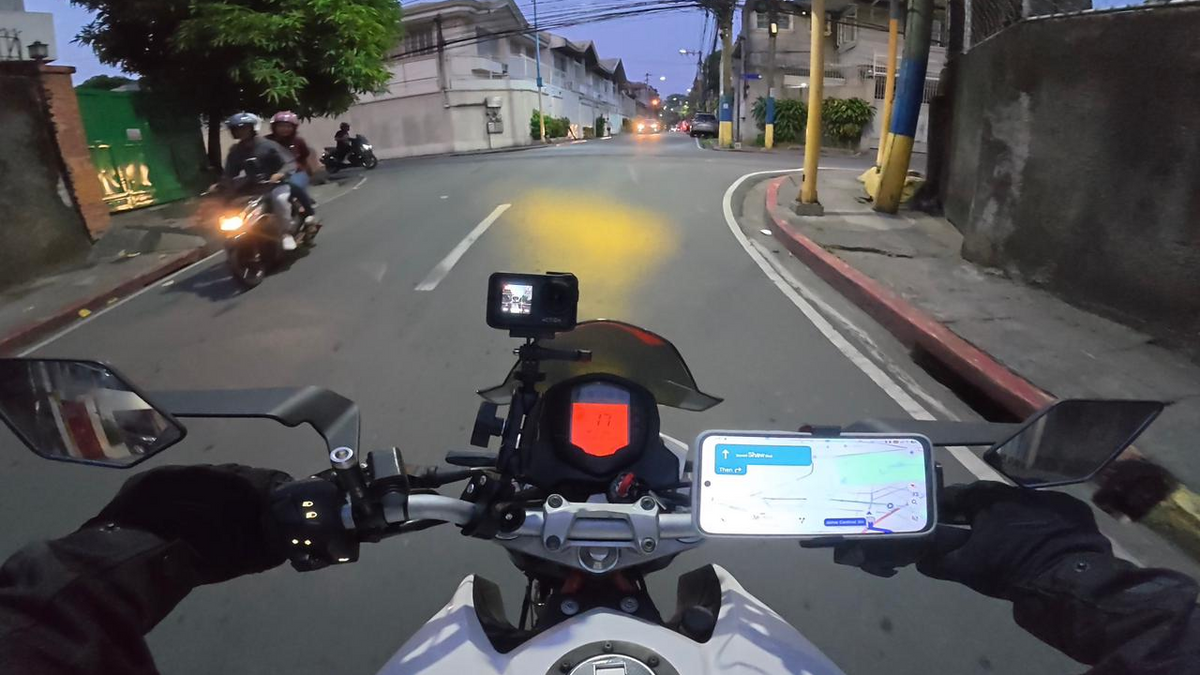
Bar-end mirrors were the first mod on my bikes – they looked right, but they cost visibility in the back third of every lane change. After a rear collision in Quezon City, that gap stopped feeling like a manageable tradeoff and started feeling personal. When the CHIGEE SR-1 arrived, it addressed the exact problem I'd been patching with extra mirror checks and too much mental load.
Garmin's zūmo R1 Radar, announced at CES 2025 and priced at $599.99, put motorcycle radar into mainstream conversation for any bike, not just flagship OEM models. What the press release didn't foreground was that a full-screen radar display requires a smartphone app or a zūmo XT2 motorcycle navigator, a device sold separately at $599.99 MSRP. That single detail changes the entire value calculation.

CHIGEE SR-1 vs Garmin zūmo R1 Radar: visibility, cost, and safety tradeoffs for riders and tech review
This comparison covers what each system actually delivers on the road and what it genuinely costs to get there.
The Real Cost of Getting There
The Garmin zūmo R1 at $599.99 works with a free smartphone app, but the full-screen radar display and audio headset alerts Garmin promotes require either the app running on a mounted phone or the zūmo XT2 navigator. Riders who don't already own the XT2 are looking at a combined hardware investment of $1,199.98 at full MSRP for the complete experience. That's before mounting hardware or a compatible helmet headset.
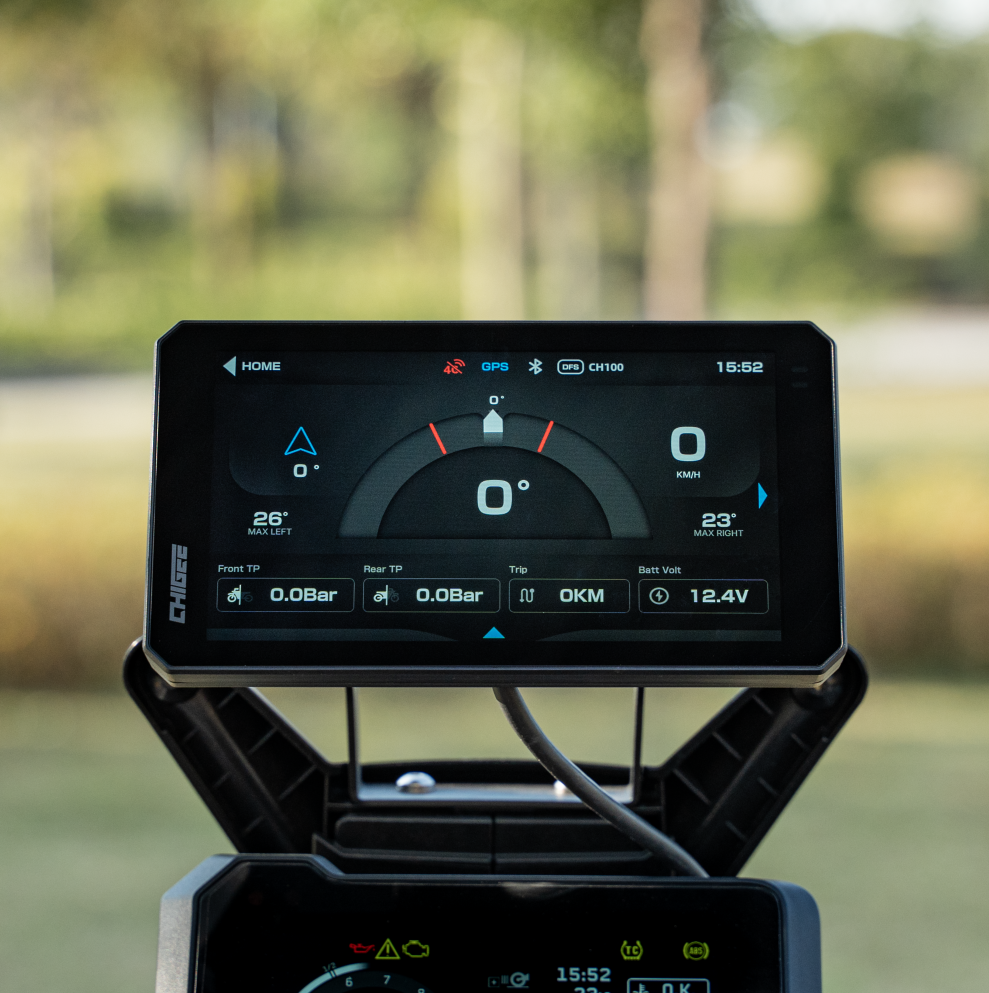
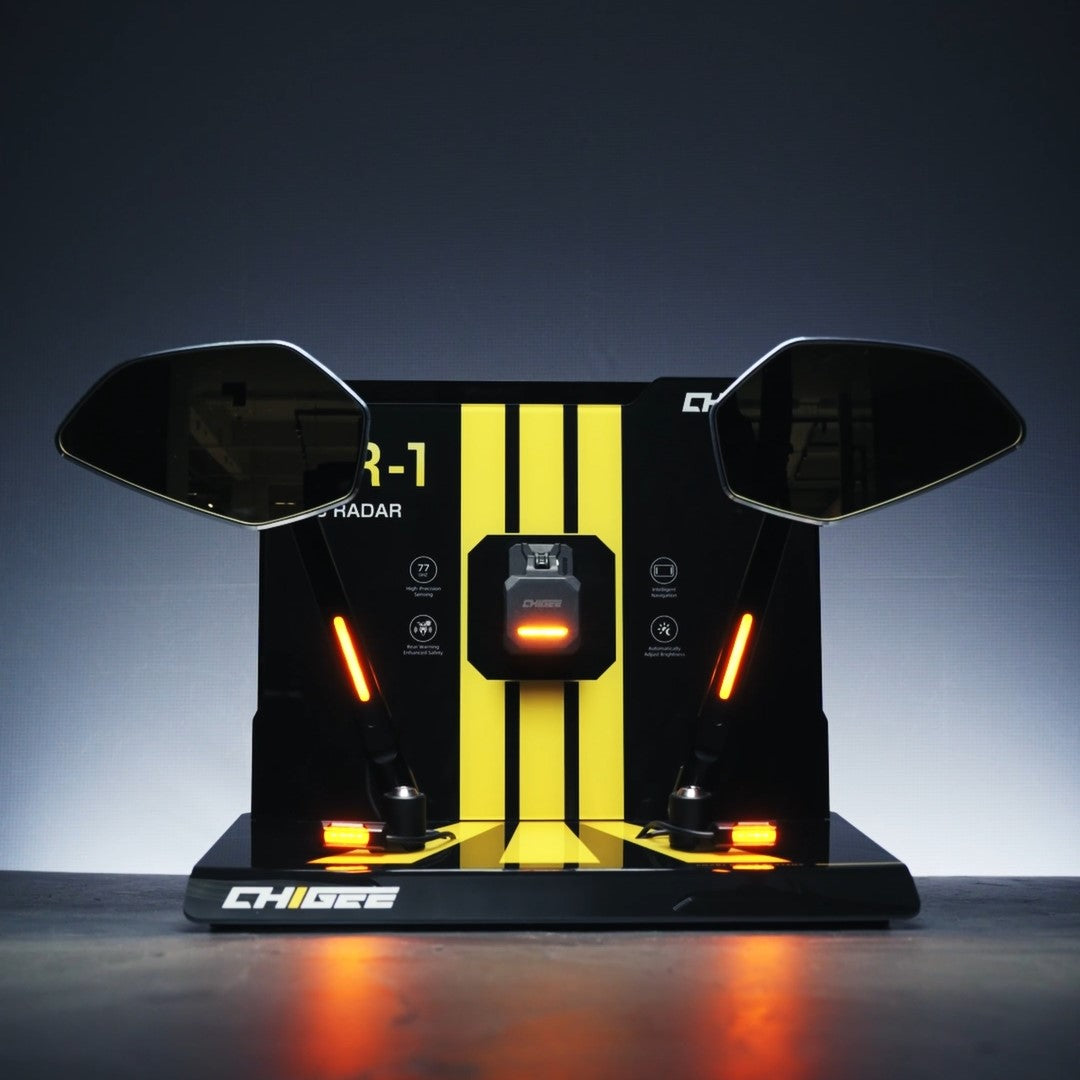
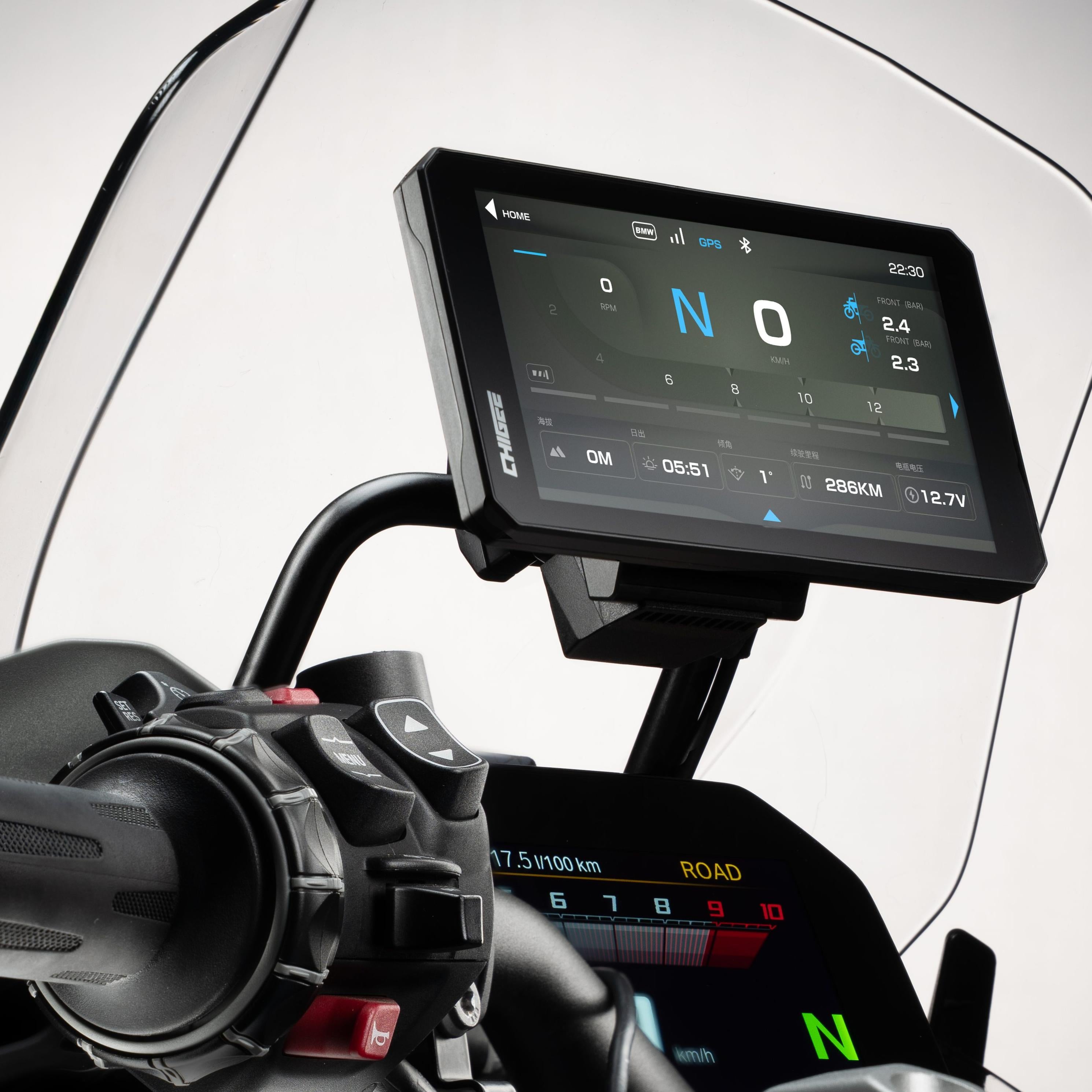
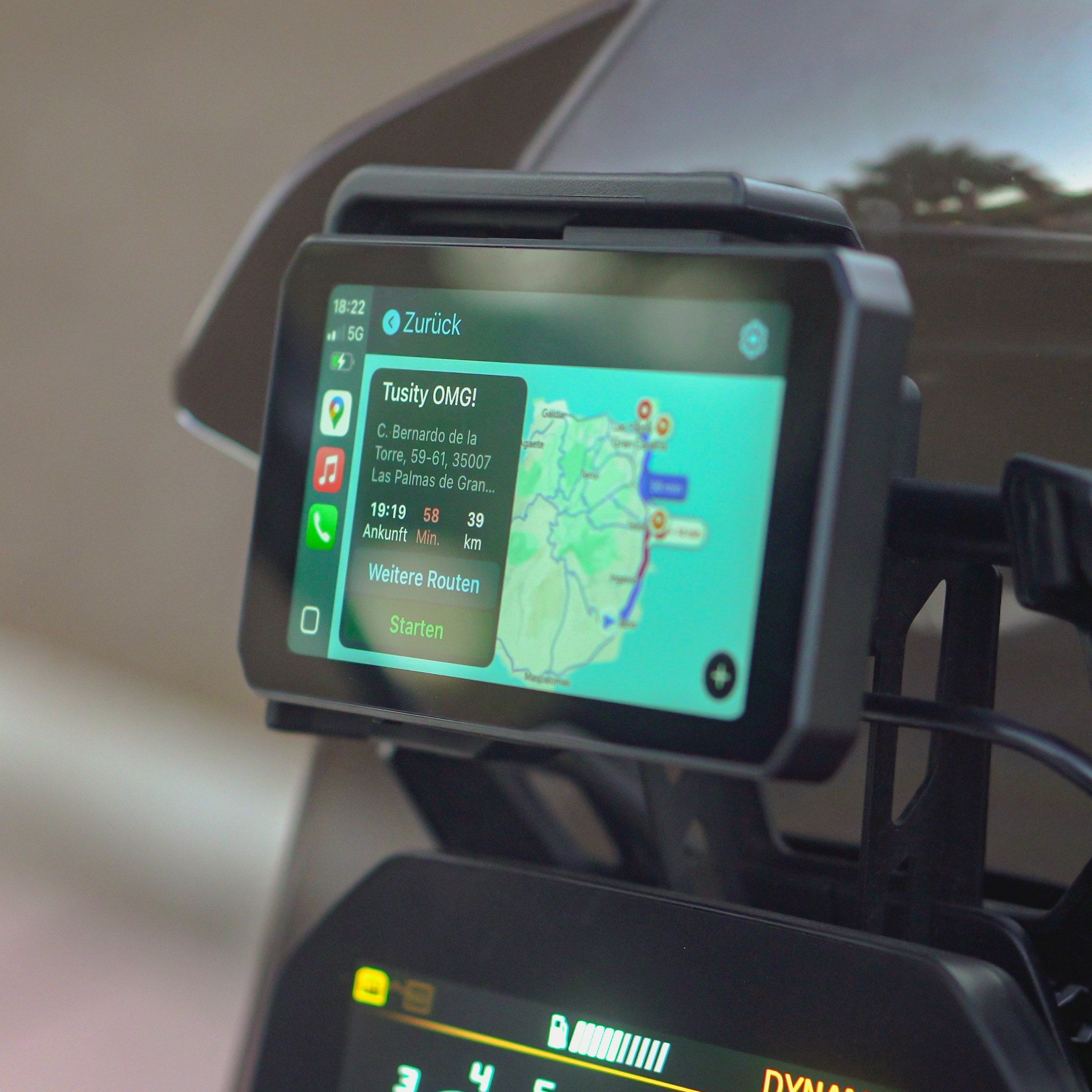
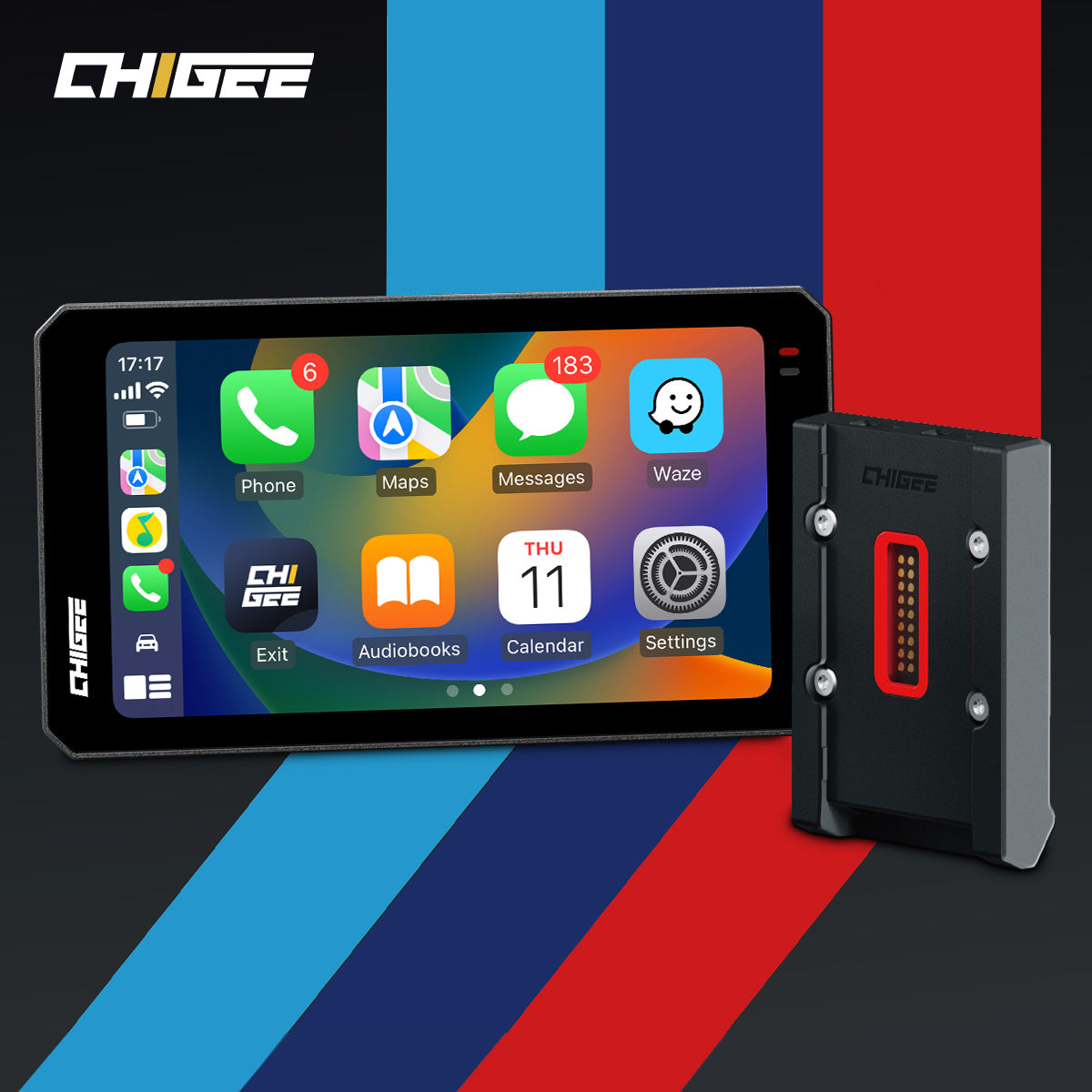
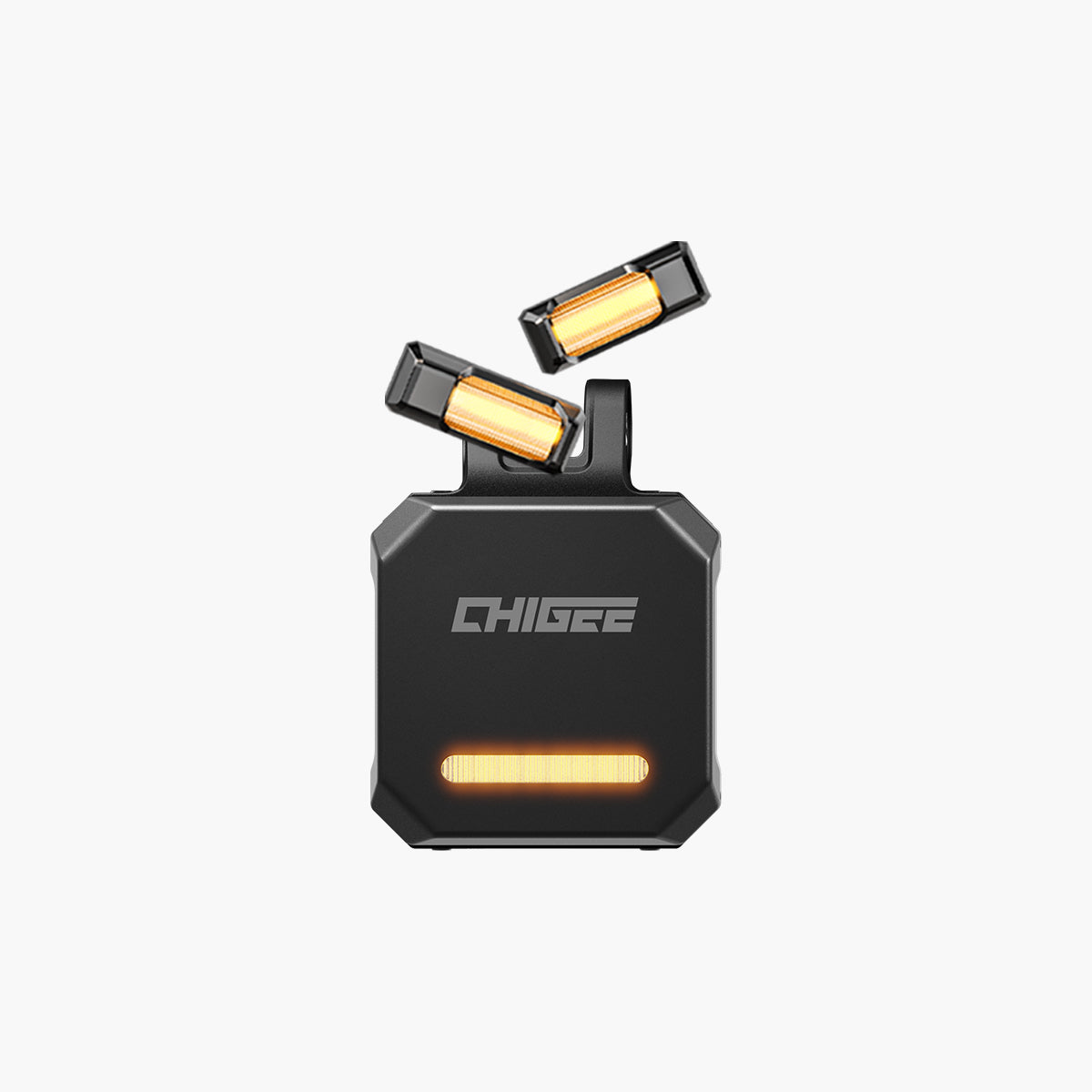
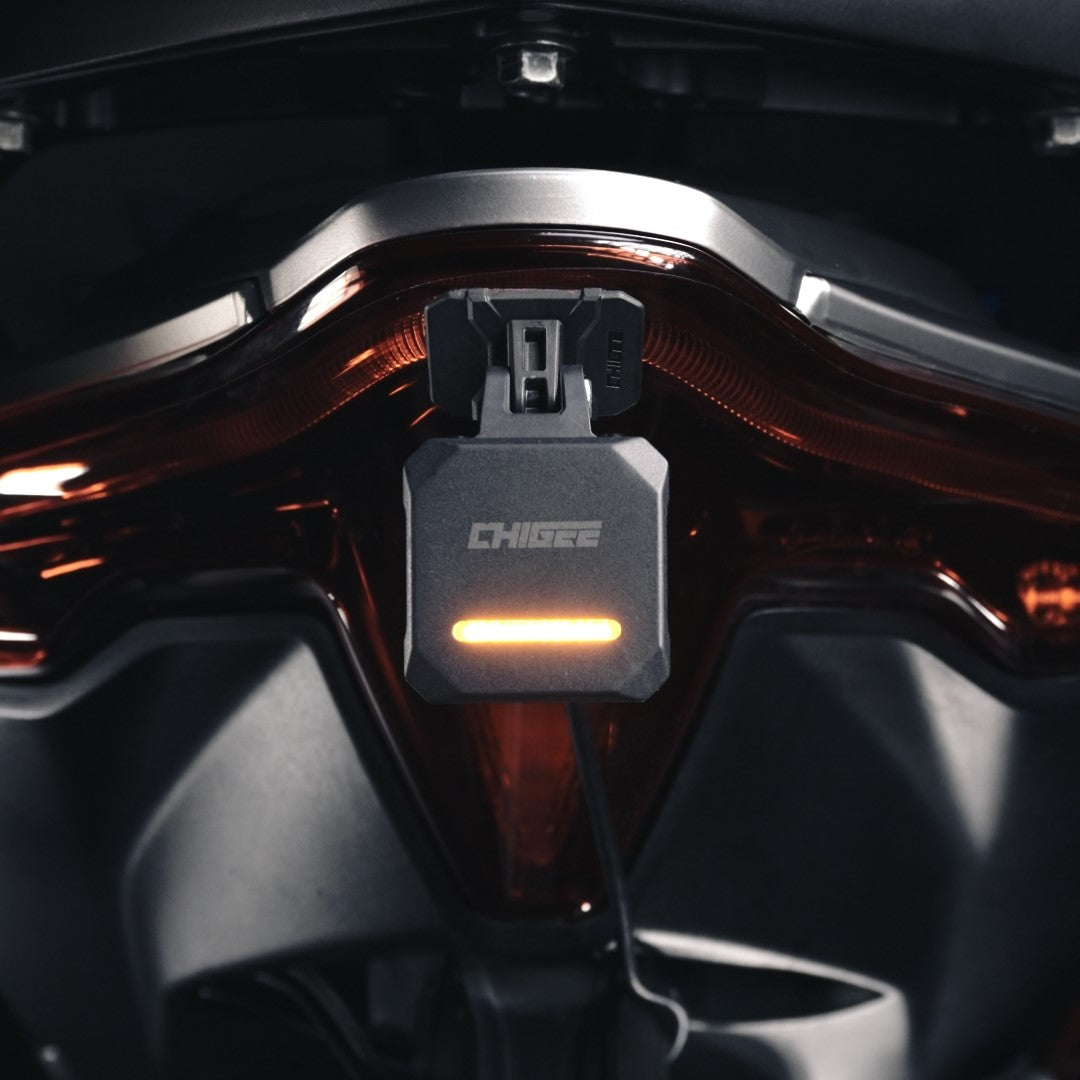
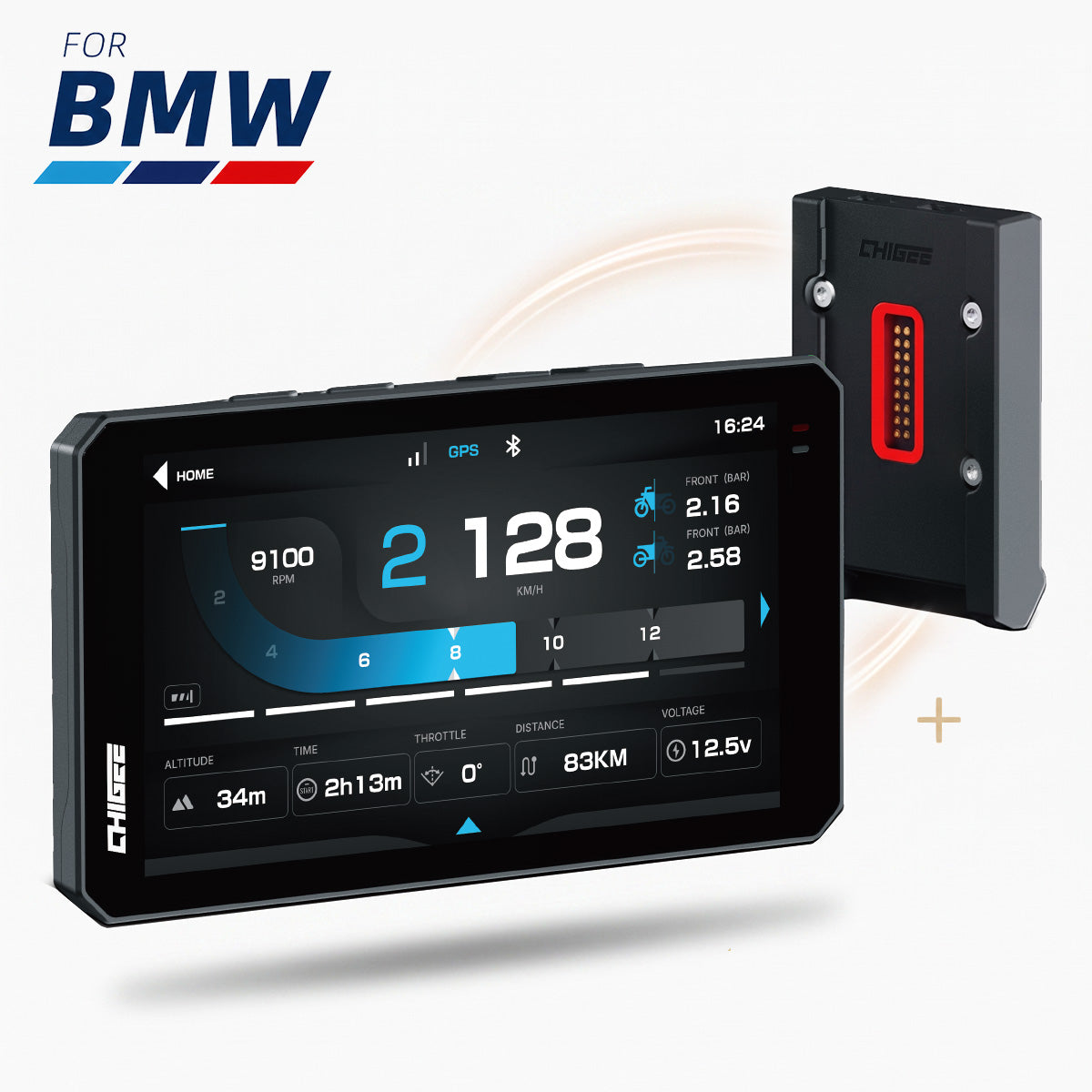
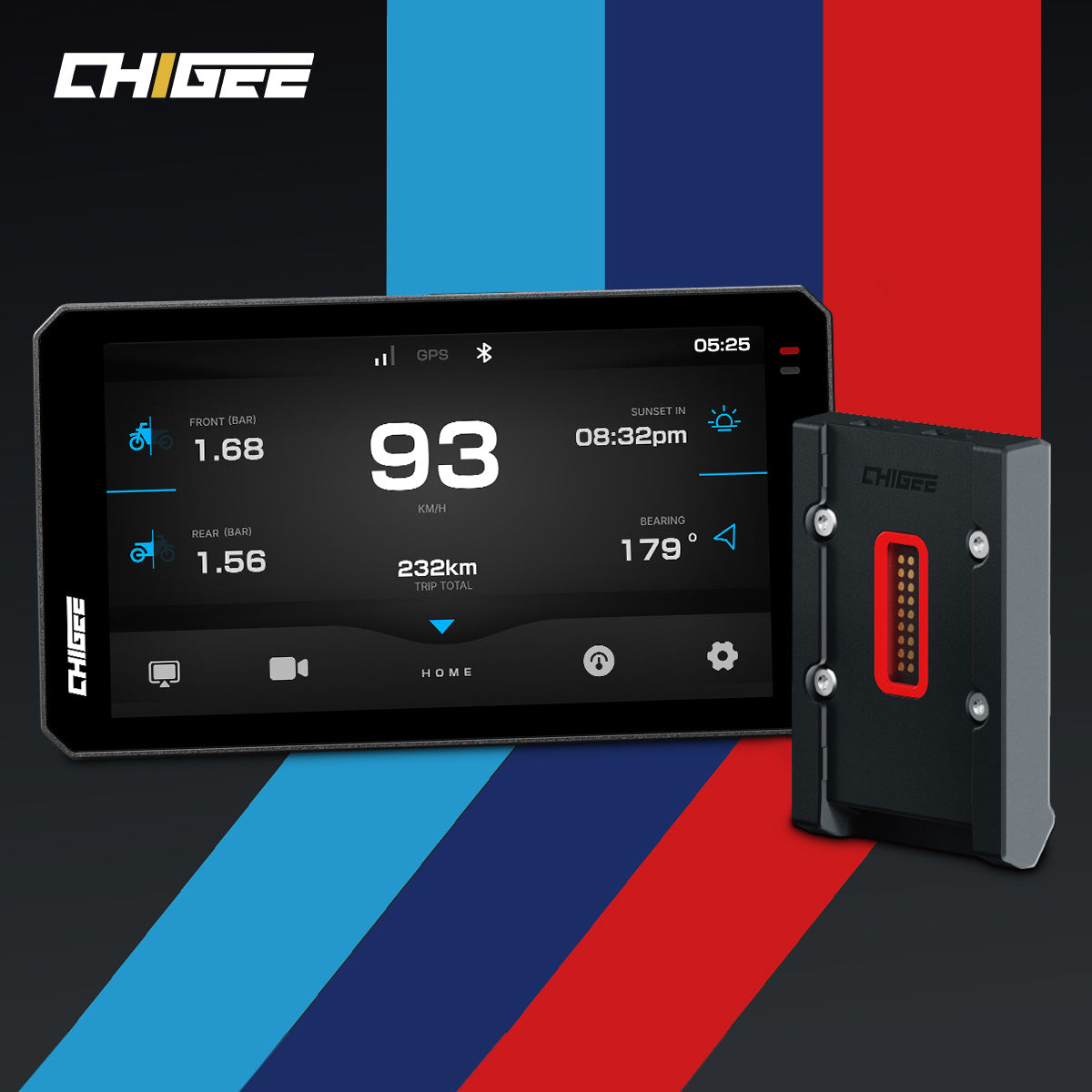
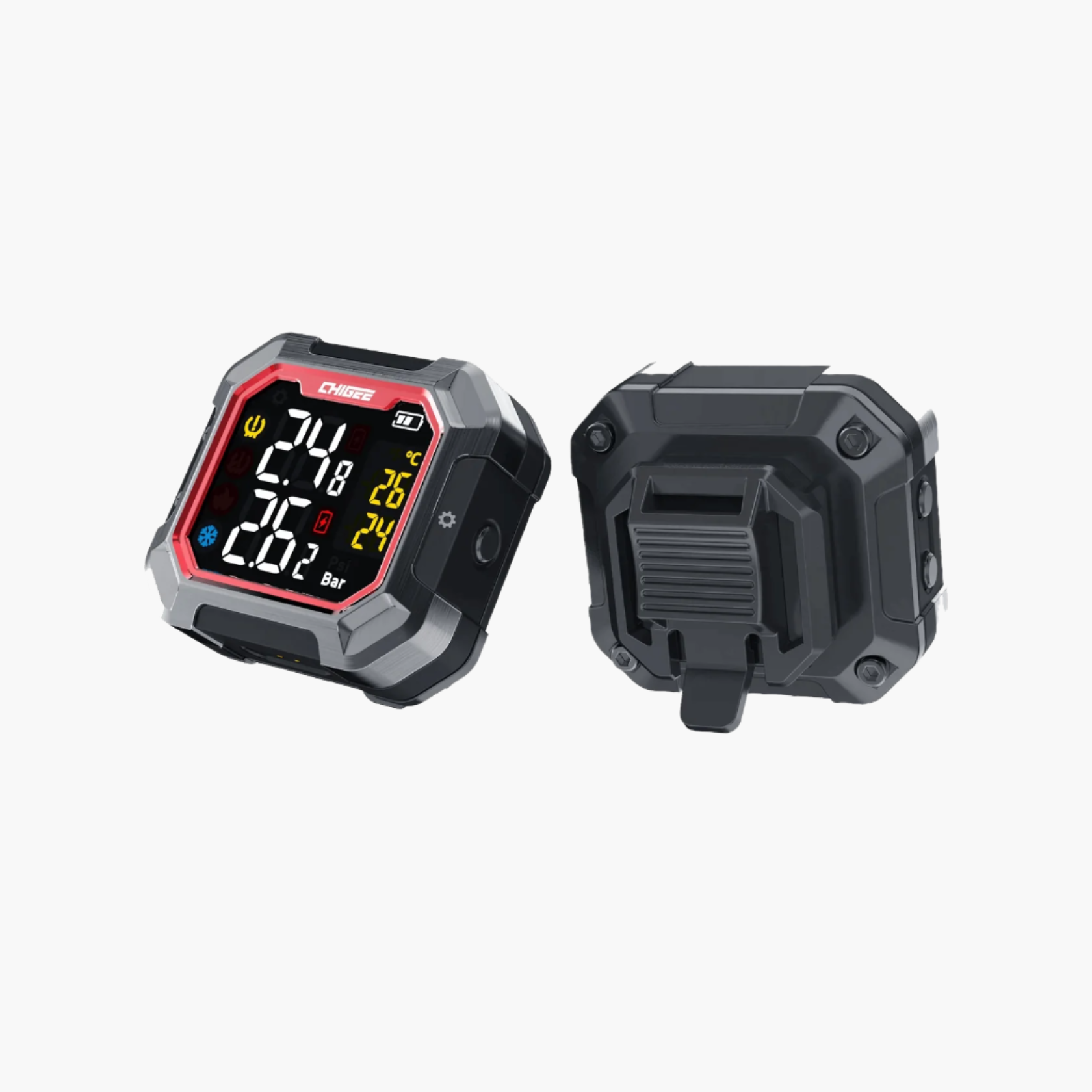
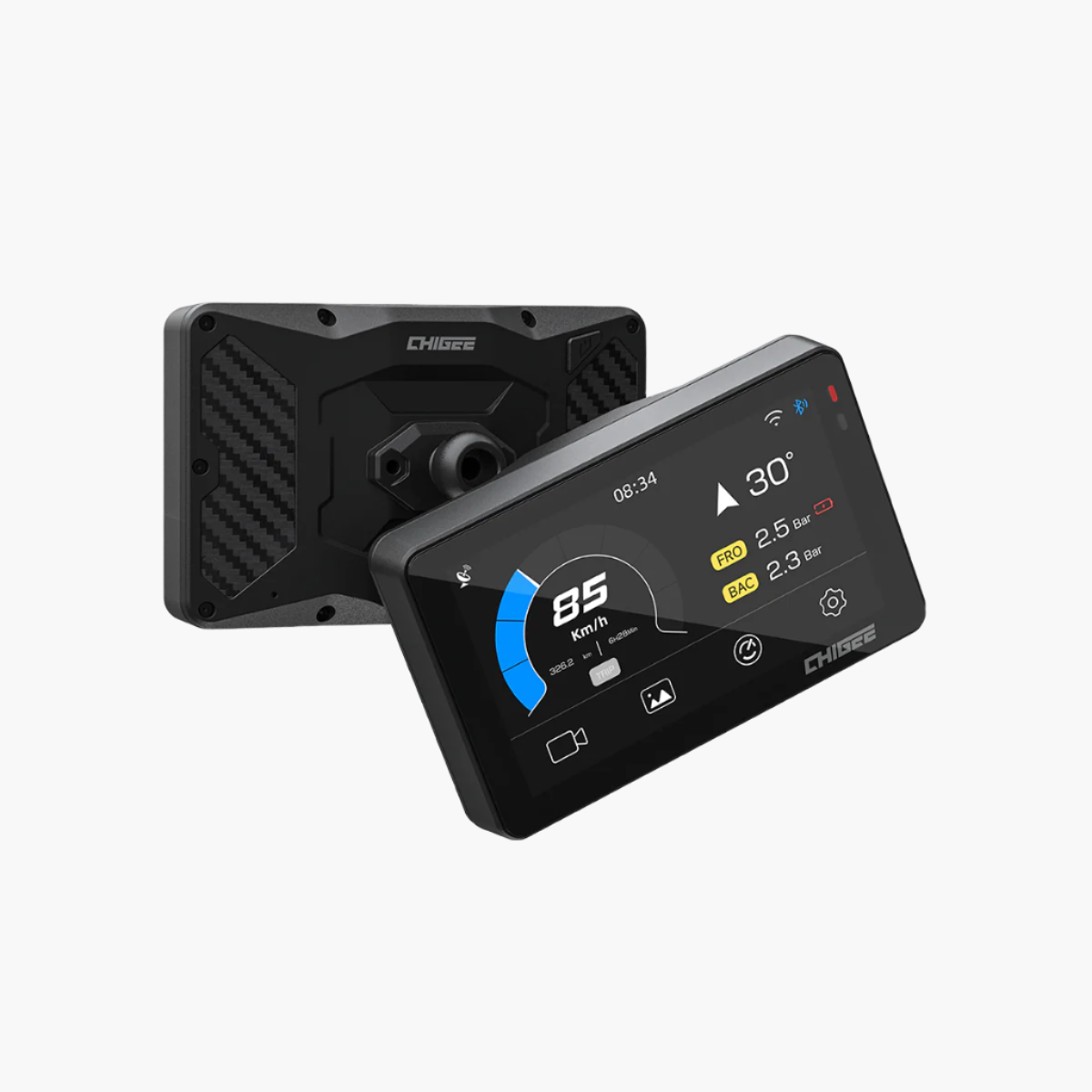
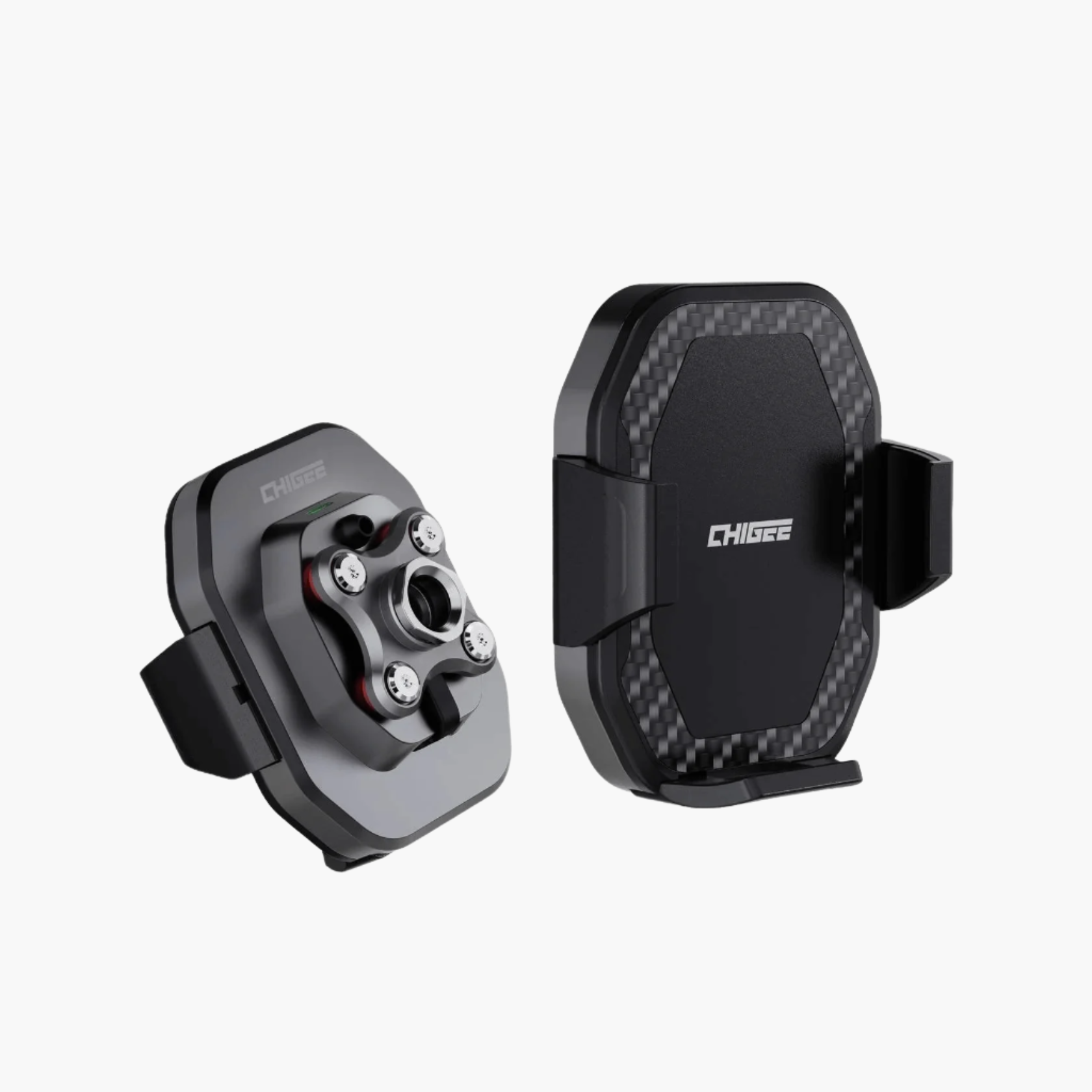
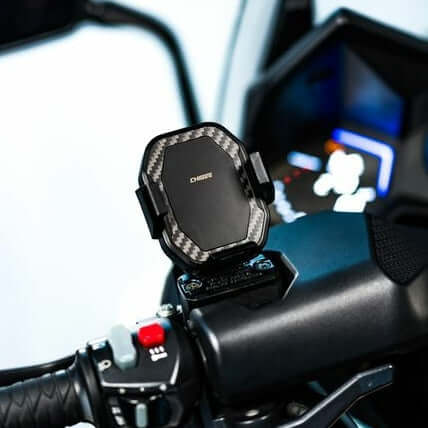
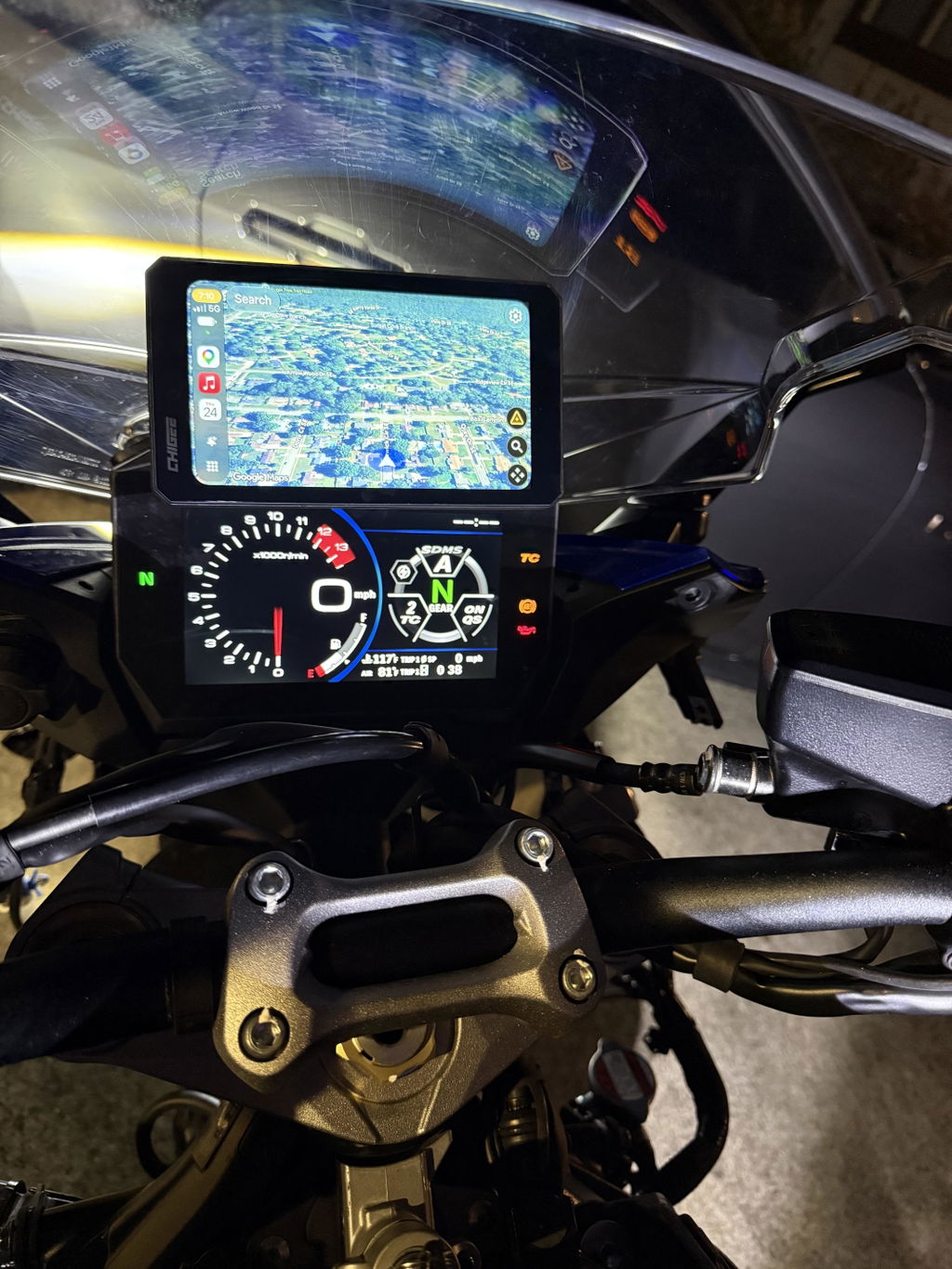
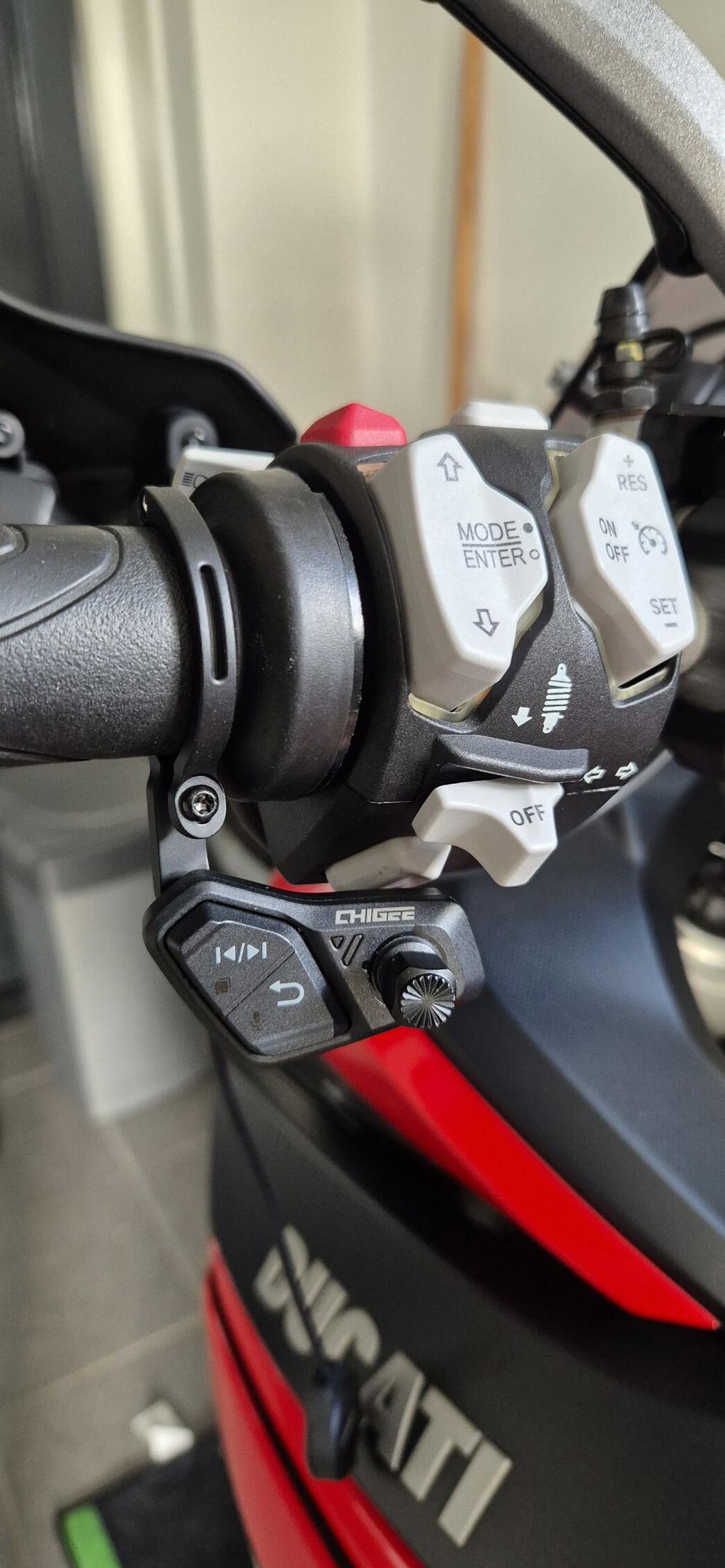
The CHIGEE SR-1 costs $219 and functions as a standalone unit from the first ride. The two included warning lights deliver visual Blind Spot Detection and Rear Collision Warning alerts without any paired display at all–BSD radar mirrors are an optional upgrade, not part of the base package. Pairing it with a CHIGEE AIO-6 or AIO-5 adds on-screen radar overlay via a dedicated BSD page, Apple CarPlay, Android Auto, and an optional dashcam add-on to the same bar mount–total system cost $679.

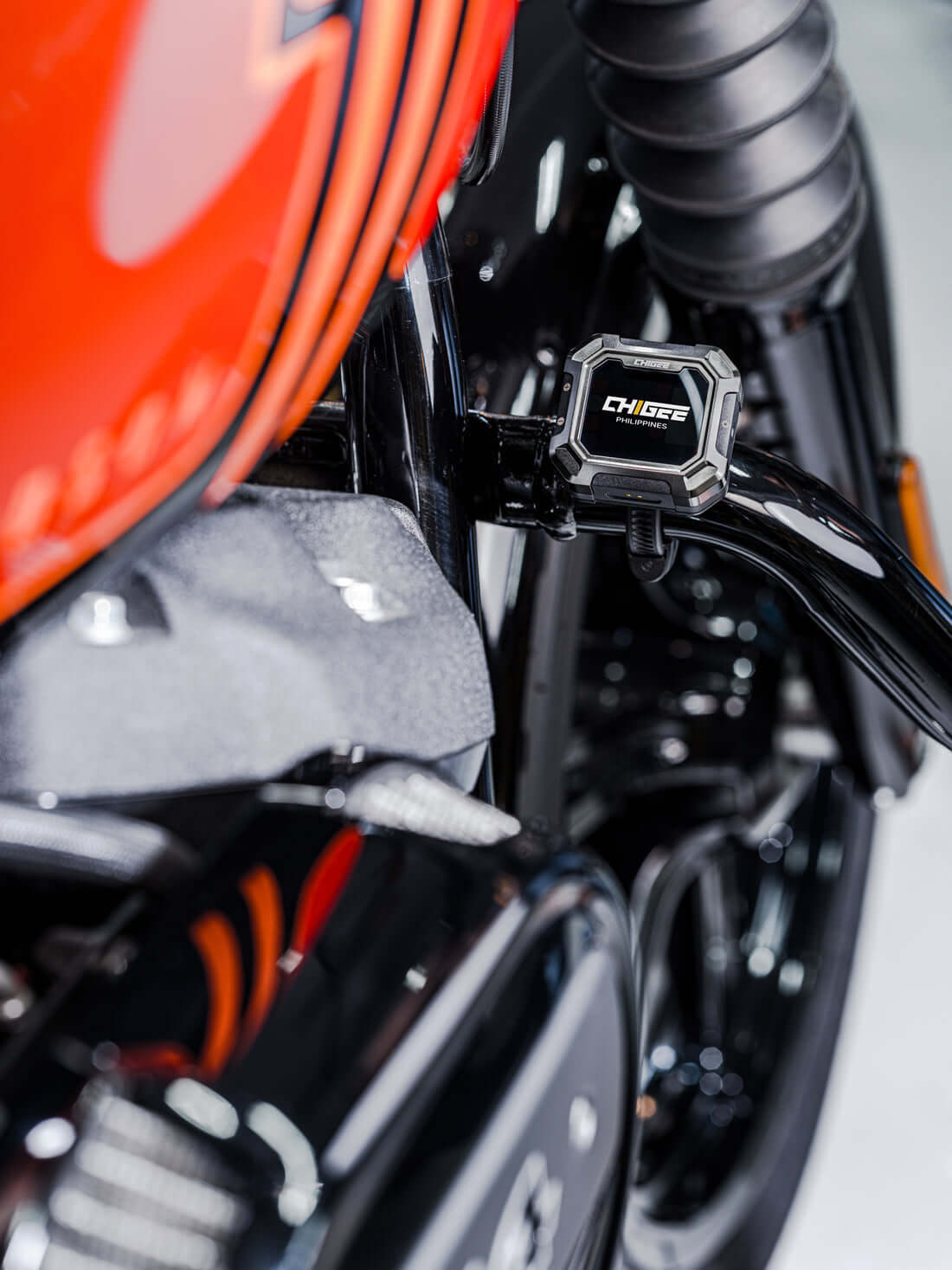
SR-1 adds radar blind-spot alerts for bar-end mirror riders, improving awareness on highways with limited mirror coverage.
Garmin's brand carries real weight in navigation hardware, and the R1 is genuinely well-built at IP67. At $599.99 for the radar alone, the cost-to-capability ratio doesn't hold up.
Four Modes Running at Once
The Garmin zūmo R1 covers two scenarios: blind spot monitoring and rearview detection. The SR-1 runs four simultaneous warning algorithms–Blind Spot Detection (BSD), Active Overtake Alert (AOA), Lane Change Assist (LCA), and Rear Collision Warning (RCW)–each tuned to a distinct riding moment, all active without any mode switching required.
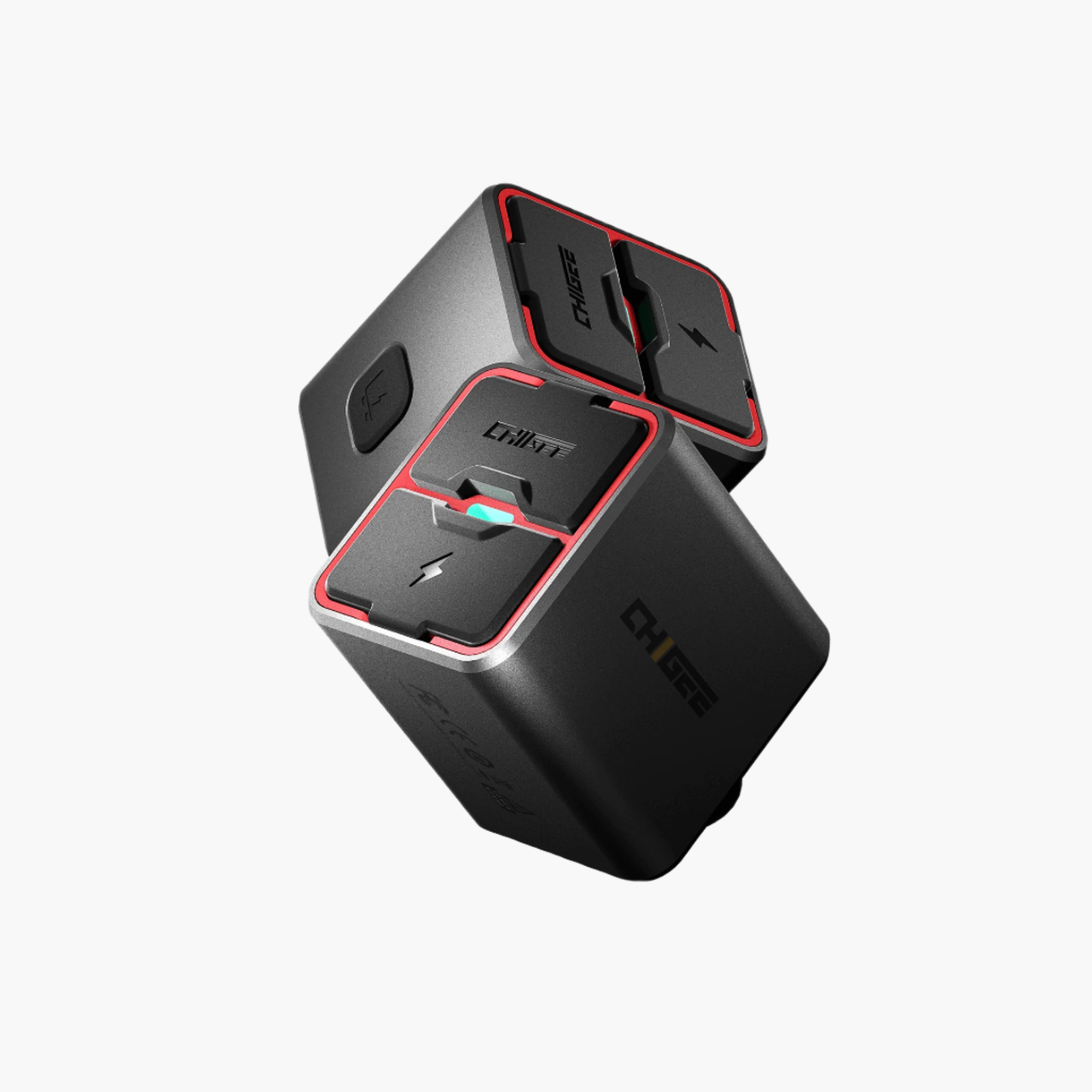
The RCW is the mode that earns its place on a highway. The moment the SR-1 detects a vehicle closing fast from behind, it fires a warning to the rider and simultaneously flashes the strobe built into the radar module toward the approaching driver. Garmin's R1 includes a rear-facing warning light as well, but it ships with that function disabled by default because the feature may not be legal in all jurisdictions. Riders can enable or disable the warning light through the device or app settings where permitted. By contrast, the SR-1's rear strobe is enabled by default and active immediately after installation.

CHIGEE SR-1 displaying Active Overtake Alert (AOA) during an overtaking detection scenario.
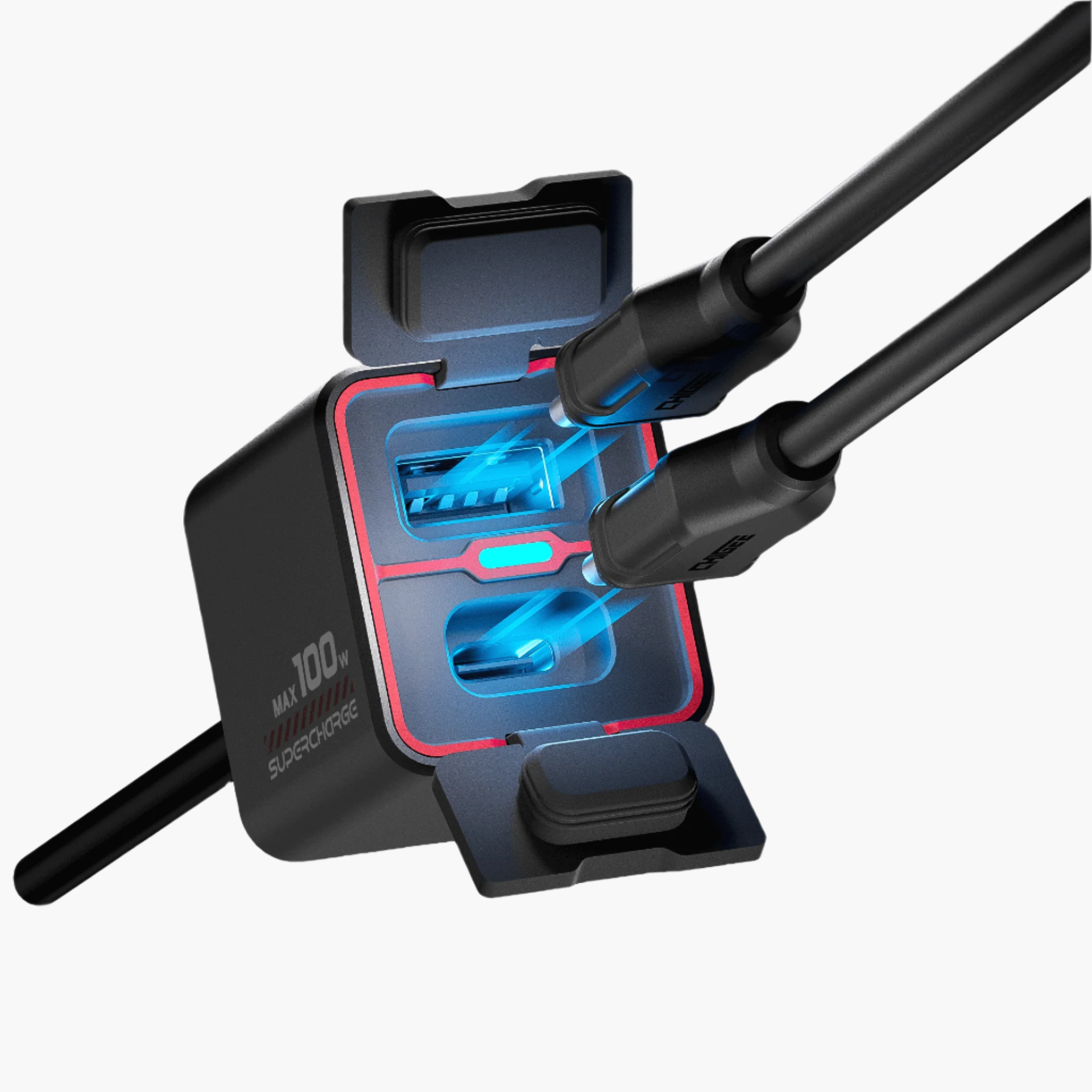
The SR-1's 77GHz millimeter-wave radar resolves distance and relative speed at millimeter-level accuracy, its IP68/IP69 rating handles sustained submersion and high-pressure washing, and detection range reaches 70 meters at a 15 Hz refresh rate.
One Screen vs. Two Devices
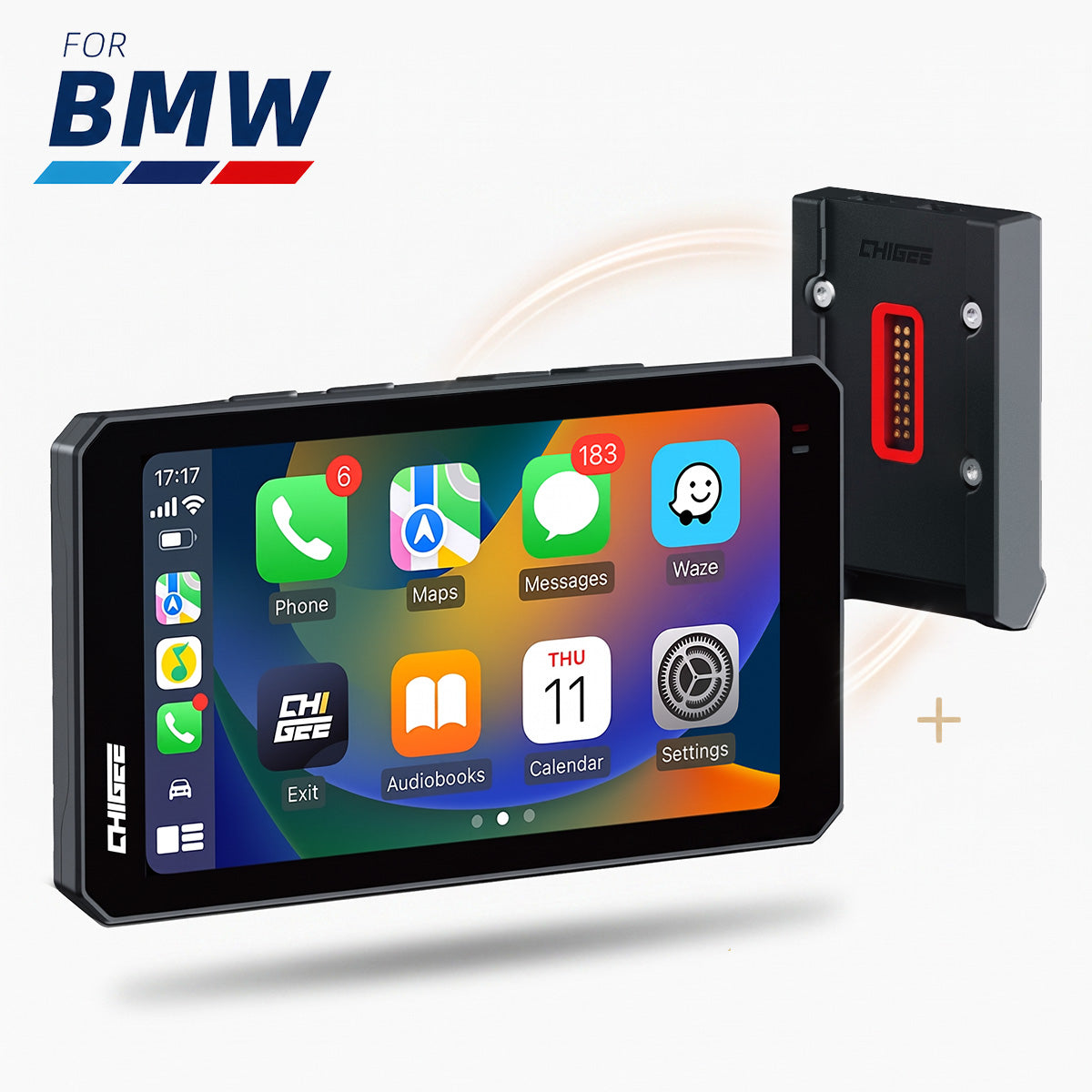
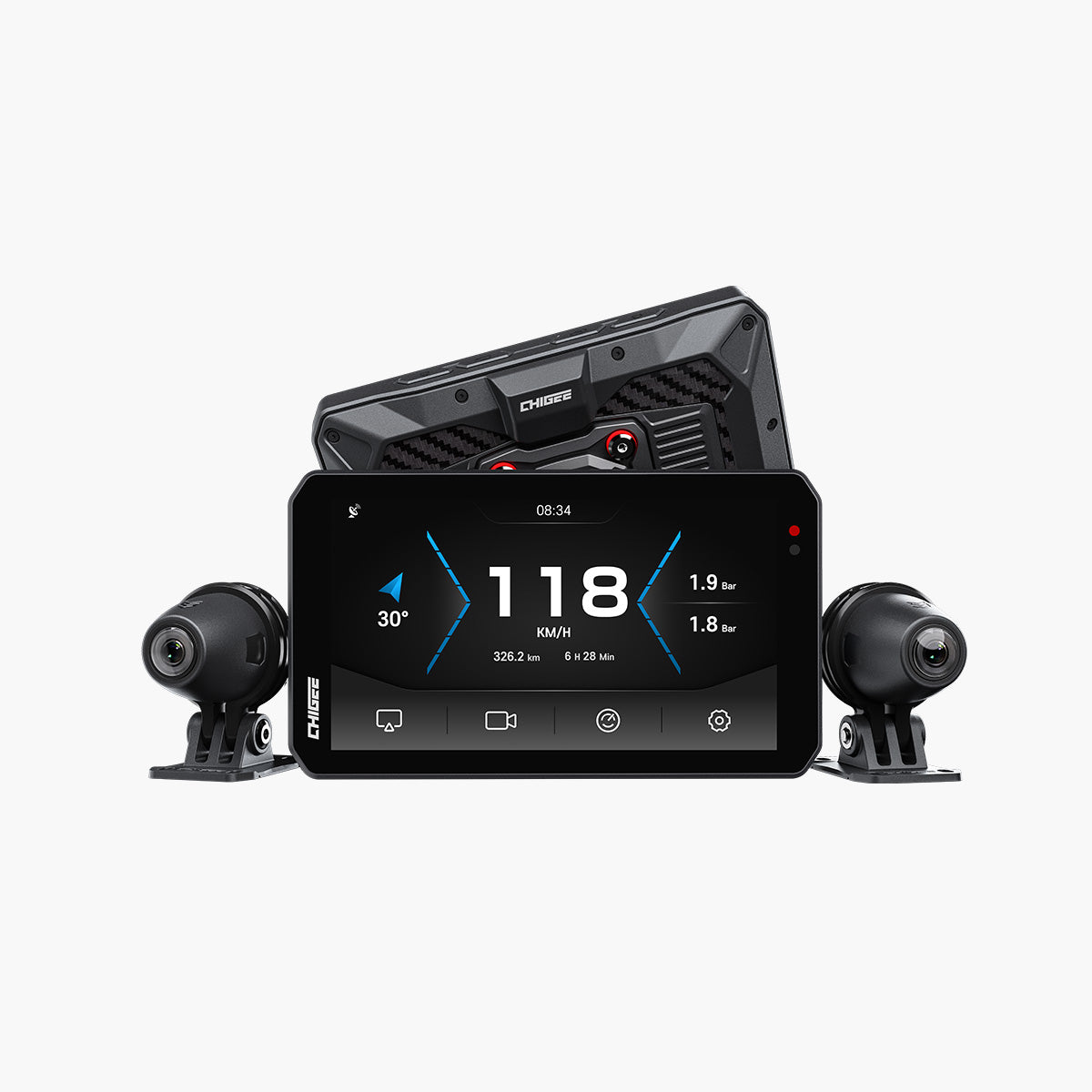
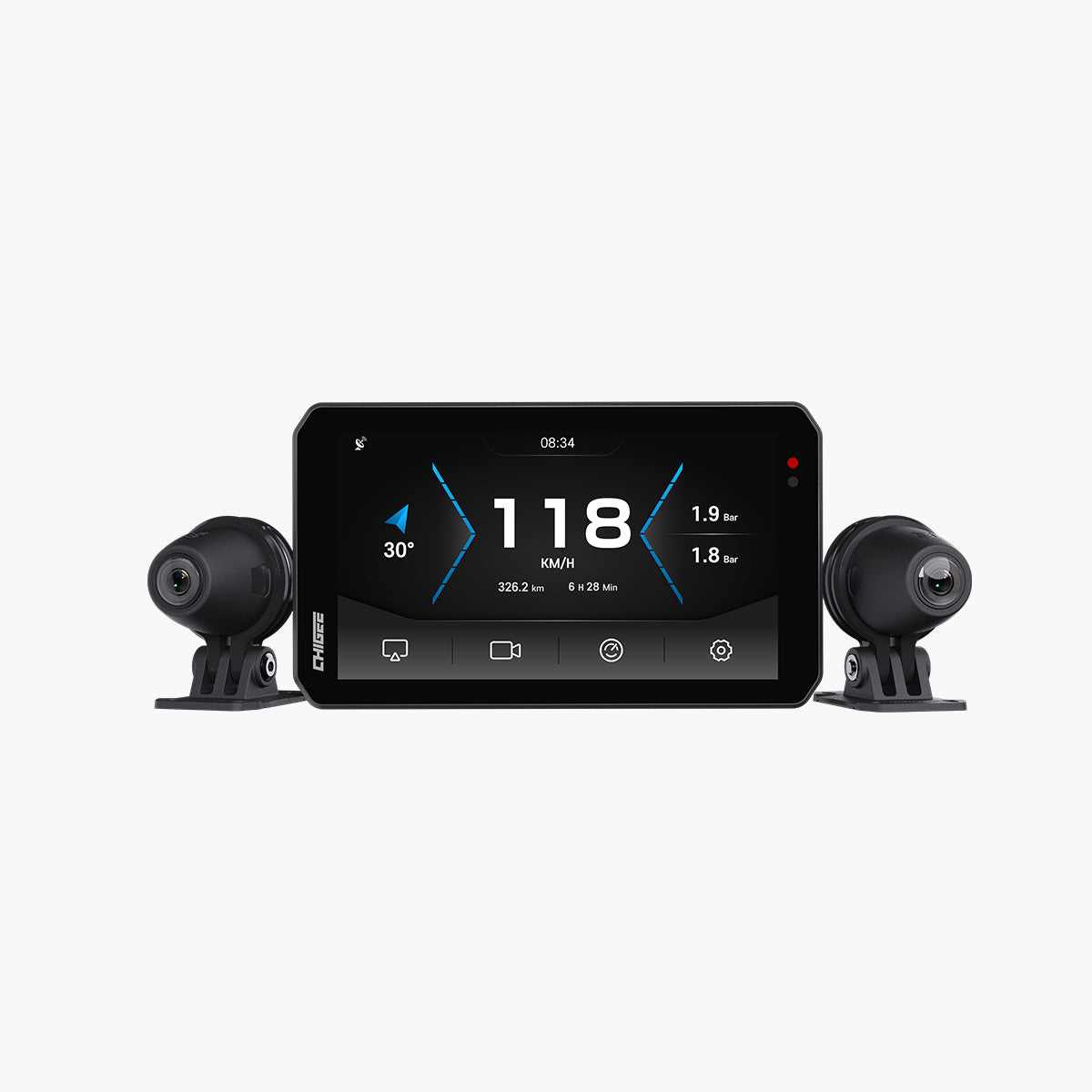
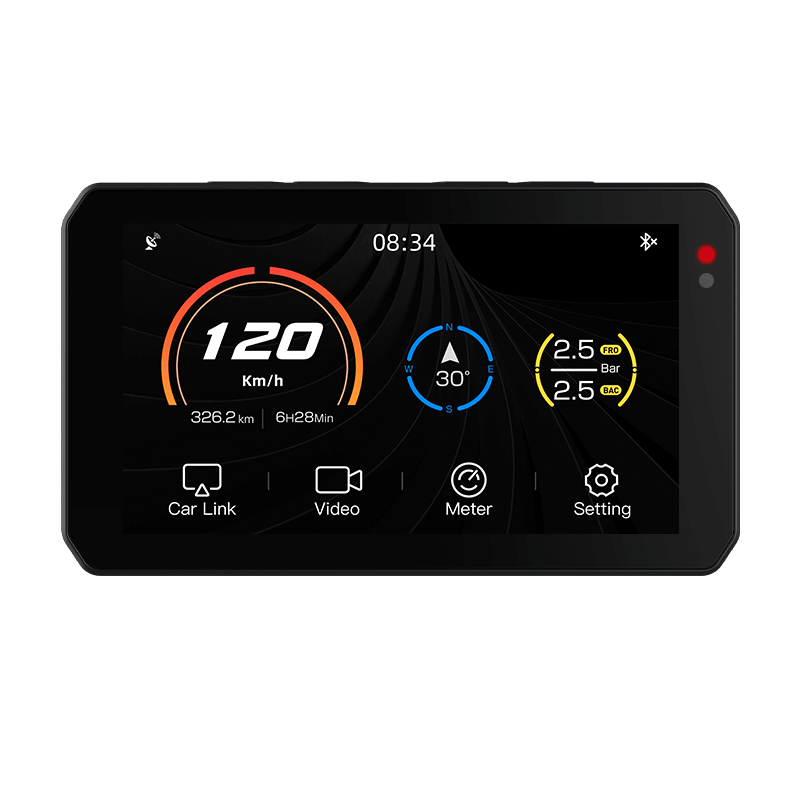
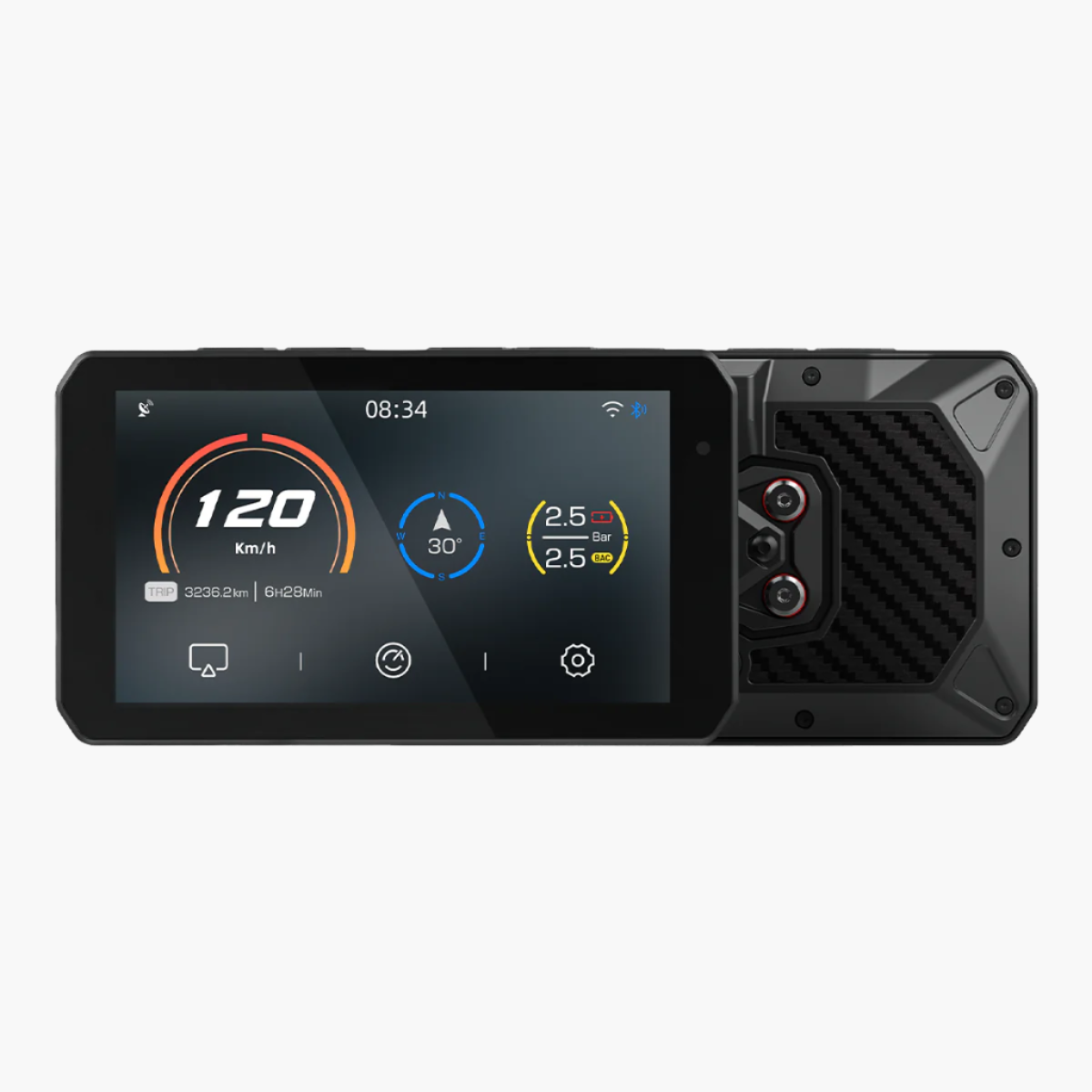
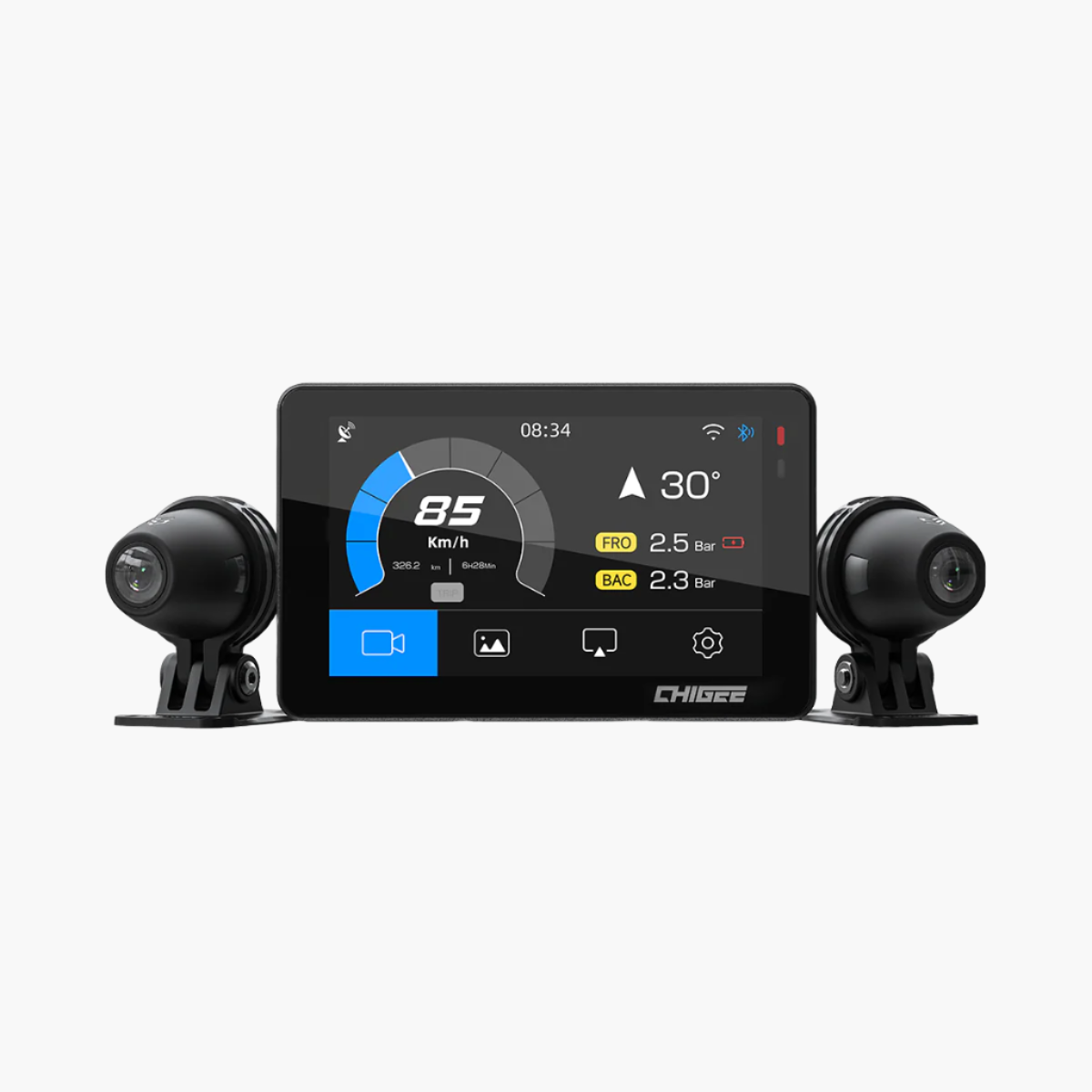
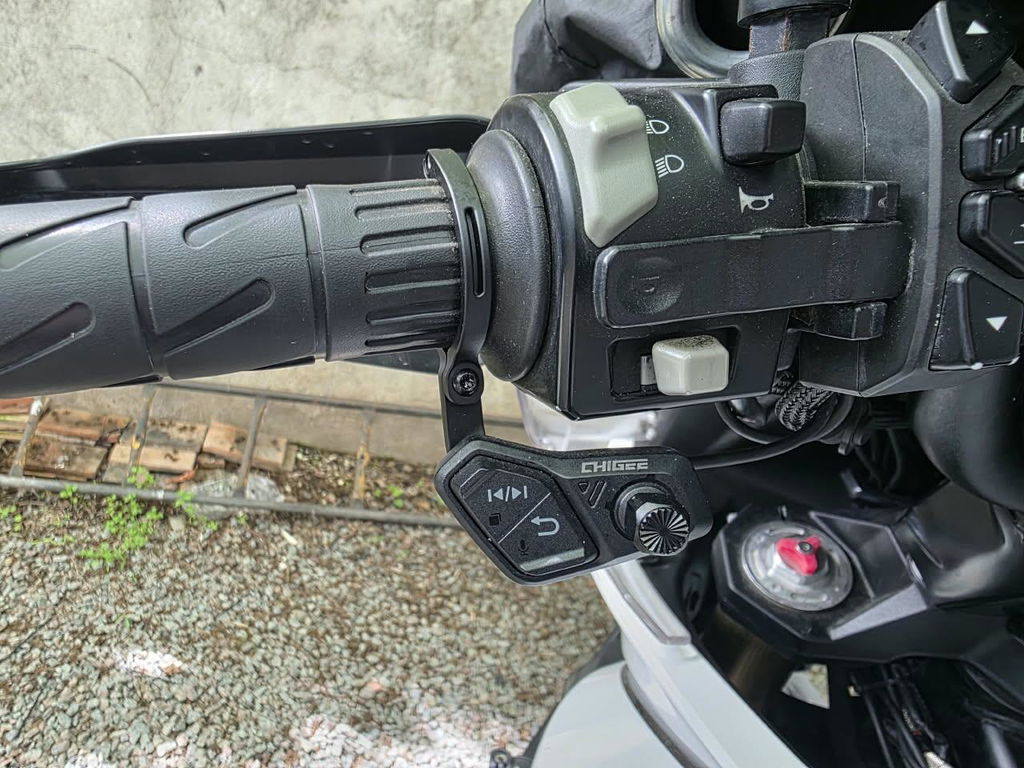
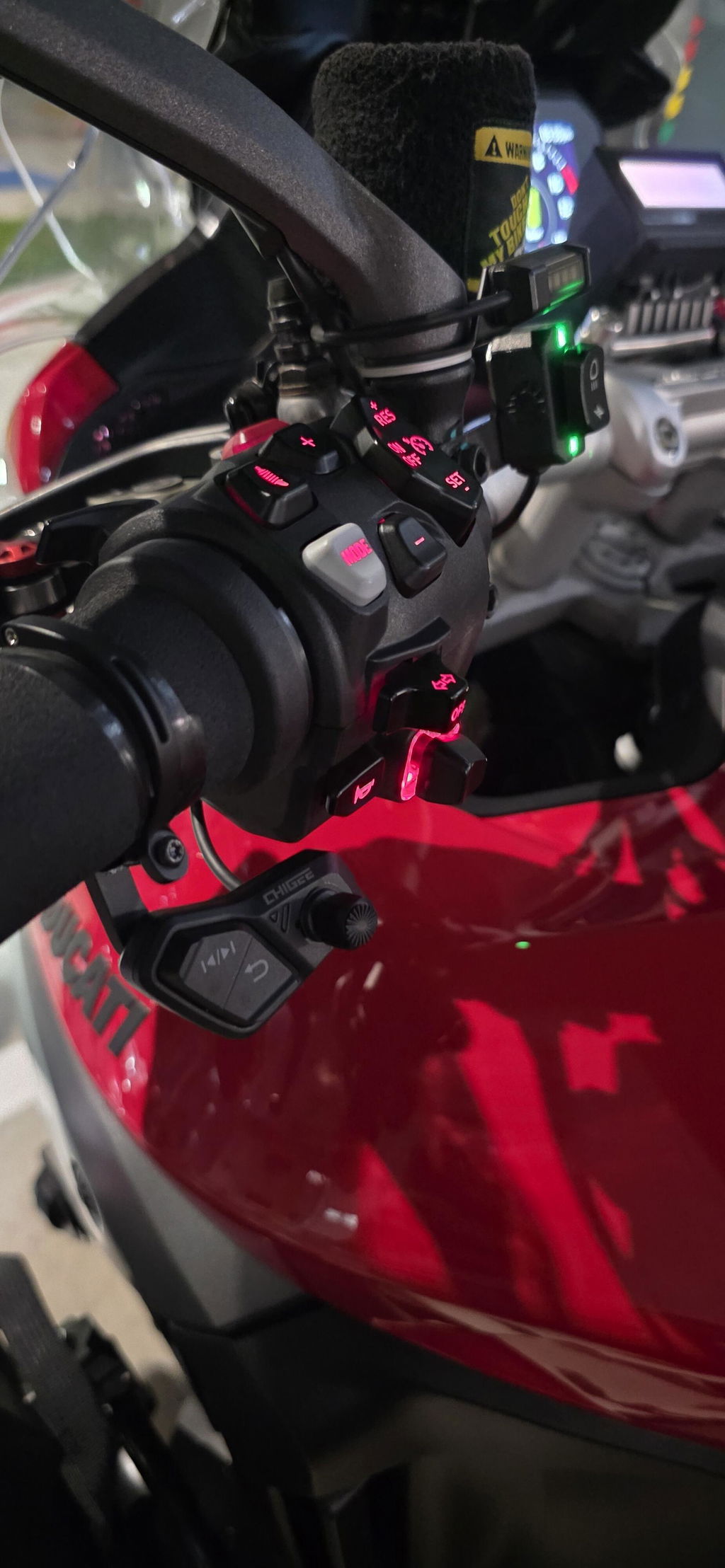
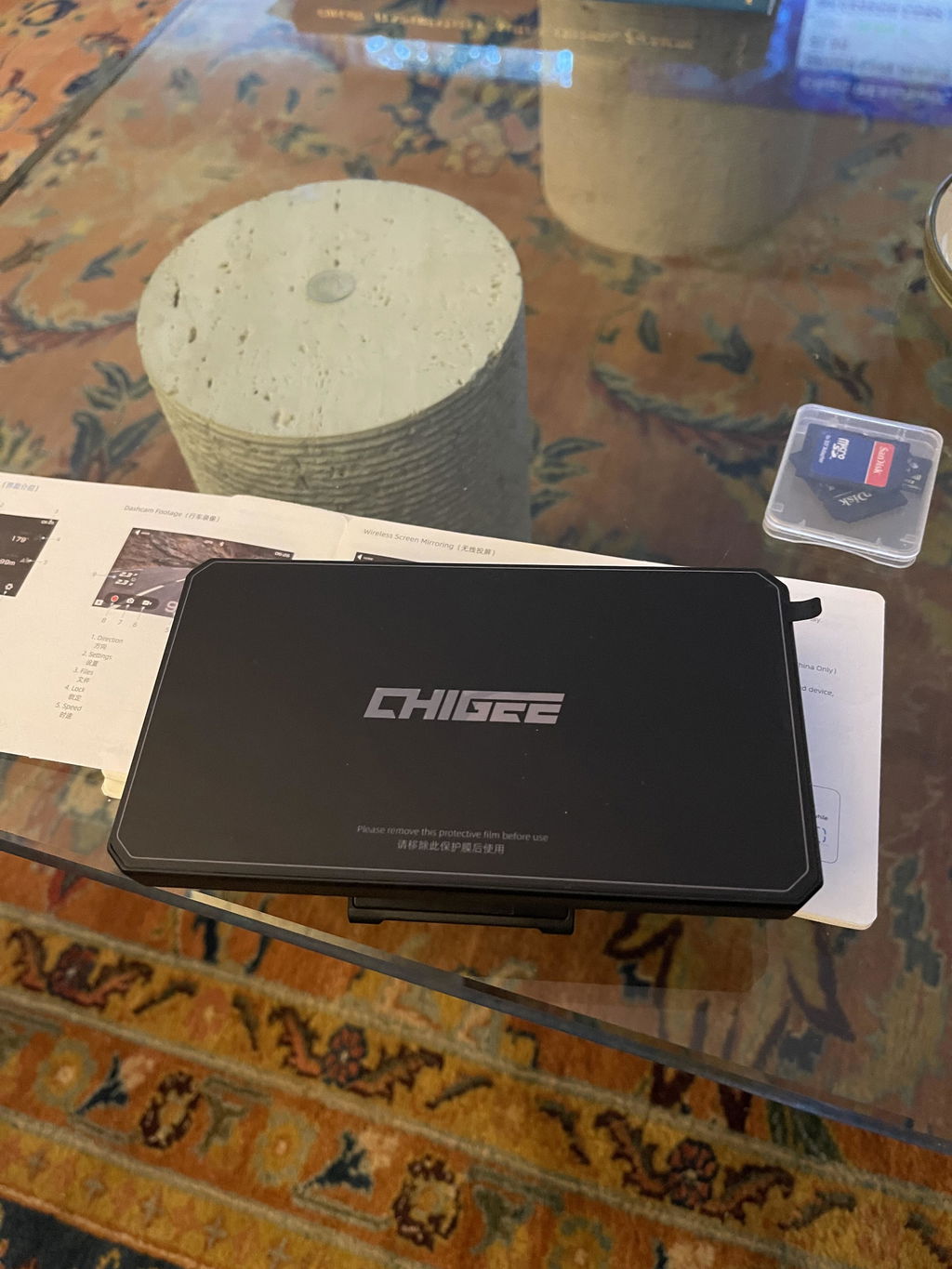
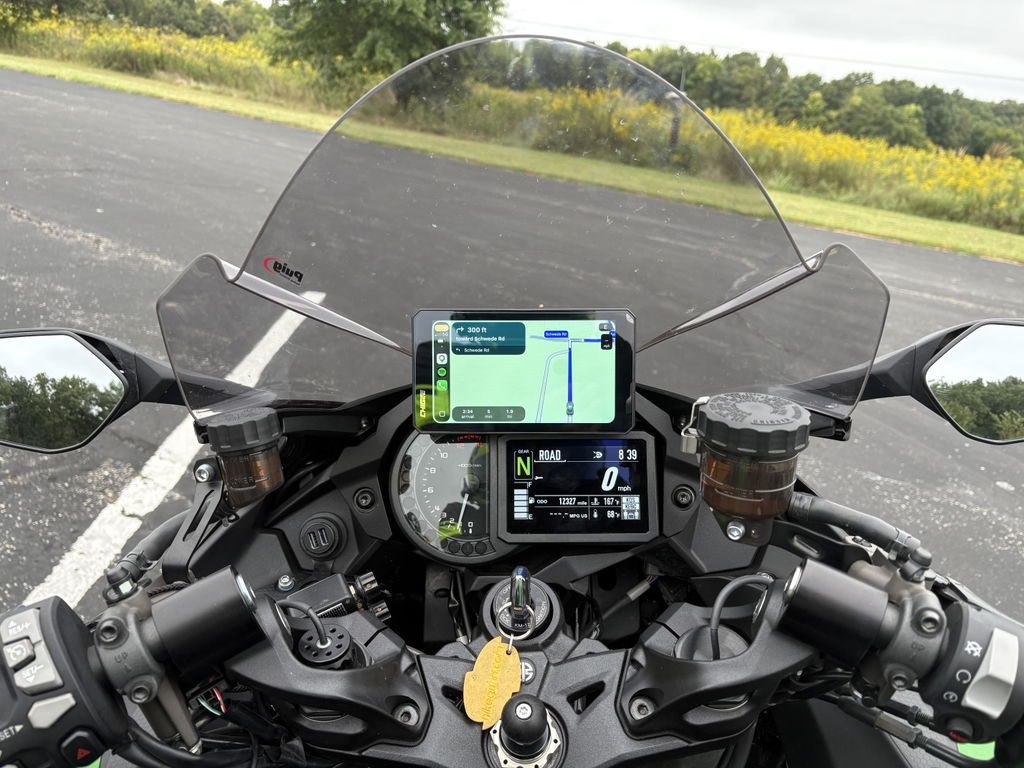
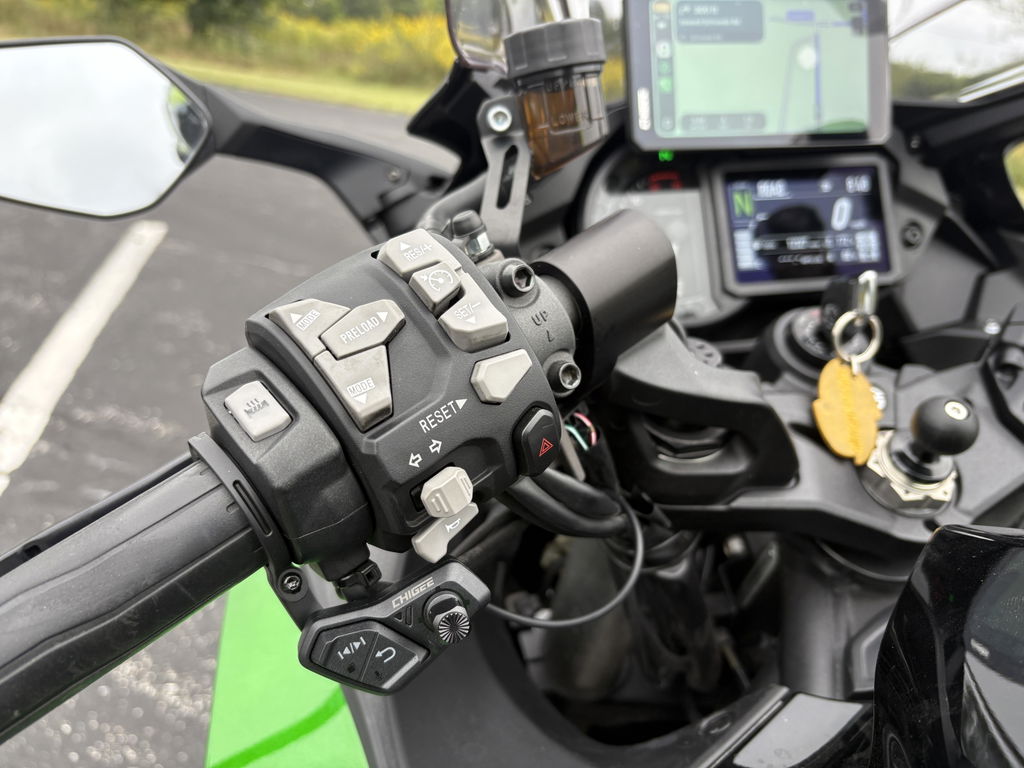
Garmin's ecosystem routes radar data through a phone app or a dedicated zūmo XT2–two separate devices on the bars, two power connections, two potential failure points on a long day in the heat. The CHIGEE AIO-6 or AIO-5 or AIO-5 consolidates radar overlay, turn-by-turn navigation via CarPlay, and an optional dashcam into one screen that powers on with the ignition. Riders who want built-in SOS emergency calling can step up to the AIO-6 LTE, which adds 4G connectivity via a SIM card.
The SR-1 also runs completely standalone for riders who don't want a display at all. The warning lights handle BSD and RCW alerts visually without any paired device–which makes it a low-friction entry point for a naked bike or a machine where bar space is already committed. If you already run a CHIGEE AIO-5 or AIO-6, pairing the SR-1 unlocks a dedicated BSD page on your existing display with no additional hardware required.

CHIGEE SR-1 ecosystem integrates radar, navigation, and dashcam into one setup or runs standalone, no subscriptions required.
No subscription fees apply to the CHIGEE ecosystem. Navigation runs through your existing phone apps, and the radar needs no ongoing plan to function.
FAQ
Does the CHIGEE SR-1 work without a display?
Yes. The SR-1 ships with two standalone warning lights that deliver visual BSD and RCW alerts without any paired screen. Audio alerts and the dedicated on-screen BSD page require a compatible CHIGEE AIO-5 or AIO-6 display, but the radar's core detection runs from the moment the bike starts. BSD radar mirrors are an optional upgrade–before ordering, confirm whether your bike's mirrors are removable and whether they use M10 standard or reverse threads. CHIGEE offers both round and angular mirror shapes to match your cockpit aesthetic.
Does the Garmin zūmo R1 require the XT2 navigator?
Not strictly, but the experience is meaningfully reduced without it. Full-screen radar display and audio alerts through a headset require either the zūmo Radar smartphone app or the zūmo XT2. The R1 functions with just the handlebar indicator lights, but riders expecting the complete advertised experience should budget for both.
Which system has better weatherproofing?
The SR-1 is rated IP68/IP69, covering sustained submersion and high-pressure washing. The zūmo R1 carries IP67, which handles rain and splashing but falls short of the SR-1's threshold. For riders in wet-climate or monsoon-prone regions, that margin is worth factoring in.
Does the CHIGEE AIO-6 or AIO-5 replace a dedicated GPS navigator?
Yes. Apple CarPlay and Android Auto run natively on the AIO-6, so Google Maps, Waze, or any navigation app on your phone displays directly on the bar-mounted screen with no map subscription required. Garmin's full navigation experience ties to proprietary maps and devices, adding ongoing cost the AIO avoids entirely.
The Numbers Resolve It
Garmin entering the motorcycle radar category is a net positive for riders–it validates a safety gap that has existed in the aftermarket for years. The zūmo R1 is a capable, well-engineered device from a brand with a long track record in navigation.
At $219, the CHIGEE SR-1 delivers four active warning modes, IP68/IP69 protection, a dual-direction rear strobe, and clean integration into a display that already handles navigation and CarPlay–at a combined system cost $521 less than a full Garmin radar and navigator setup at MSRP. For riders building a complete cockpit, the CHIGEE AIO-6 or AIO-5 paired with the SR-1 is where that math lands cleanly.
About the Author
Reuben Cabrera is a content writer based in the Philippines, writing for Power. Handle. Throttle. On Long Roads. – a motorcycle gear and technology publication focused on testing in real conditions. With 60,000+ kilometers logged on a 1990 Yamaha XJR 400 and Keeway CR152 across tropical heat, monsoon roads, and mountain cold, his reviews are earned through road time. Follow his work on YouTube and TikTok.






Leave a comment
All comments are moderated before being published.
This site is protected by hCaptcha and the hCaptcha Privacy Policy and Terms of Service apply.