



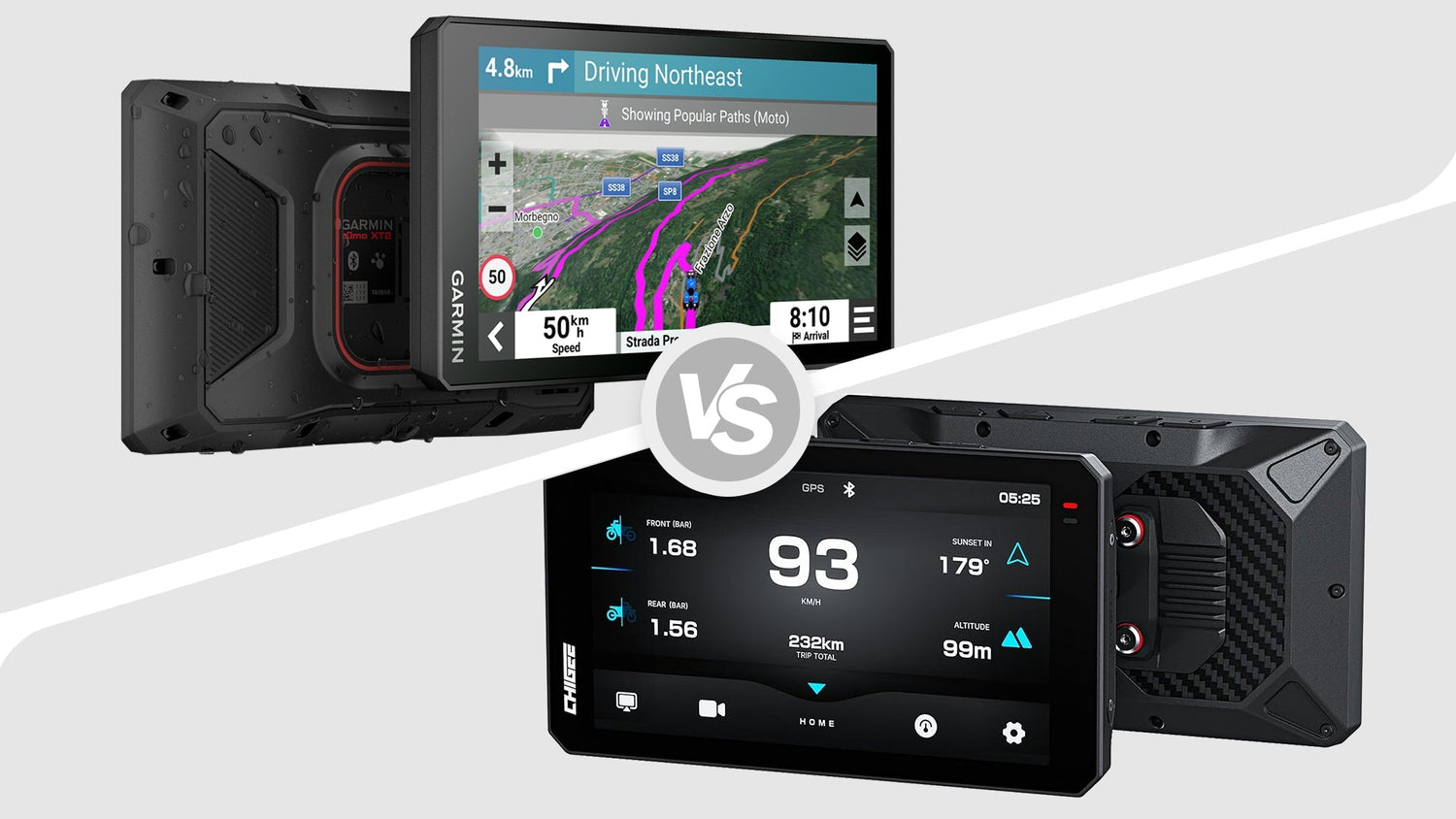
I never owned a Garmin Zumo, but I’ve spent enough time inside the Garmin ecosystem through cycling to understand how it approaches navigation. Devices like the Garmin Edge rely on preloaded or downloadable maps that live offline on the unit itself, designed for reliability over real-time responsiveness.
That approach works well on long rides and planned routes but in a packed urban commute, that same offline-first system can feel a step behind when conditions change in real time. When I swapped to the CHIGEE AIO-6, the difference showed up on the first morning.

Garmin favors offline reliability for touring; CHIGEE AIO-6 feels faster in urban rides with real-time phone-based routing.
This isn’t a spec sheet war. Both devices are serious hardware for serious riders. What matters when you're ready to spend real money is knowing which one fits how you actually ride.
How to Evaluate a Motorcycle Navigator in 2026
The old benchmarks still matter: durability, map coverage, mount stability. But they're no longer the primary differentiators. In 2026, the evaluation comes down to screen readability at speed, live vs. offline connectivity, ecosystem depth, and total cost of ownership over three years. Map update costs, accessory fees, and cloud service subscriptions add up fast and rarely get factored in at purchase.
CHIGEE AIO-6 Max (~$479)
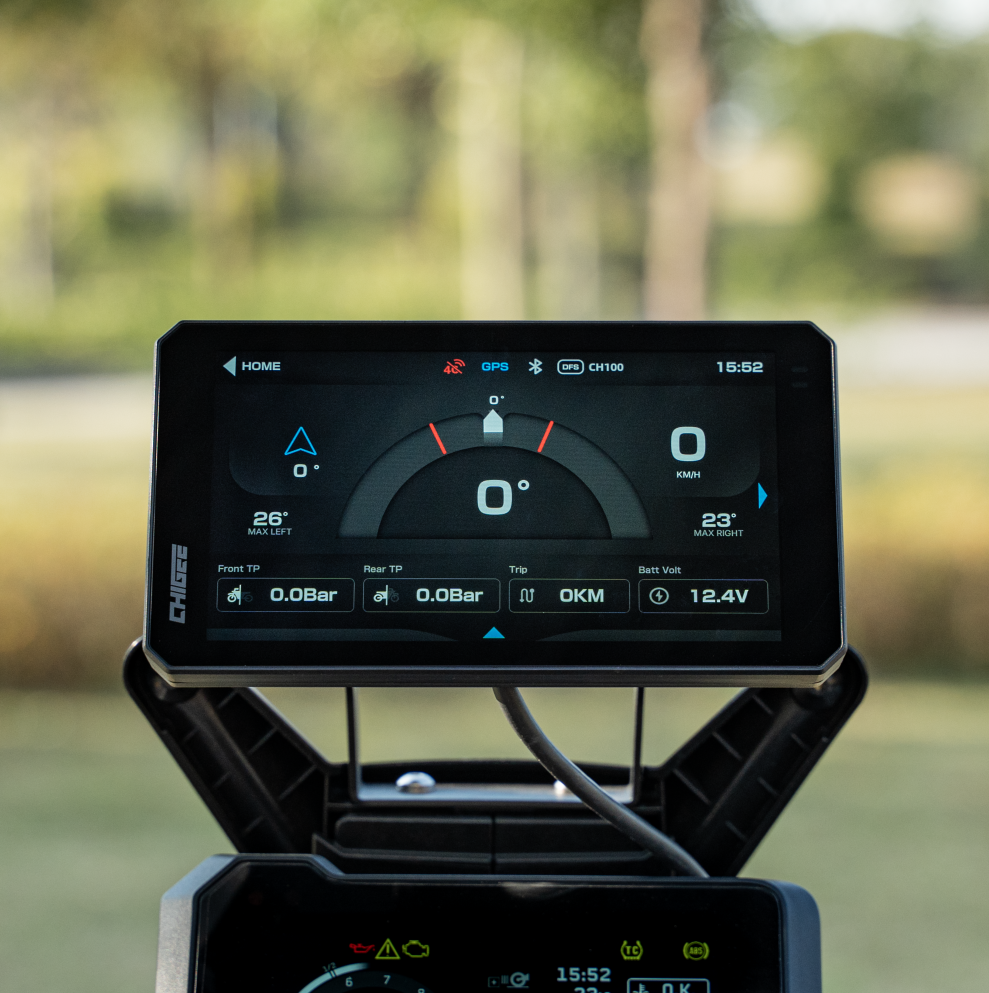
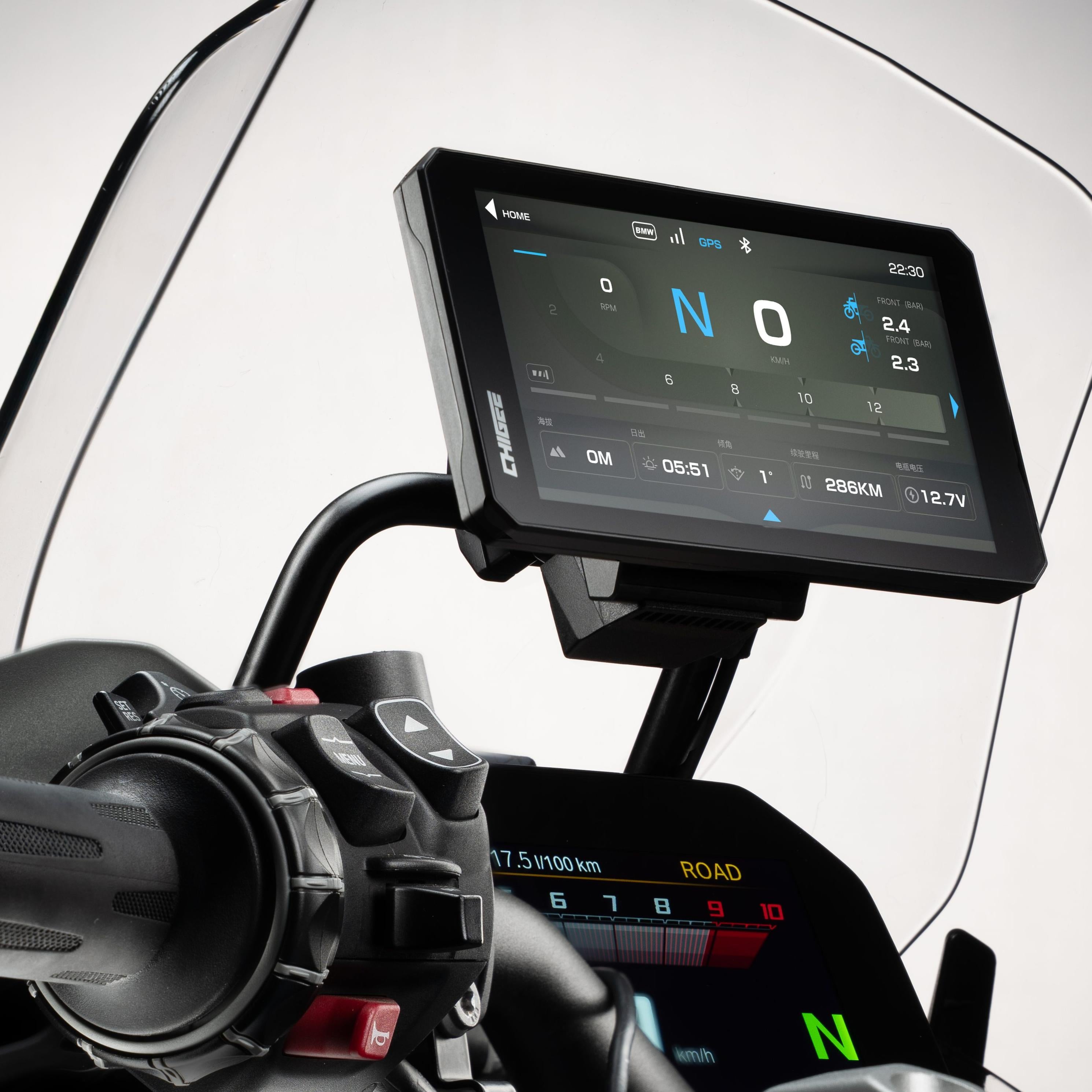
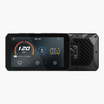
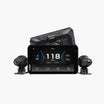
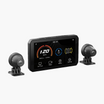
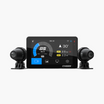
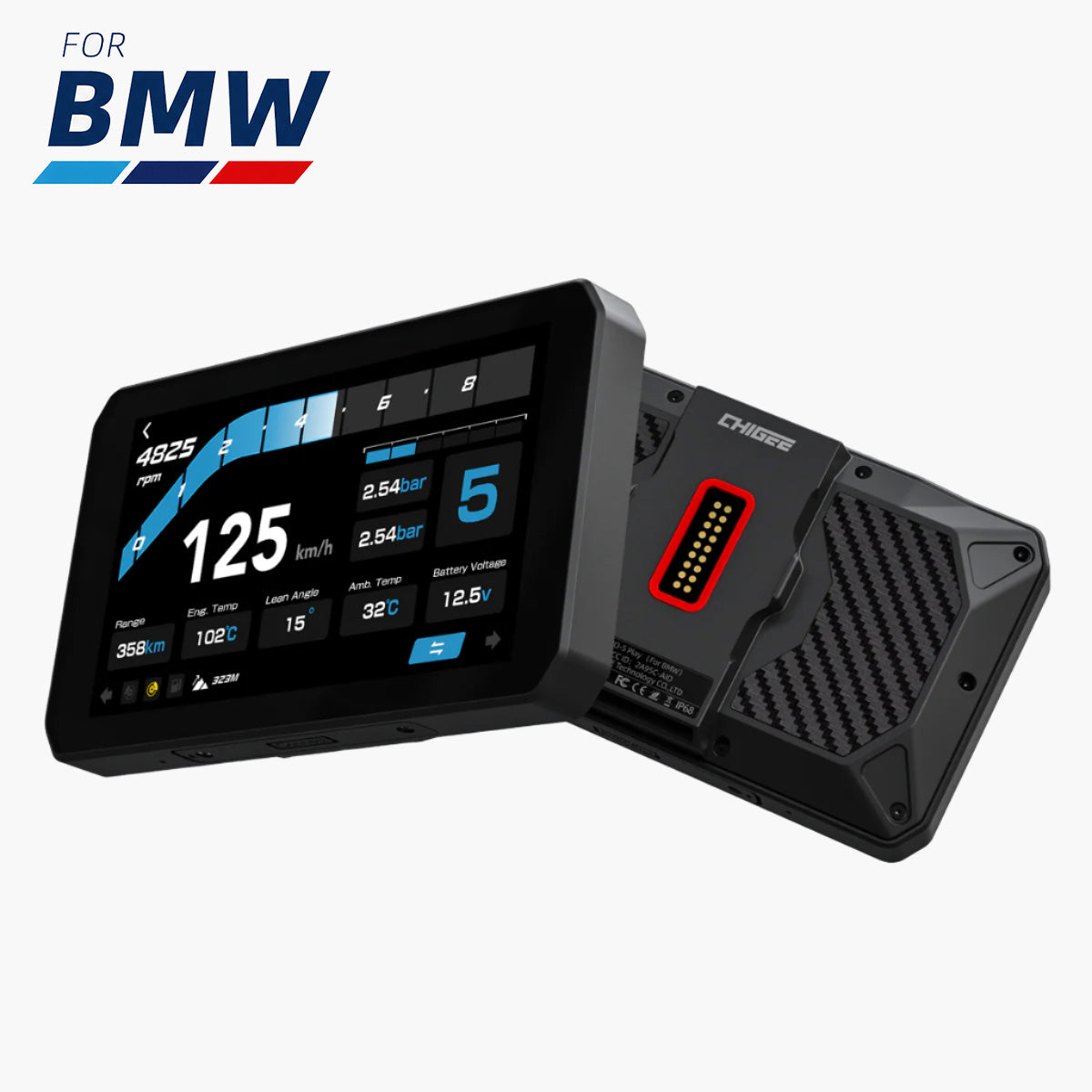
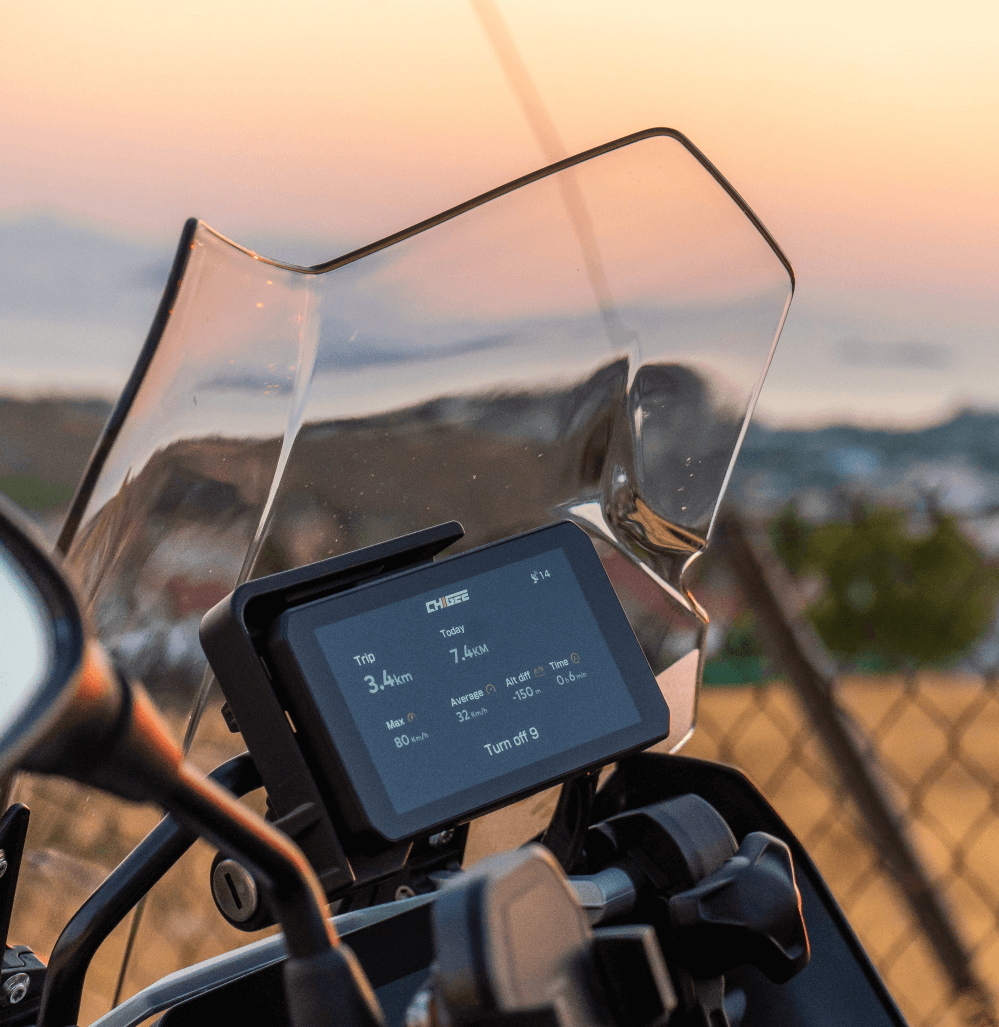
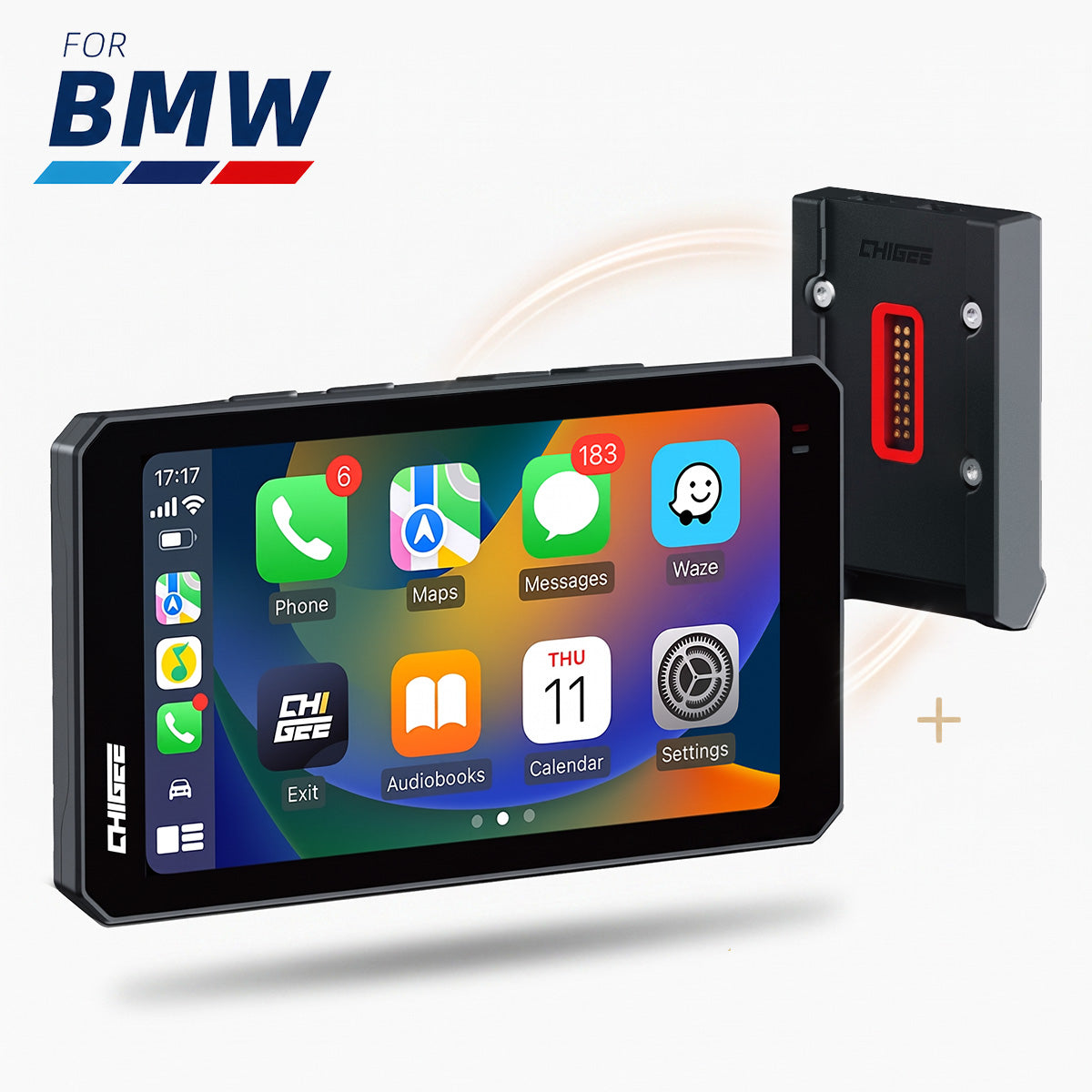
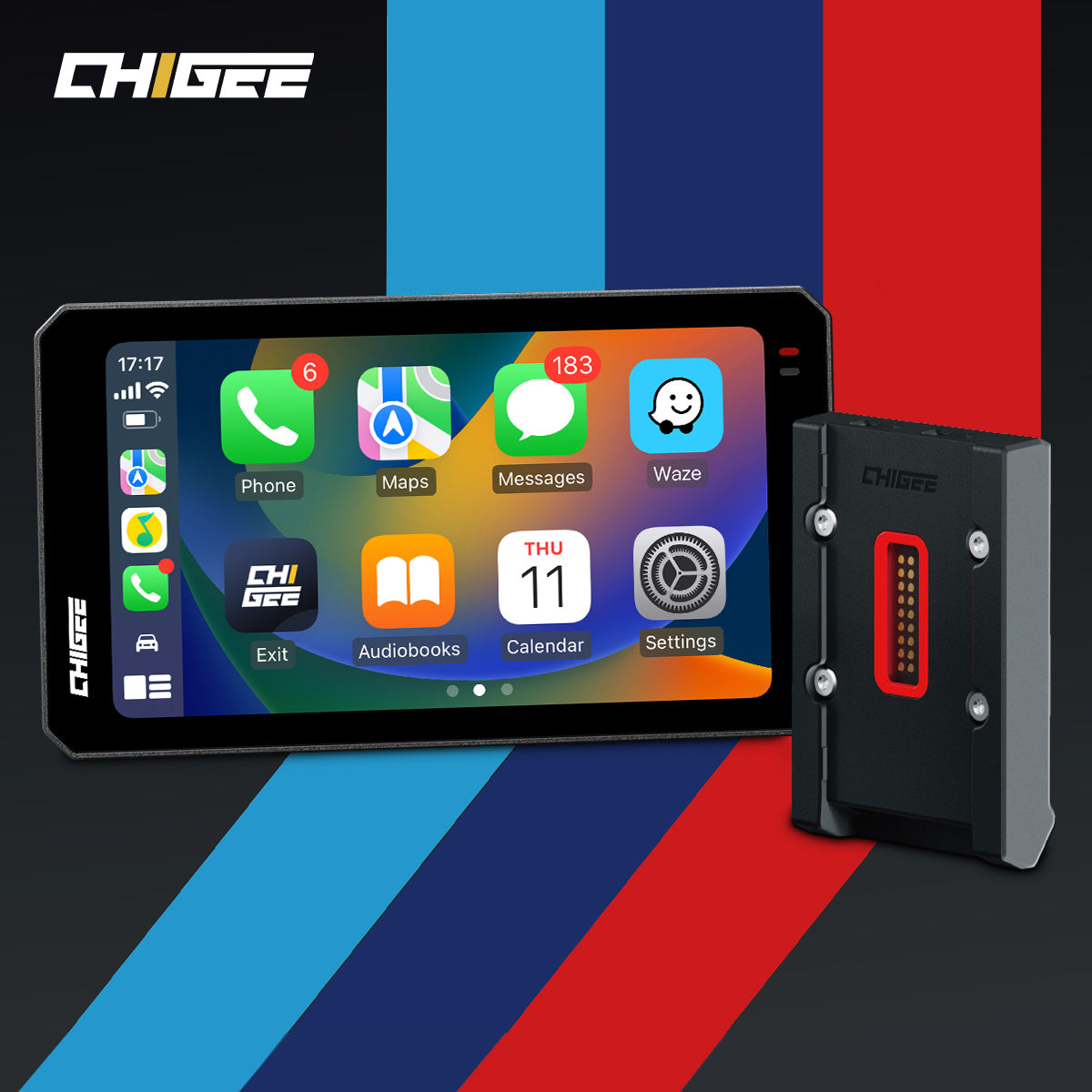
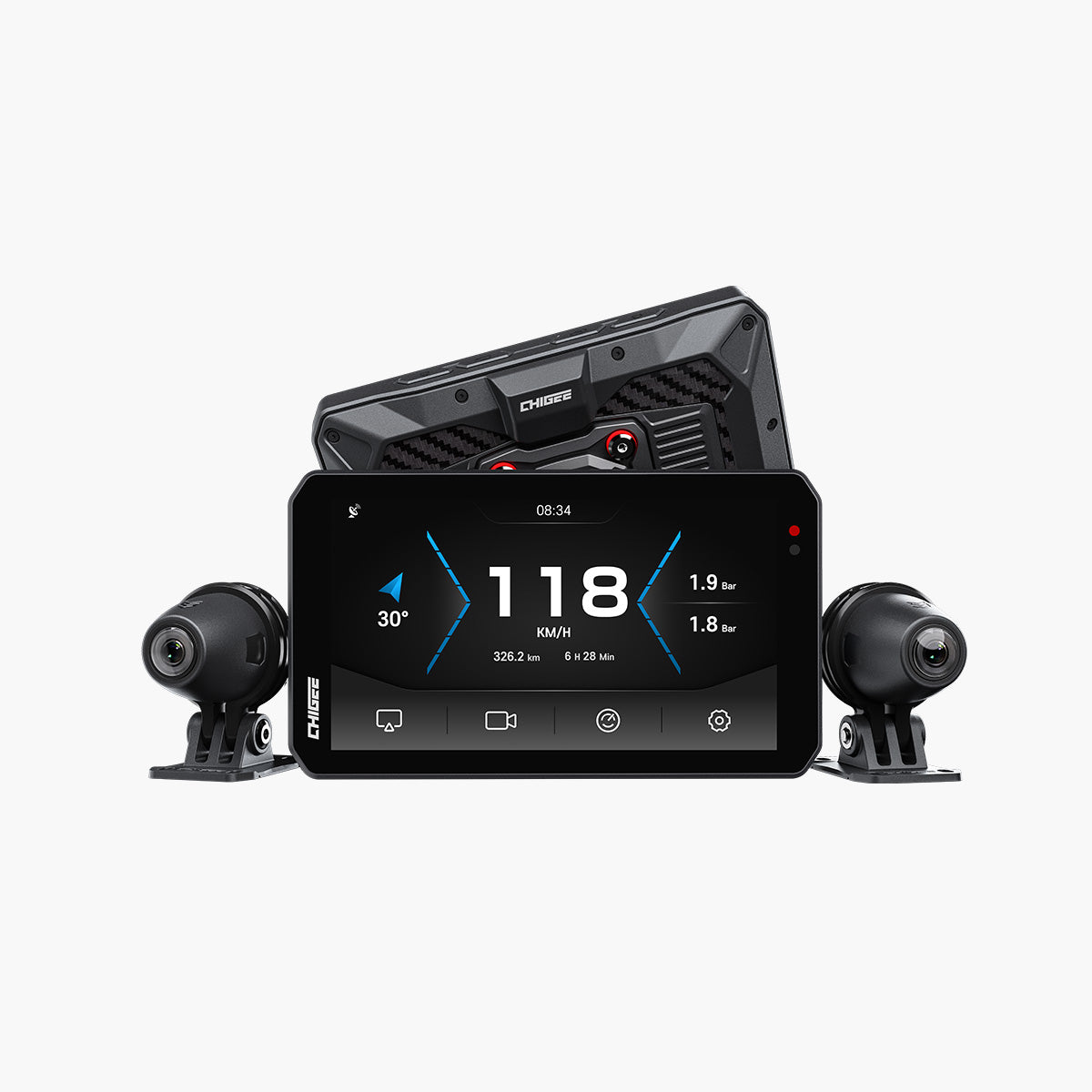
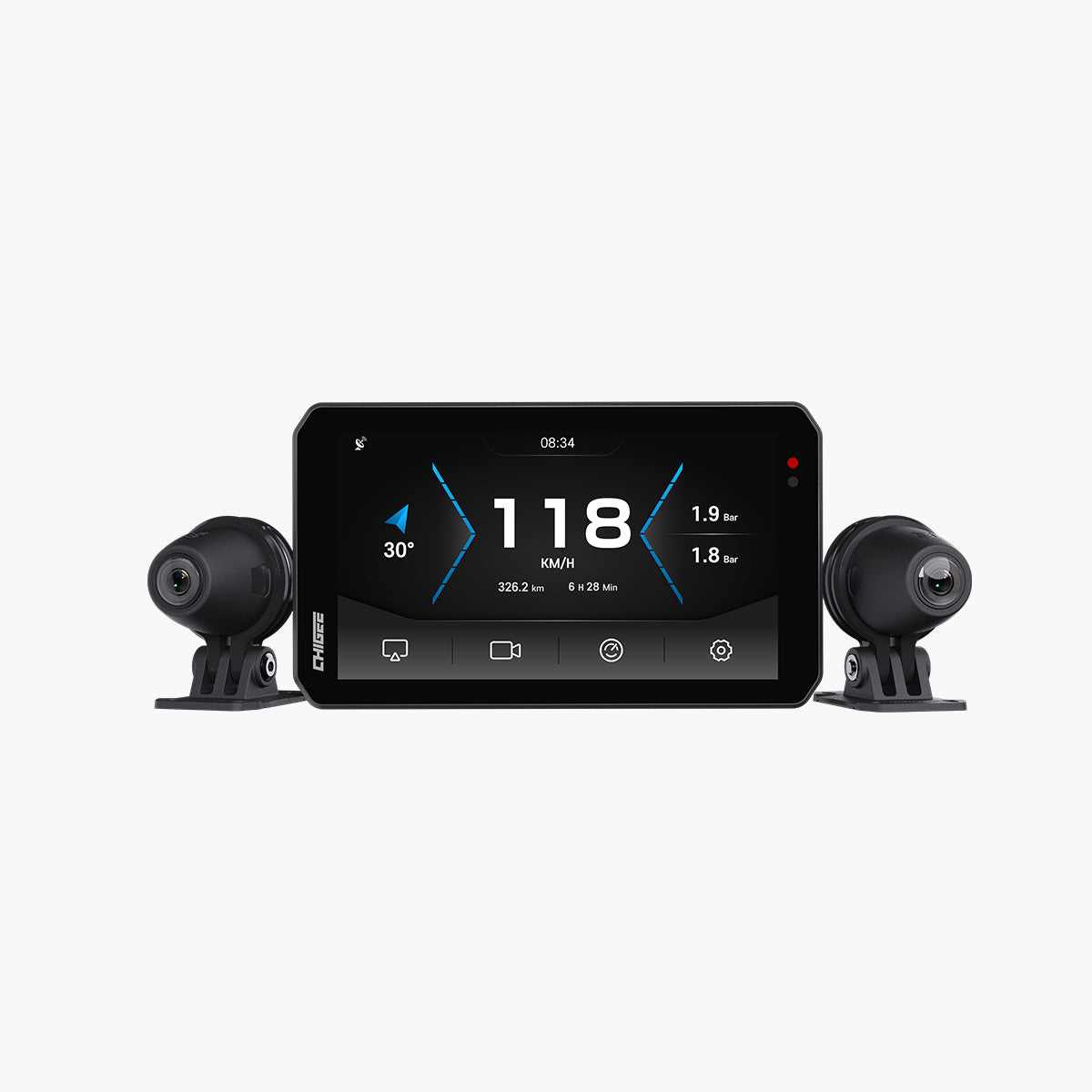
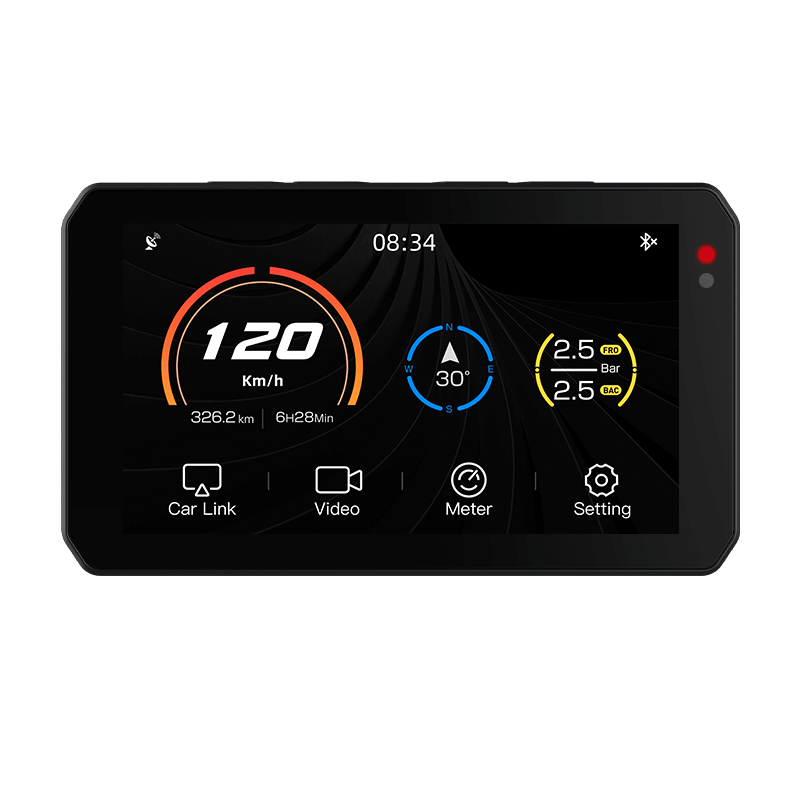
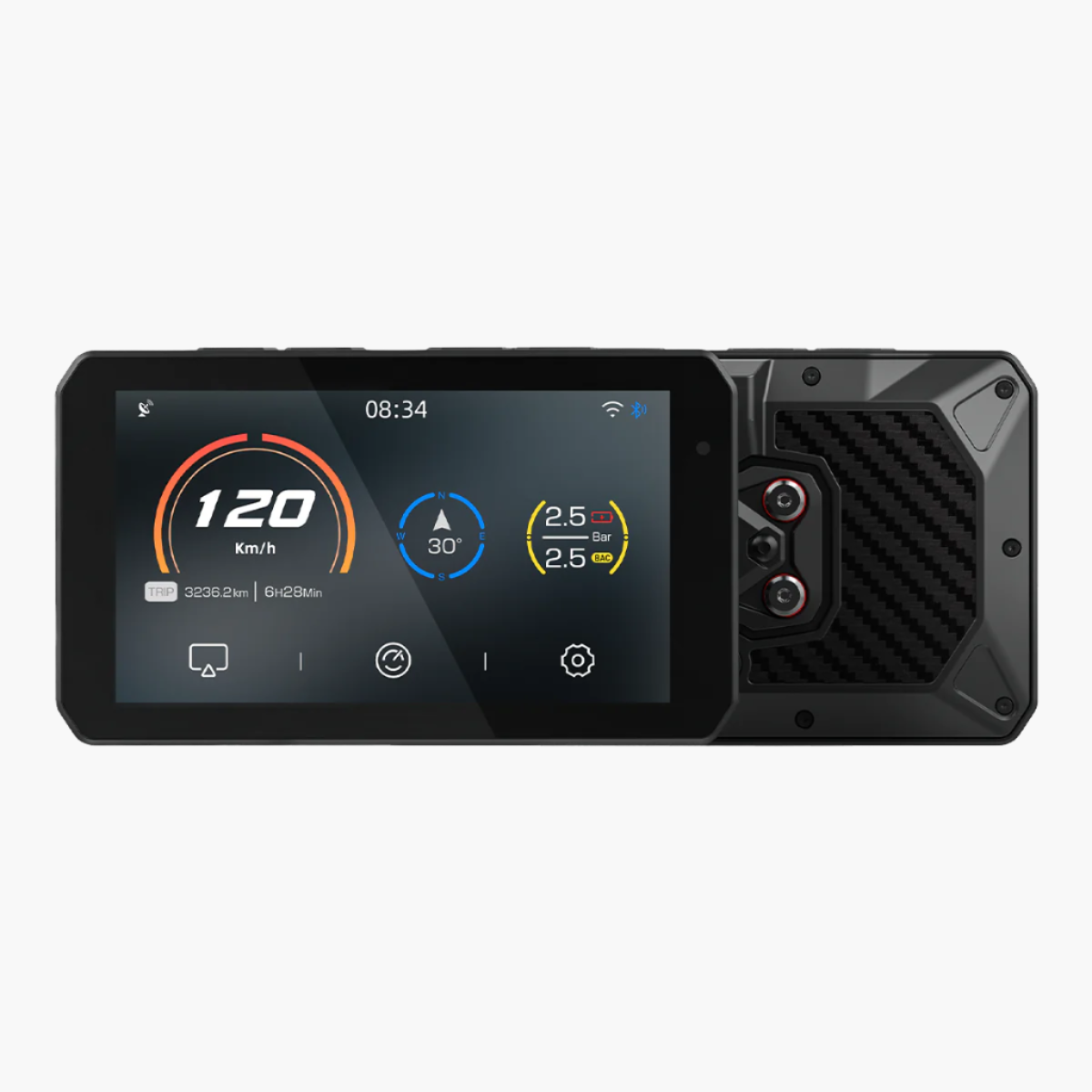
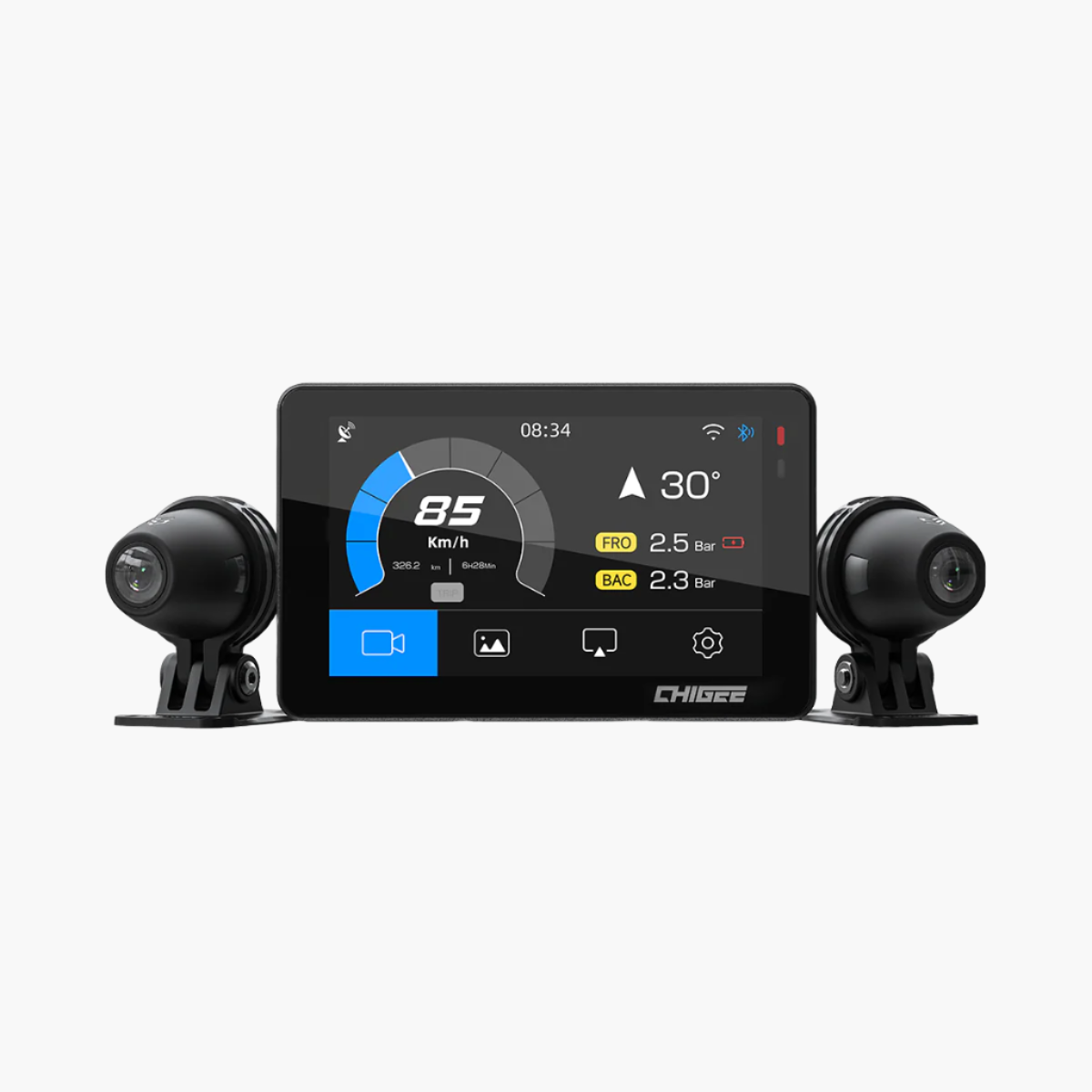
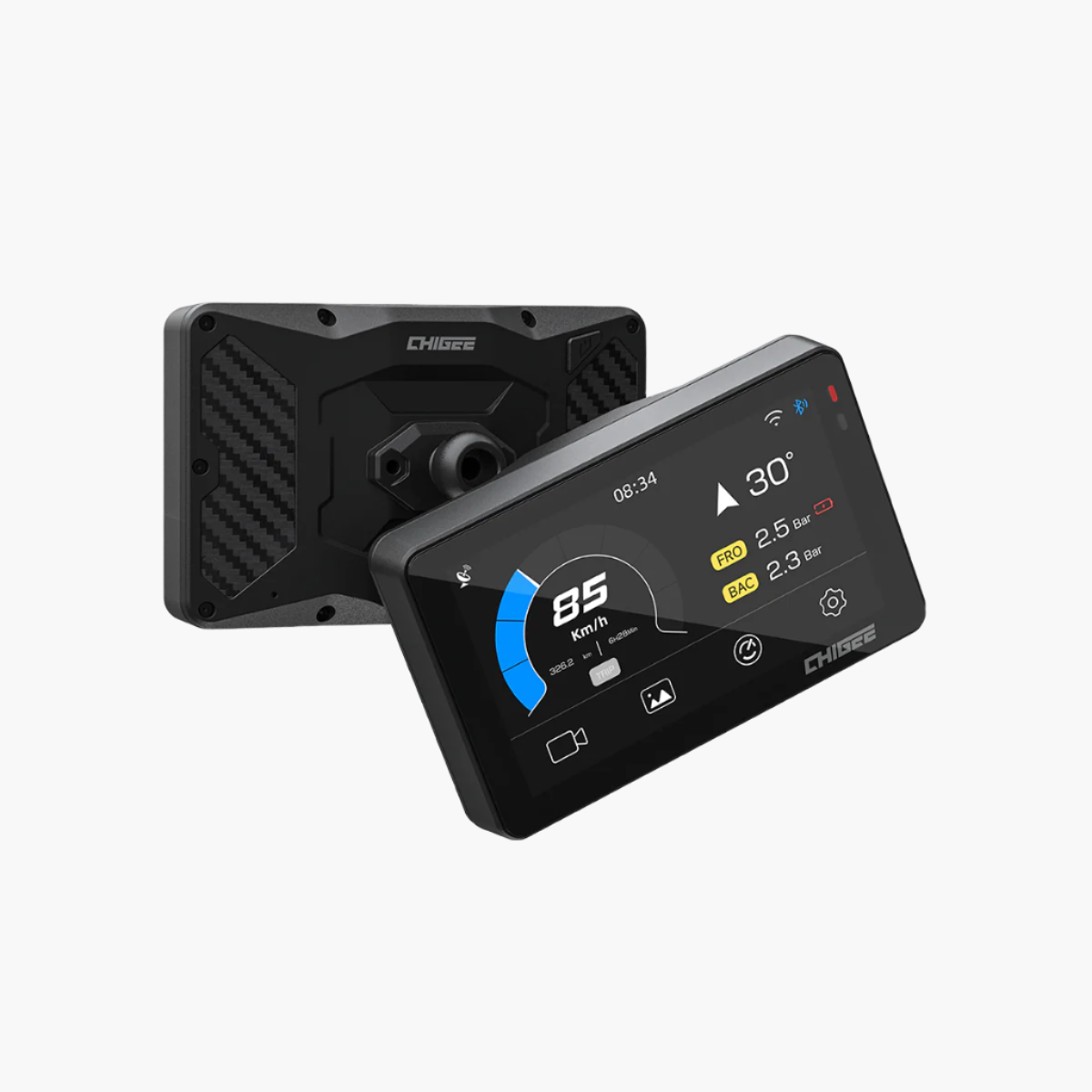
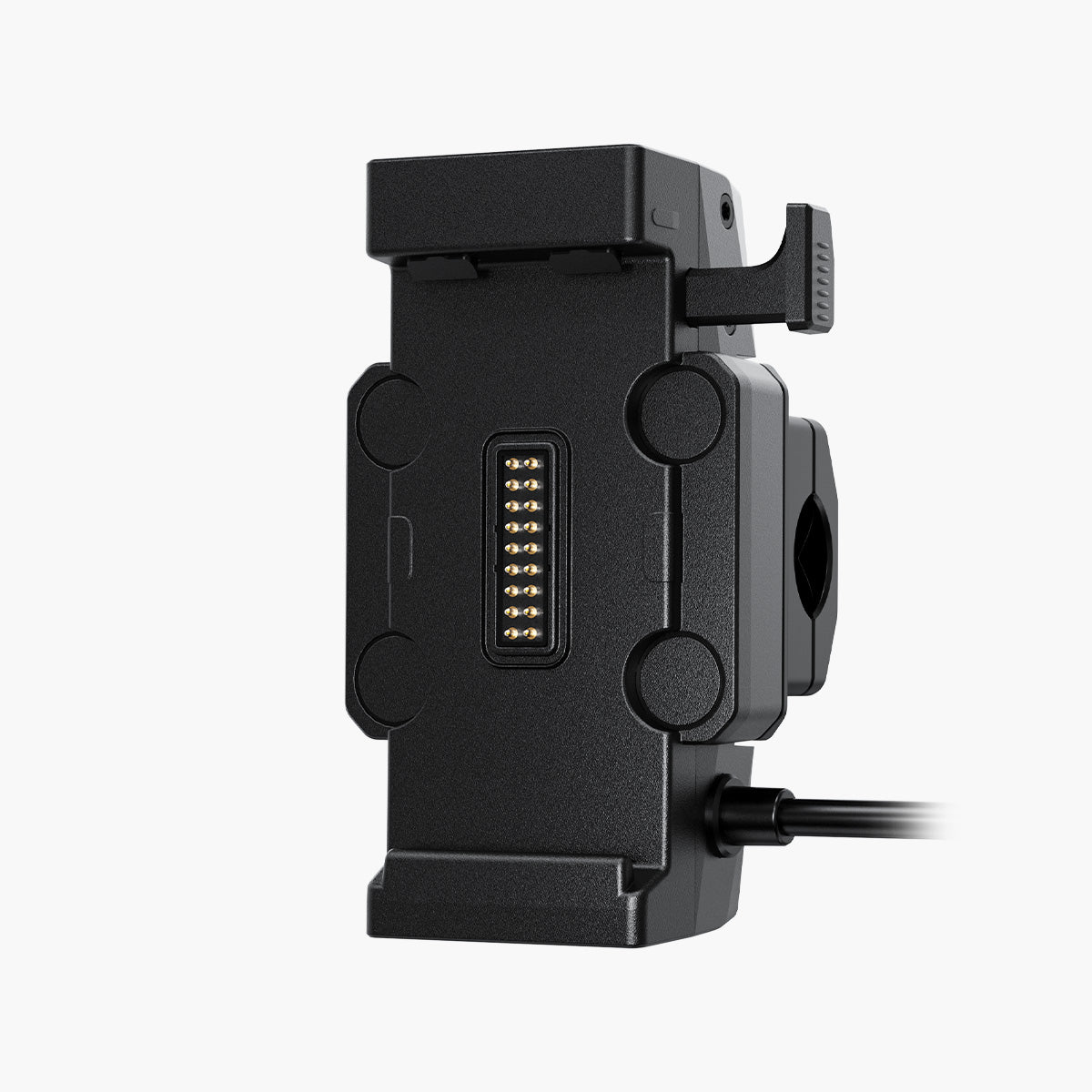
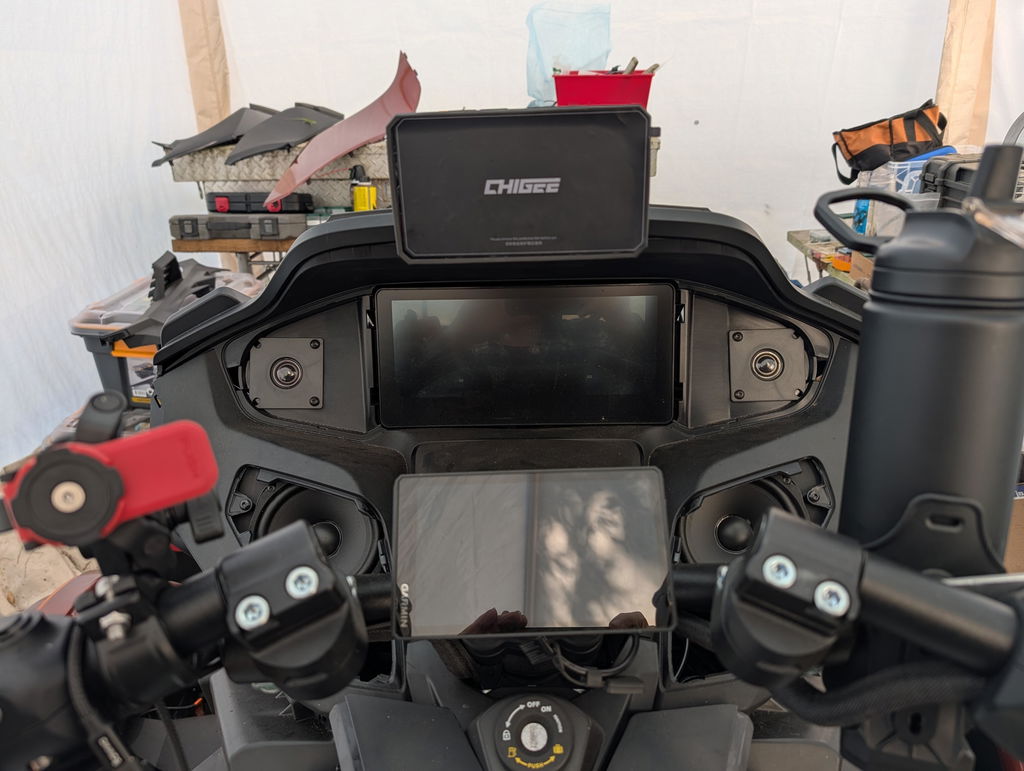
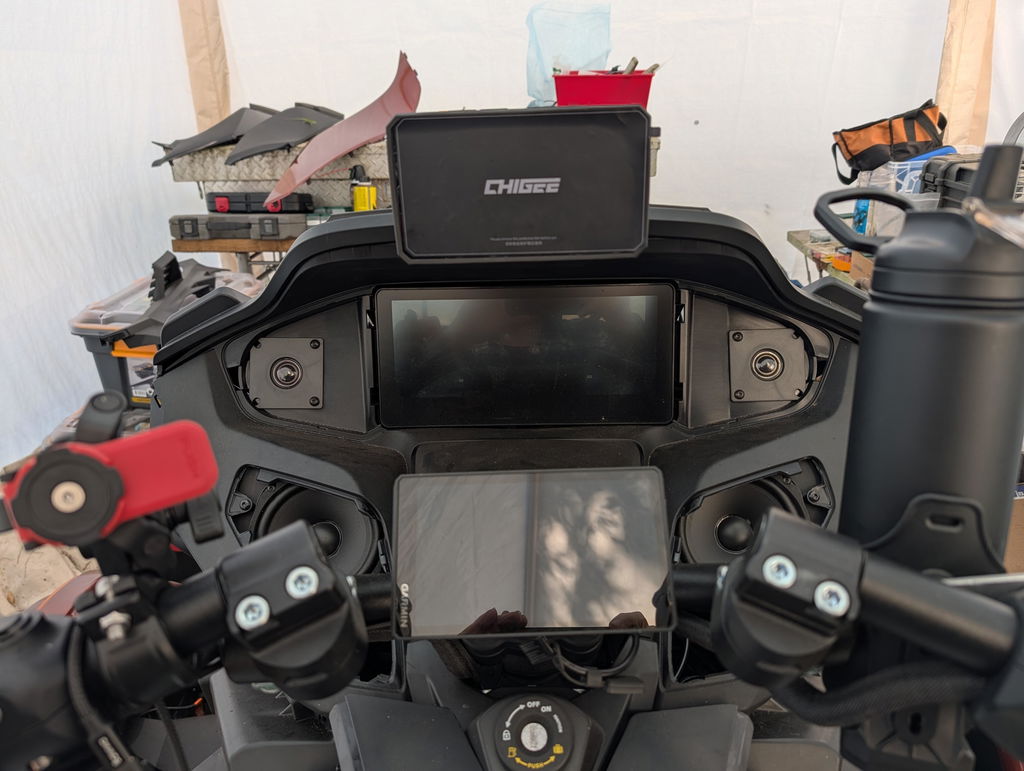
The AIO-6 Max runs CHIGEE OS 2 on a dual-core A53 processor with a 6-inch, 2000-nit IPS anti-glare display. It operates as a CarPlay and Android Auto display, where your phone mirrors its apps via Bluetooth and Wi-Fi. Navigation, music, and calls all run through your phone, with the AIO-6 Max acting as the display and input layer, and there is no built-in SIM or 4G on this model.
In practice, that architecture still changes the daily riding experience in meaningful ways. On a commute where a stalled truck blocked two lanes, Google Maps rerouted in real time using live traffic from your phone, displayed on the AIO-6 Max just like in a car. That’s not a novelty feature it’s time saved, sometimes up to 15 minutes, and the integrated music control lets you adjust Spotify directly without taking your phone out.

AIO-6 Max is a 6-inch CarPlay/Android Auto display using phone data for live navigation, with optional dashcam/BSM, no SIM or 4G.
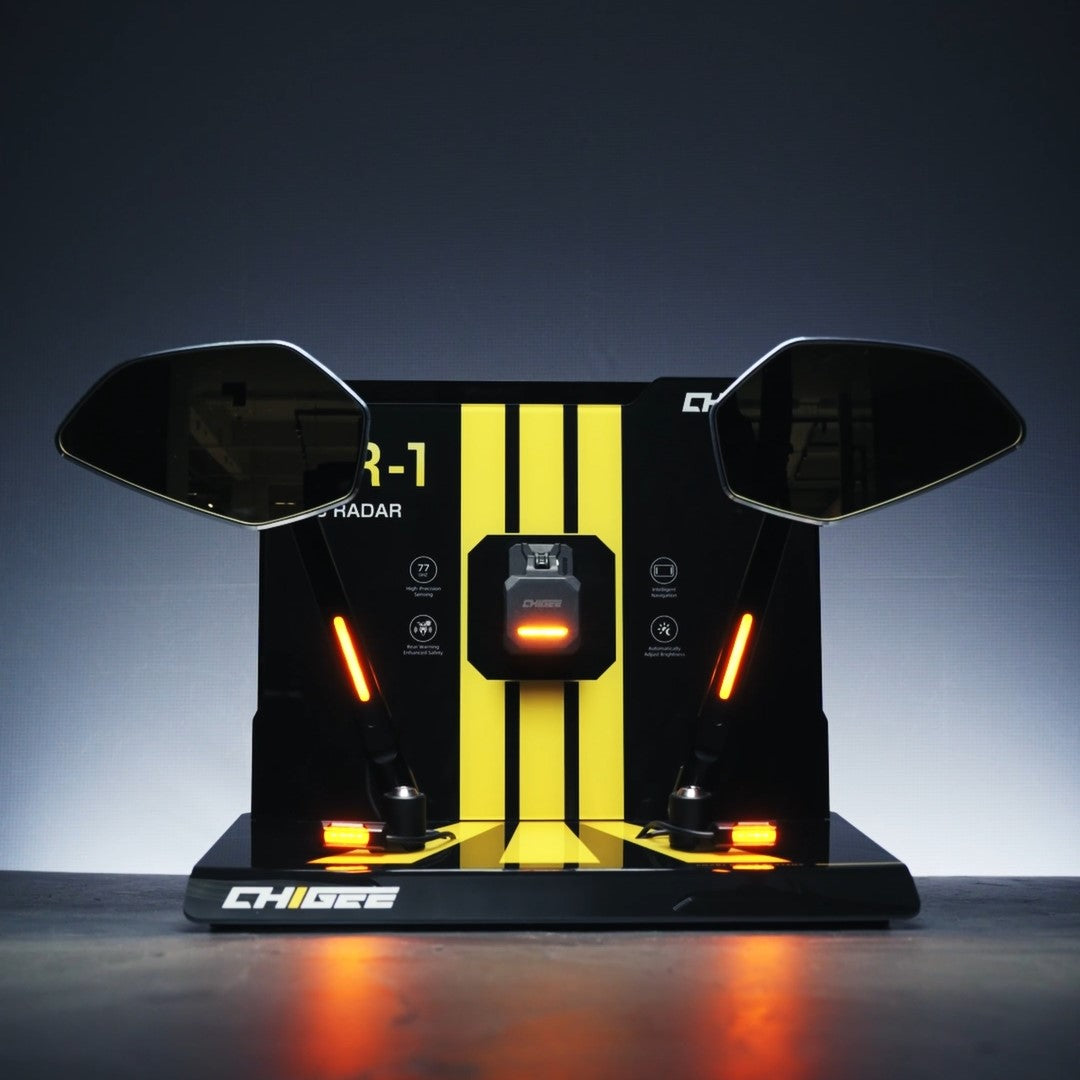
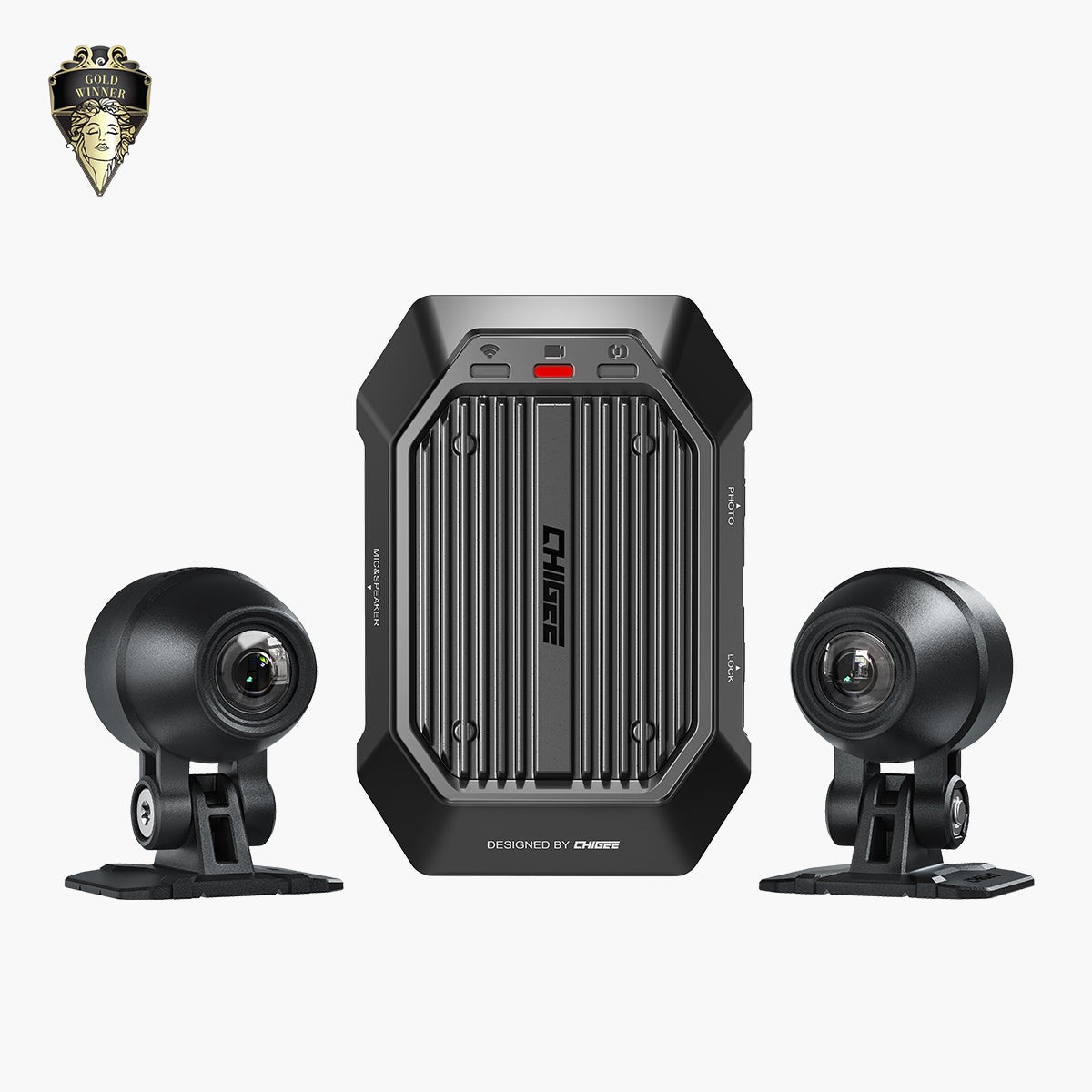
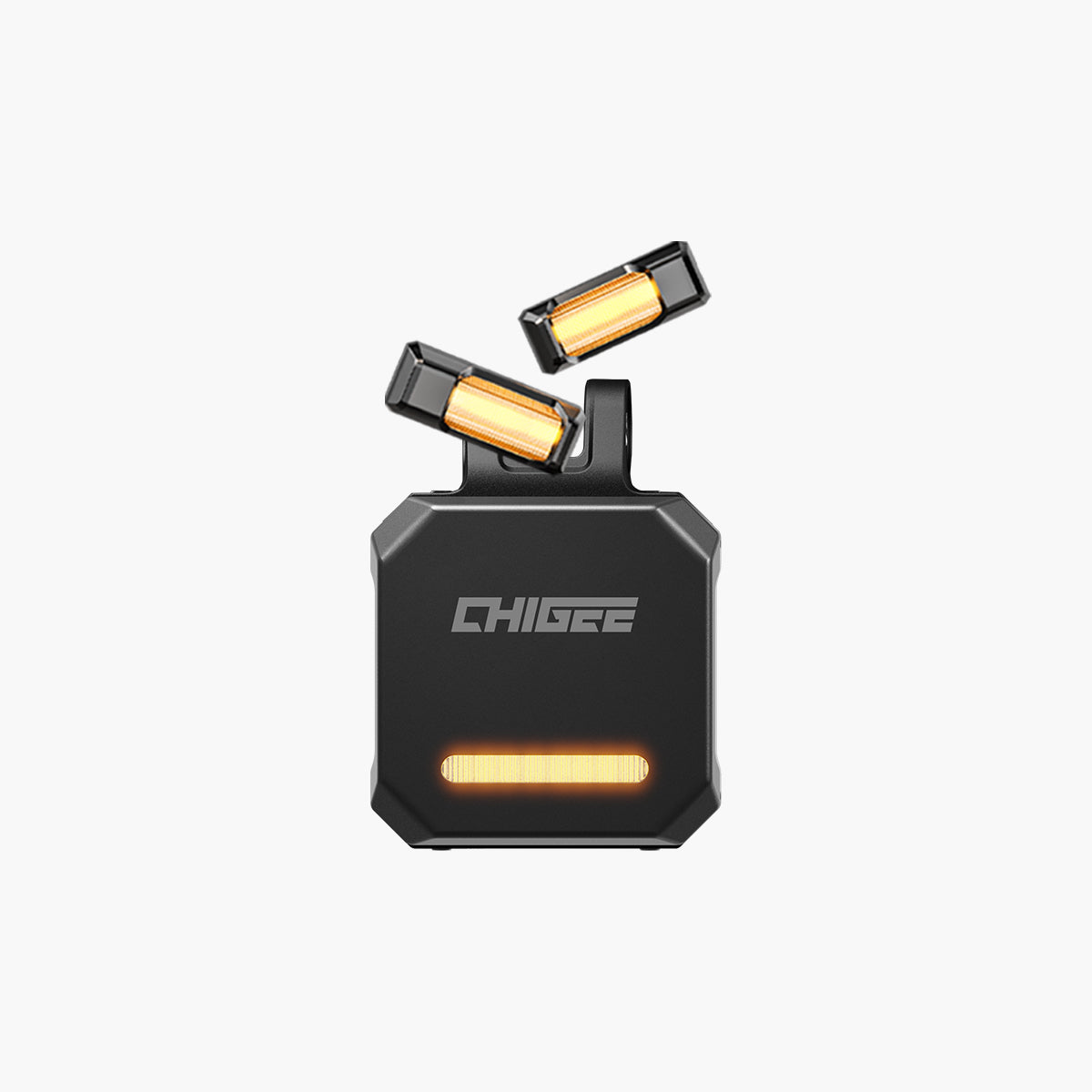
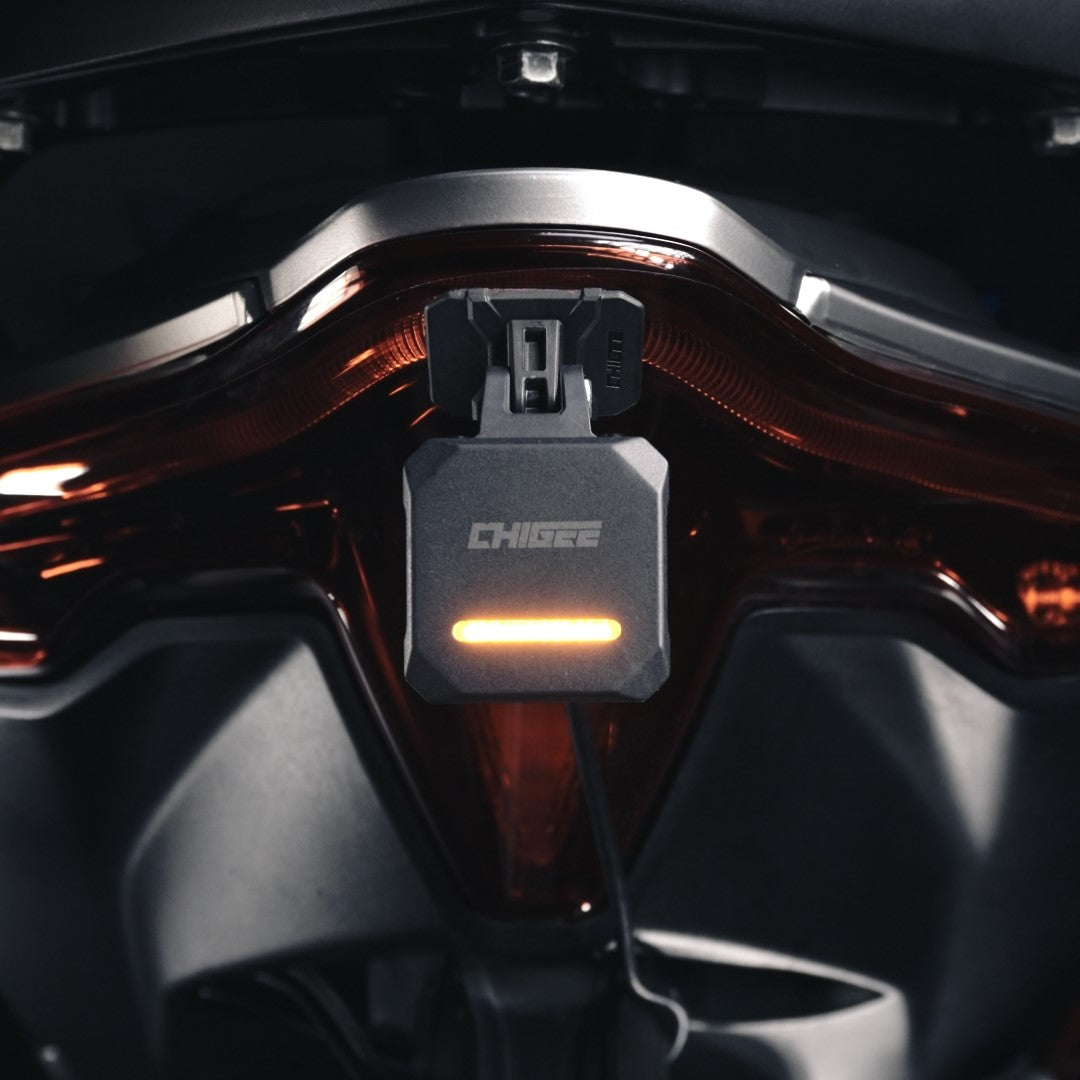
Beyond navigation, the AIO-6 Max supports optional dashcam integration and blind spot detection via an add-on lens accessory. Unlike Garmin’s Zumo line, which doesn’t offer these natively, this device combines navigation, media, and safety monitoring in one unit at its price point.
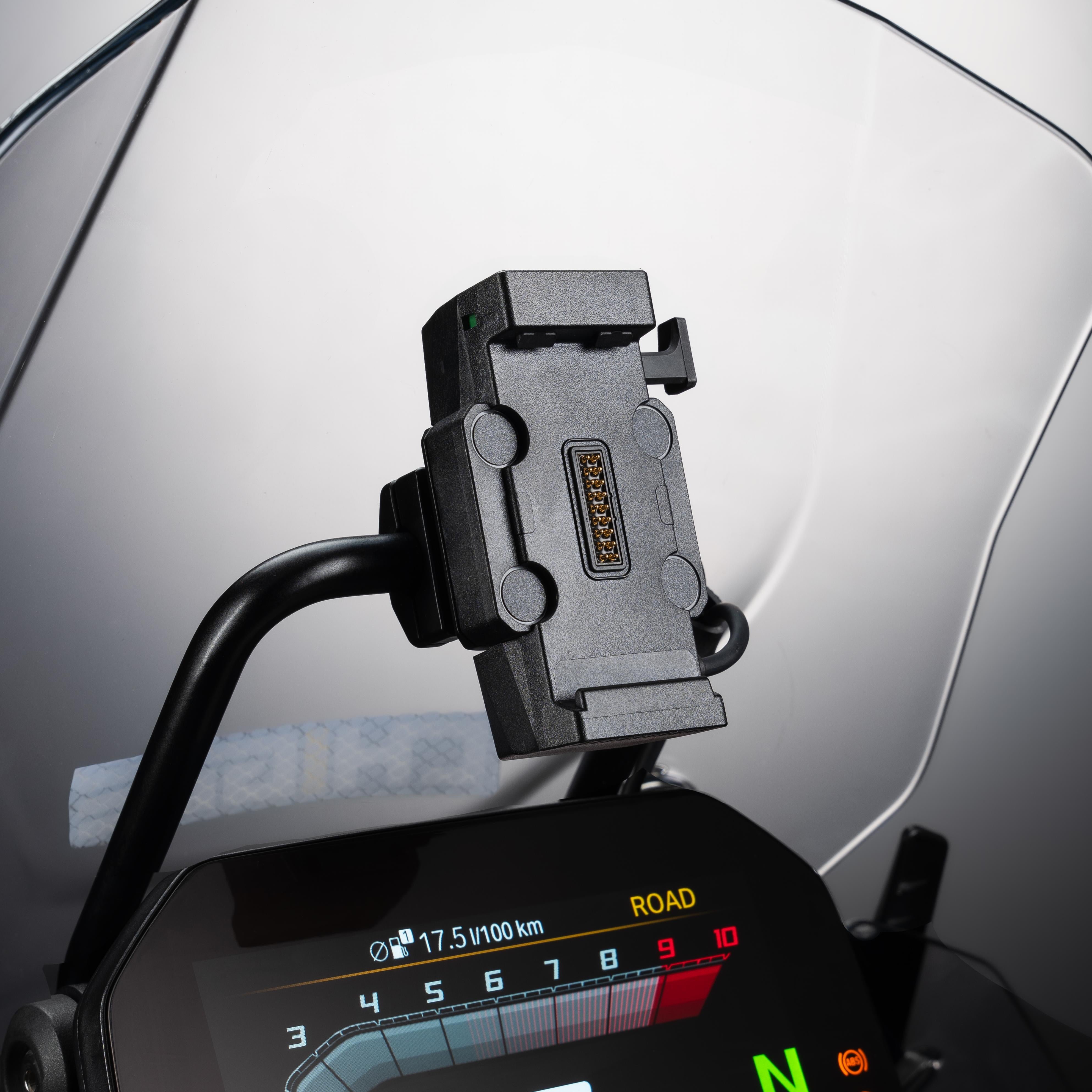
Just note, the AIO-6 Max has no built-in battery, requires hardwiring or USB power, and needs an SD card for OTA updates, which is not included.
CHIGEE AIO-6 LTE (~$579.00)
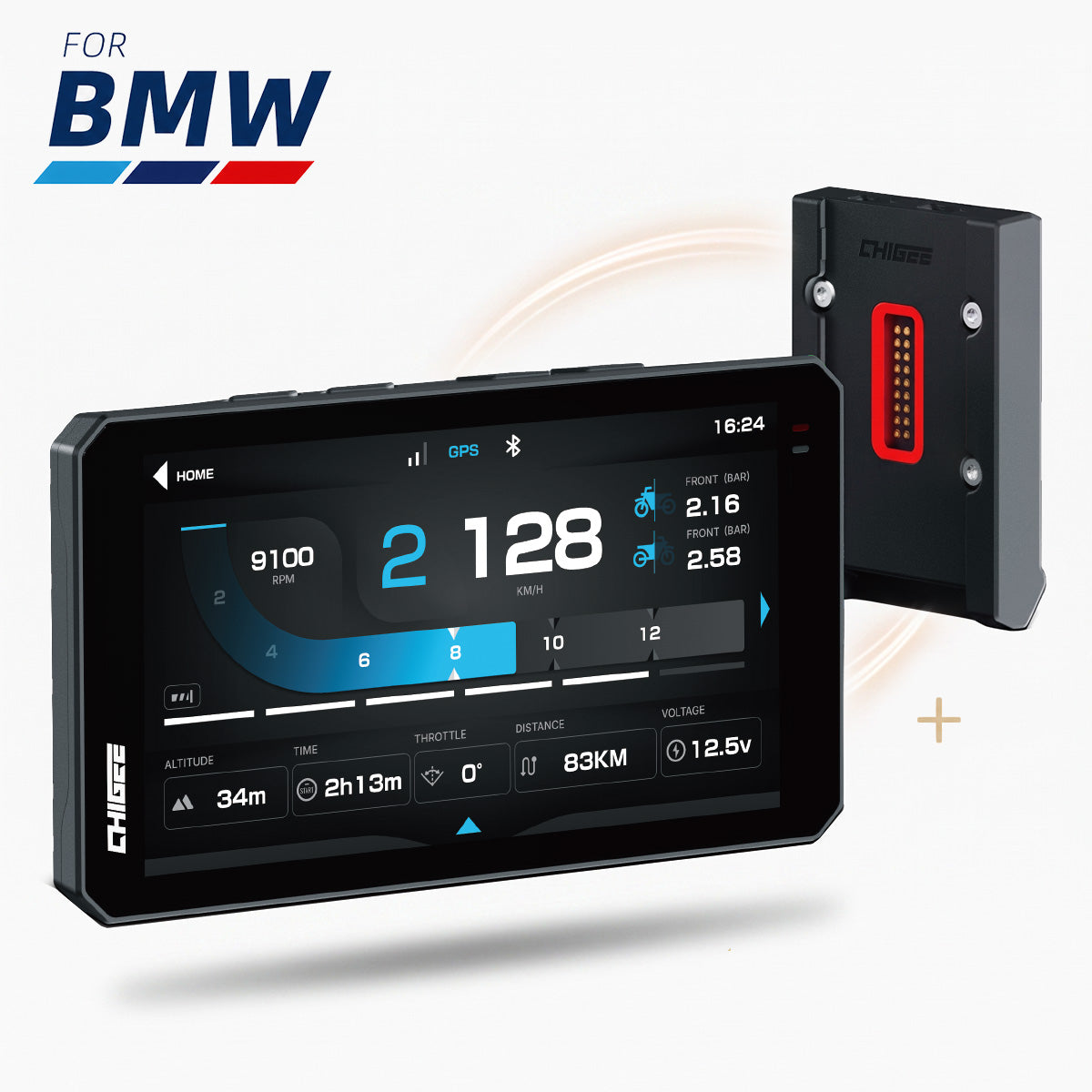
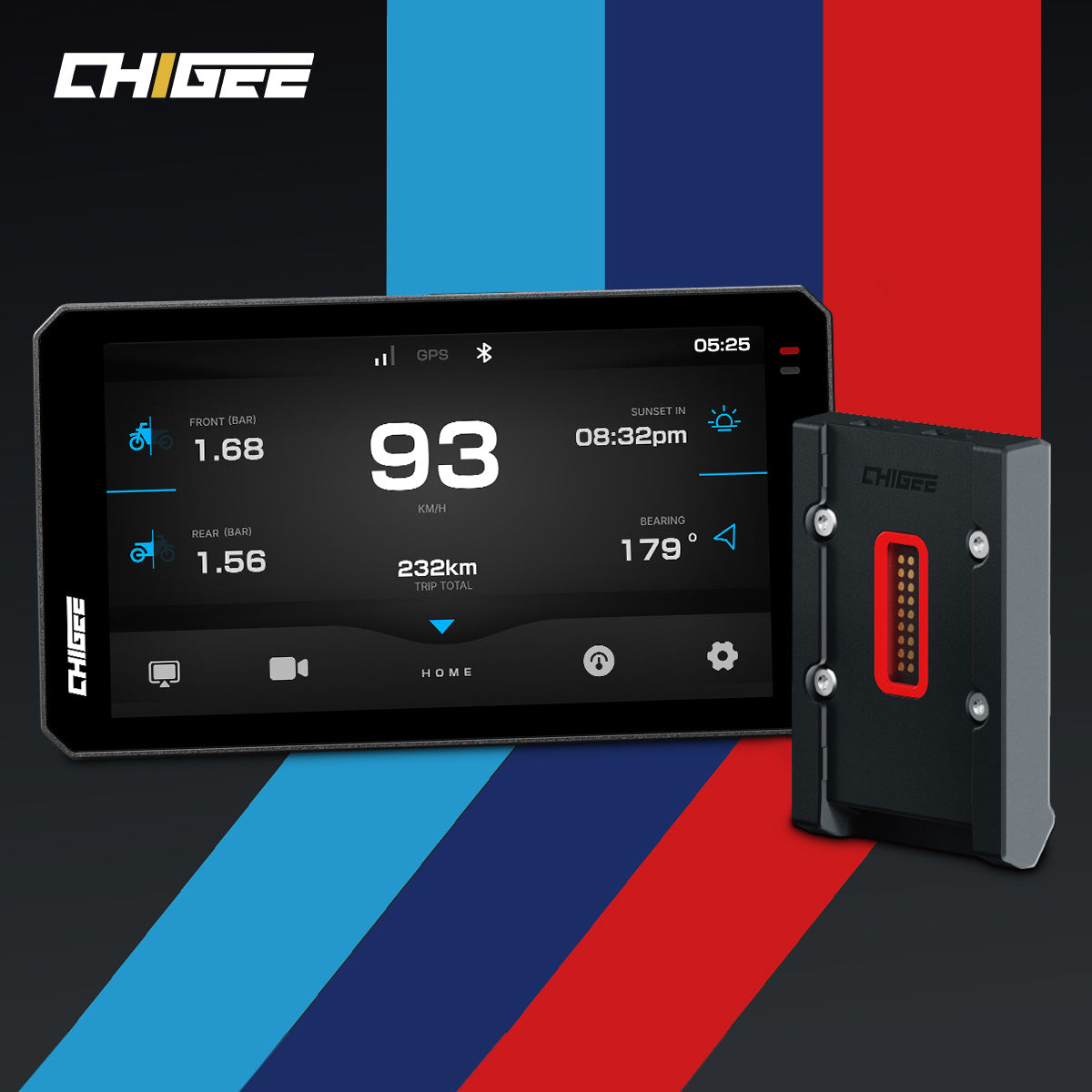
The AIO-6 LTE runs the same CHIGEE OS 2, with the same 6-inch display (2300 nits, slightly brighter than the Max) and identical CarPlay/Android Auto functionality, but adds built-in 4G LTE via a physical SIM card slot. This means the device isn’t just mirroring your phone it can operate with its own connectivity layer. That single addition shifts it from a display unit to something closer to a connected riding system.
That SIM unlocks device-side features your phone alone can’t fully replicate: real-time GPS tracking, remote camera access, live video streaming, emergency SOS alerts, and security notifications if your bike is touched while parked. These run through CHIGEE’s cloud infrastructure and require a subscription fee, and if you opt out, the 4G features are disabled while CarPlay, Android Auto, dashcam, and display functions remain fully usable. In short, you’re paying specifically for connectivity-driven safety and monitoring.

AIO-6 LTE adds 4G SOS, tracking, streaming via SIM; Max is phone-based CarPlay/Android Auto for basic navigation.
For riders who just want Google Maps navigation and media control, the AIO-6 Max already covers the essentials. The LTE version makes sense if you value SOS alerts, remote tracking, or live video streaming built directly into the device rather than relying entirely on your phone. It’s less about better riding and more about added security and peace of mind.
Garmin Zumo XT2 ($599.99)
The Zumo XT2’s reputation is earned. It features a 6-inch glove-friendly, sunlight-readable touchscreen, IPX7 weatherproofing, and pre-loaded City Navigator street maps with 3D topographic data. Garmin built this device to survive harsh conditions vibration, rain, dust, and extreme heat with a mount system trusted on long-distance tours.
Its offline capability is the real differentiator. Maps load quickly and work without any cellular connection, powered by dedicated GPS hardware that doesn’t rely on your phone. For remote rides or organized touring groups, the Garmin ecosystem adds value through Tread app integration, including group tracking and device-to-device messaging.

Garmin Zumo XT2 delivers rugged, offline navigation with GPS reliability; ideal for remote touring but less dynamic than phone-based routing.
Live traffic re-routing is available, but it depends on your phone via the Garmin Tread or Drive app. It works, but it’s less dynamic than Google Maps on a direct connection, and that difference shows when traffic changes quickly. For 2026 buyers, it’s worth noting the release of the zūmo XT3, which matches the XT2 in price at the 6-inch tier while adding newer features making it the more current option to consider.
Who Should Buy Which
The AIO-6 Max is the right call for riders primarily in urban or suburban environments. Live Google Maps routing fed through your phone's data is not replicable by any offline system, and the CarPlay/Android Auto interface removes the daily friction of managing navigation and music from your phone on the bars. The Max also avoids the cloud subscription cost that comes with the LTE.
The AIO-6 LTE adds device-level 4G for riders who want SOS, remote tracking, or live video streaming without depending entirely on phone connectivity. Factor in the cloud service fee when calculating total cost.

AIO-6 Max excels in city riding with live navigation; LTE adds tracking. Zumo XT2 only wins for true off-grid touring.
The Zumo XT2 (or XT3) still wins in one specific scenario: remote adventure touring with no cellular access for days at a stretch. Off-grid expeditions where your phone is useless this is where its fully offline maps and standalone GPS hardware matter. The honest truth is that most riders will never spend more than a few hours outside cellular range, which means the Zumo XT2's core advantage applies to a narrower use case than Garmin's marketing suggests.
The Verdict
The Zumo XT2 built its reputation on hardware that works without compromise in harsh conditions. What it hasn't kept pace with is the shift toward connected, integrated riding platforms that modern riders expect and at $599.99, it's no longer the only serious option in that price range.
The CHIGEE AIO-6 Max delivers live Google Maps navigation via CarPlay/Android Auto, music and call control, optional dashcam, optional blind spot detection, and a 2000-nit anti-glare display all at ~$479, and with no recurring subscription fee. For most riders in 2026 on paved routes, that's the right device. If you want device-level 4G, SOS, and remote tracking built in, step up to the AIO-6 LTE.
Frequently Asked Questions
Is the CHIGEE AIO-6 Max a direct replacement for the Garmin Zumo XT2?
For most riders on urban and paved routes, yes. The AIO-6 Max covers every core navigation and media capability, adds live Google Maps traffic (via your phone), optional blind spot detection at roughly $200 less than the Zumo XT2. The exception is deep wilderness touring with extended periods of zero cellular access, where Garmin's standalone GPS hardware and offline maps remain the stronger choice.
Do I need a separate SIM card for the CHIGEE AIO-6?
Only for the LTE model. The AIO-6 LTE requires a standard data SIM to enable its 4G features (tracking, SOS, live video). The AIO-6 Max has no SIM slot and no 4G capability; it works entirely through your phone's CarPlay or Android Auto connection. Check local carrier coverage and CHIGEE's cloud service fee structure before committing to the LTE.
Can the CHIGEE AIO-6 work without a phone?
No. Both AIO-6 models operate by mirroring your phone's apps through CarPlay or Android Auto. Navigation, music, and calls all require a connected smartphone. The built-in GPS on the device supports internal functions like speed display and distance tracking, but navigation maps and routing come from your phone's apps. The AIO-6 LTE adds device-side 4G features (SOS, tracking, video streaming) that work independently of CarPlay/AA, but the core navigation experience still needs your phone.
Is the Garmin Zumo XT2 still worth buying in 2026?
For riders doing remote adventure touring or already deep in the Garmin ecosystem with devices like the inReach, yes. But note that the new zūmo XT3 launched in 2026 at the same $599.99 price point with updated features compare both before buying. For everyday riders on paved routes with live traffic, the AIO-6 Max is the stronger value at a lower price.
About the Author
Reuben CabreraReuben Cabrera is a motorcycle gear reviewer and content creator at phtoll.com. He has been riding for over a decade with more than 60,000 km of experience across urban commuting and long-distance touring, currently aboard a 1990 Yamaha XJR 400 through Metro Manila and beyond. Reuben tests motorcycle technology in the conditions most riders actually face traffic, heat, rain, and the daily grind and writes to help riders make decisions they won't regret.








Leave a comment
All comments are moderated before being published.
This site is protected by hCaptcha and the hCaptcha Privacy Policy and Terms of Service apply.