

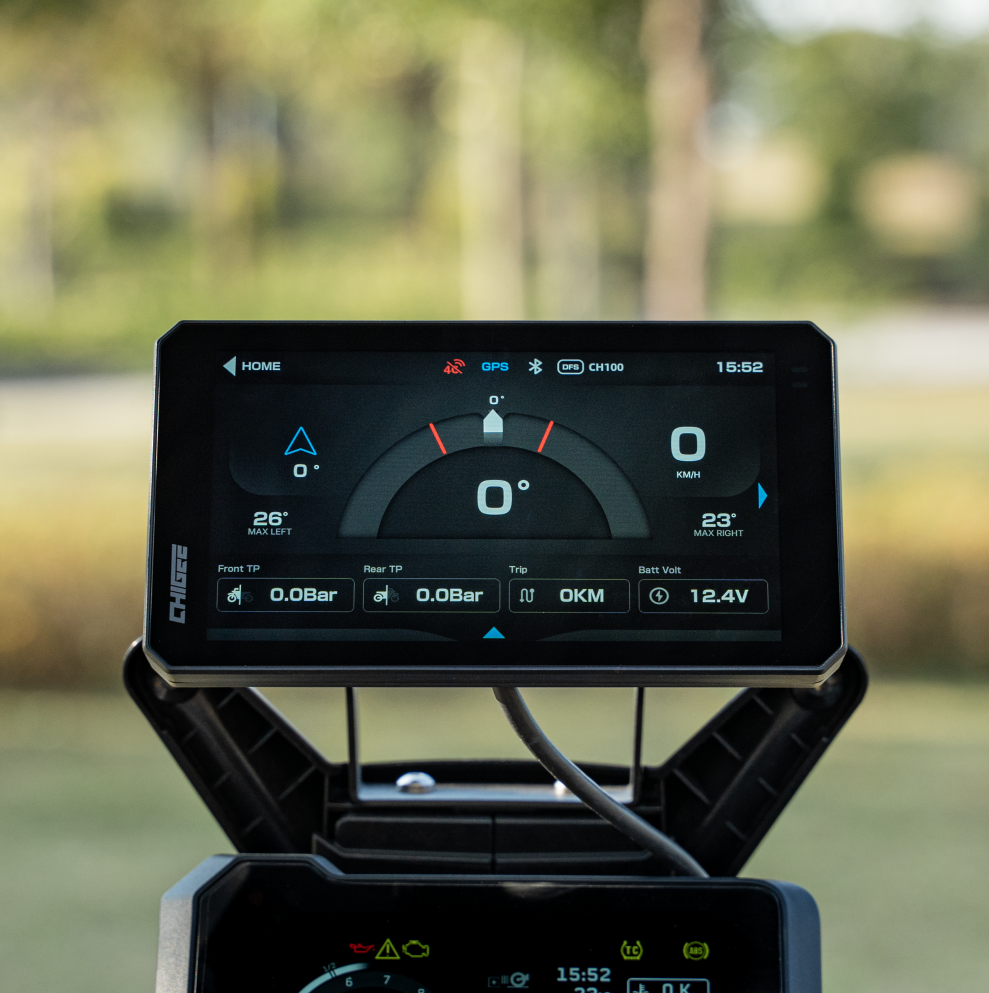
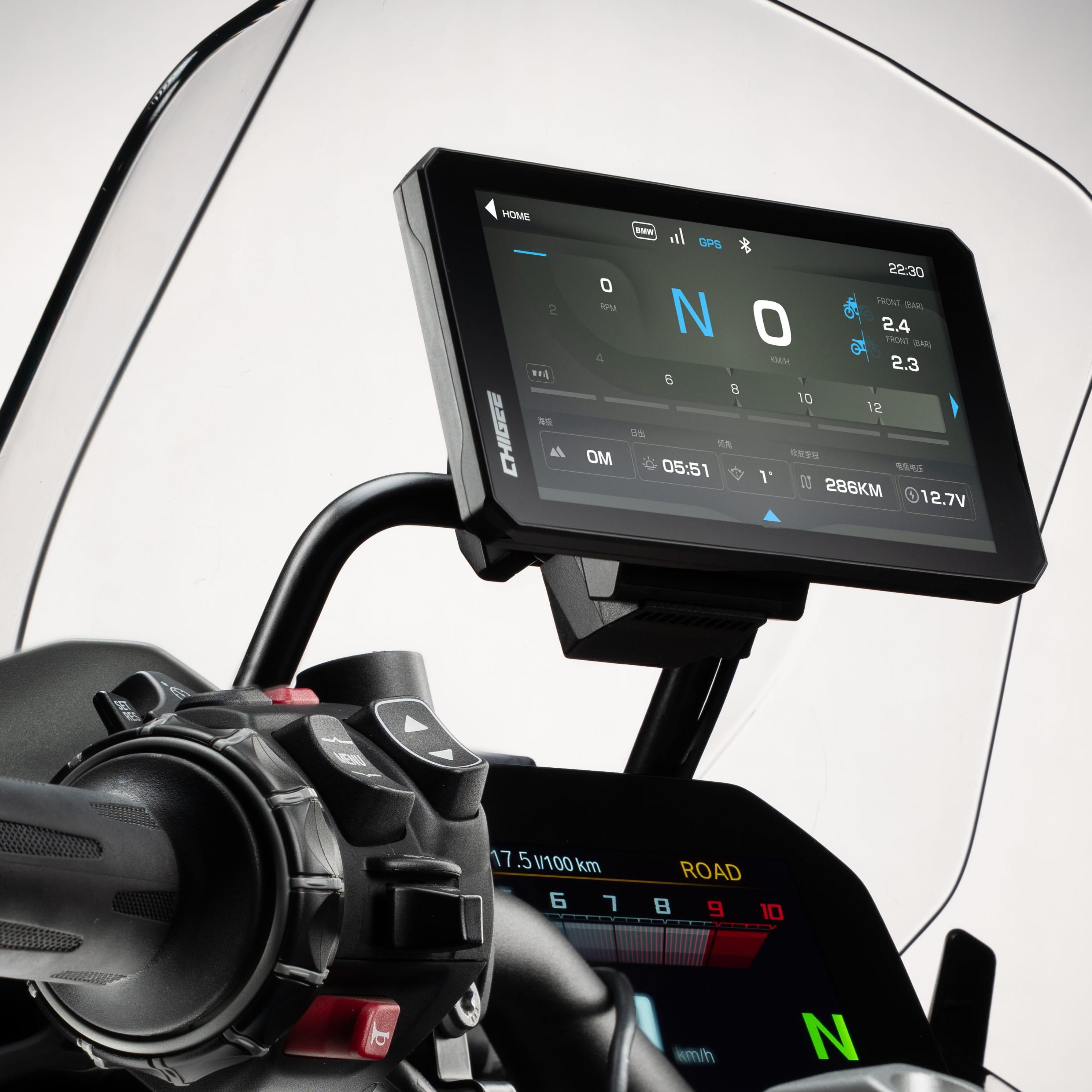
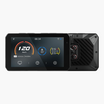
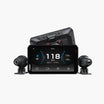
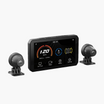
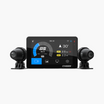

Testing the CHIGEE AIO-5 EVO across city commutes and weekend runs taught me something I did not expect: the display that punches well above its price on a small-displacement bike becomes even more of an argument on a retro-modern machine with no navigation to speak of. What the Z900RS does visually – the Z1-inspired tank, the round headlight, the analog dials it does with enough conviction that any tech addition has to earn its place on the cockpit. The EVO, with its compact 5-inch footprint and IP69K weatherproofing, earns it.
The navigation gap on the 2026 Kawasaki Z900RS is not subtle. The Rideology app pairs via Bluetooth and delivers ride data, but it does not put a map in front of you, and the LCD tucked between the two analog dials is not built for one. Riders who do regular backroad routes or unfamiliar fuel stops eventually feel that gap in the same way you feel any missing thing – not immediately, but reliably, and always at the wrong moment.
 The CHIGEE AIO-5 EVO adds navigation to the Z900RS without disrupting its retro cockpit, closing a gap Rideology alone cannot fill.
The fix does not have to compromise what makes the bike worth riding.
What Makes a Navigation Upgrade Work on a Retro Bike
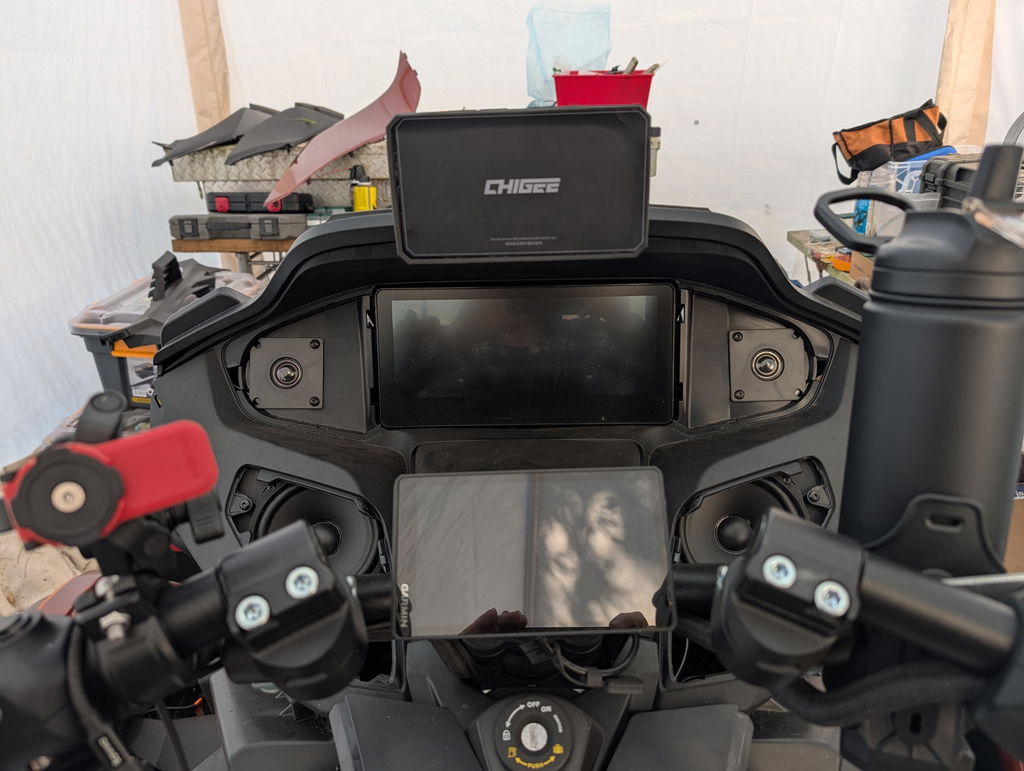
Not every smart display belongs on a Z900RS. The bike's design language is deliberate – understated chrome, round forms, a tank profile that references the original Z1 without being theatrical about it. Any addition to the cockpit has to respect that restraint or it starts to feel like a contradiction.
The criteria that matter most for a bike in this category are size, finish, and mounting philosophy. A compact 5-inch display sits closer to the instrument cluster scale the Z900RS already uses, rather than competing with it for visual real estate. A matte chassis reads as purposeful rather than plasticky. And a mount that positions the screen inside the natural sightline – rather than jutting out on a side perch – keeps the cockpit looking composed rather than assembled from spare parts.

The Z900RS cockpit demands restraint—only compact, well-finished smart displays that respect its retro design language truly belong. Source
Connectivity philosophy matters too. The Z900RS rider is not looking for a device that replicates the phone experience. They already have Apple Maps, Waze, or Google Maps on an iPhone. What they need is a weatherproof display that puts those apps in front of their eyes in a format that works with gloves on, stays readable at noon in July, and does not demand they touch their phone while the bike is moving.
The 2026 Z900RS: What Changed and Why It Matters for Riders
The engineering changes to the 2026 Z900RS ABS are worth understanding because they change how the bike feels to use on the road, not just on a spec sheet. The 948cc liquid-cooled inline-four has been substantially reworked: revised cam profiles, a higher compression ratio of 11.8:1, lighter pistons, a reduced-mass crankshaft, and a closer-ratio gearbox with a new 43-tooth rear sprocket. The result is a motor that pulls more linearly from the middle of the rev range – exactly where Z900RS riders spend most of their time on backroads.
For 2026, the bike also adds the Kawasaki Cornering Management Function, traction control, electronic cruise control, and a Kawasaki Quick Shifter – rider aids managed through an IMU that previous Z900RS generations simply did not have. The MSRP sits at $12,899 for the standard ABS, $13,299 for the Cafe ABS, and $14,599 for the SE ABS, which adds an Öhlins rear shock, Brembo M4.32 calipers, and a handlebar-mounted USB Type-C outlet.

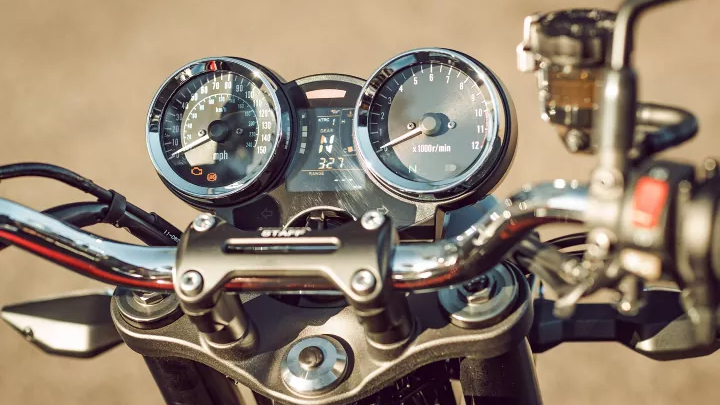
The Z900RS retains its iconic twin-gauge layout while adding modern electronic rider aids beneath the surface. Source
Riders spending in that range tend to ride the bike seriously, which makes the navigation gap harder to ignore.
Where the Stock Setup Falls Short on Long Days
The Rideology app pairing through Bluetooth is genuinely useful for checking fuel consumption and adjusting power delivery modes. What it is not is navigation. The Z900RS has no screen real estate allocated for a map, and the LCD between the two analog dials is reserved for instrument functions – speed, gear position, trip data.
That means every Z900RS rider who wants turn-by-turn guidance is either running their phone in a handlebar mount or going without. Phone mounts work until the device overheats on a summer slab run, or the RAM ball socket vibrates loose on a rough road, or the screen becomes unreadable when the sun hits it directly. The SE ABS USB-C outlet helps with charging, but it does not solve the navigation problem – it just makes it easier to keep the phone charged while it sits in an imperfect spot.
Riders who do regular distance eventually want something that feels more intentional than a phone stuck to a bar clamp.
How the CHIGEE AIO-5 EVO Fits the Z900RS
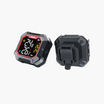
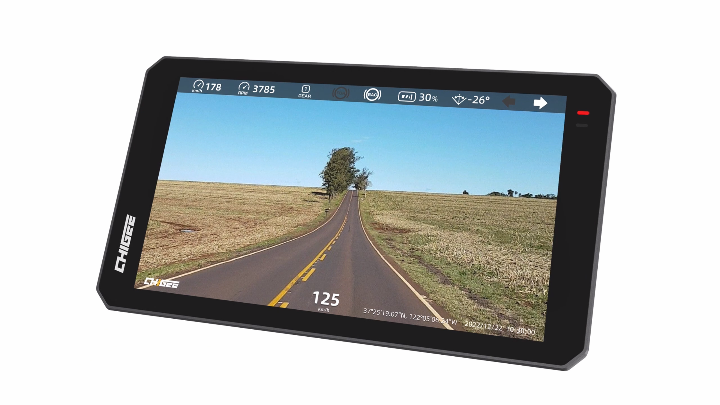
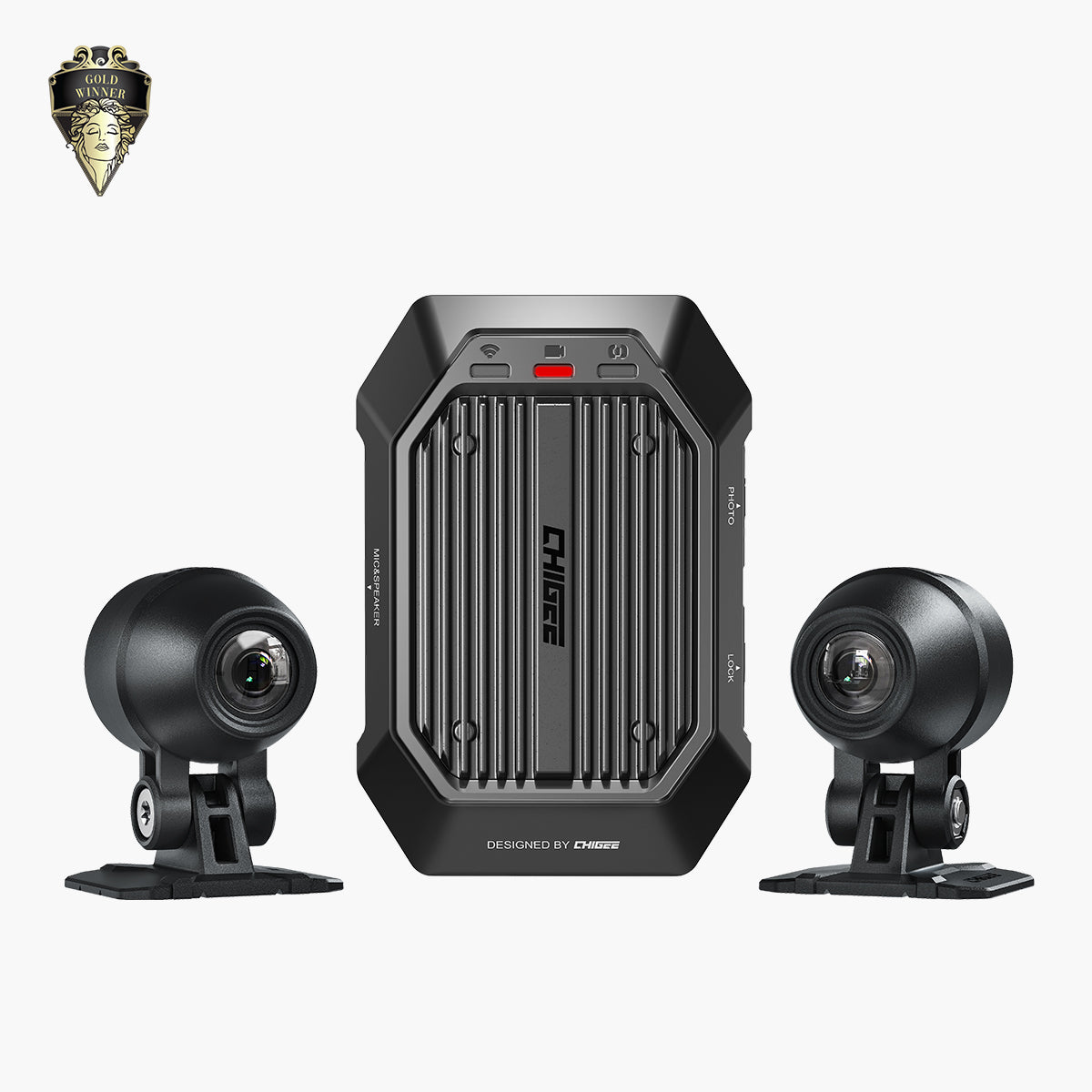
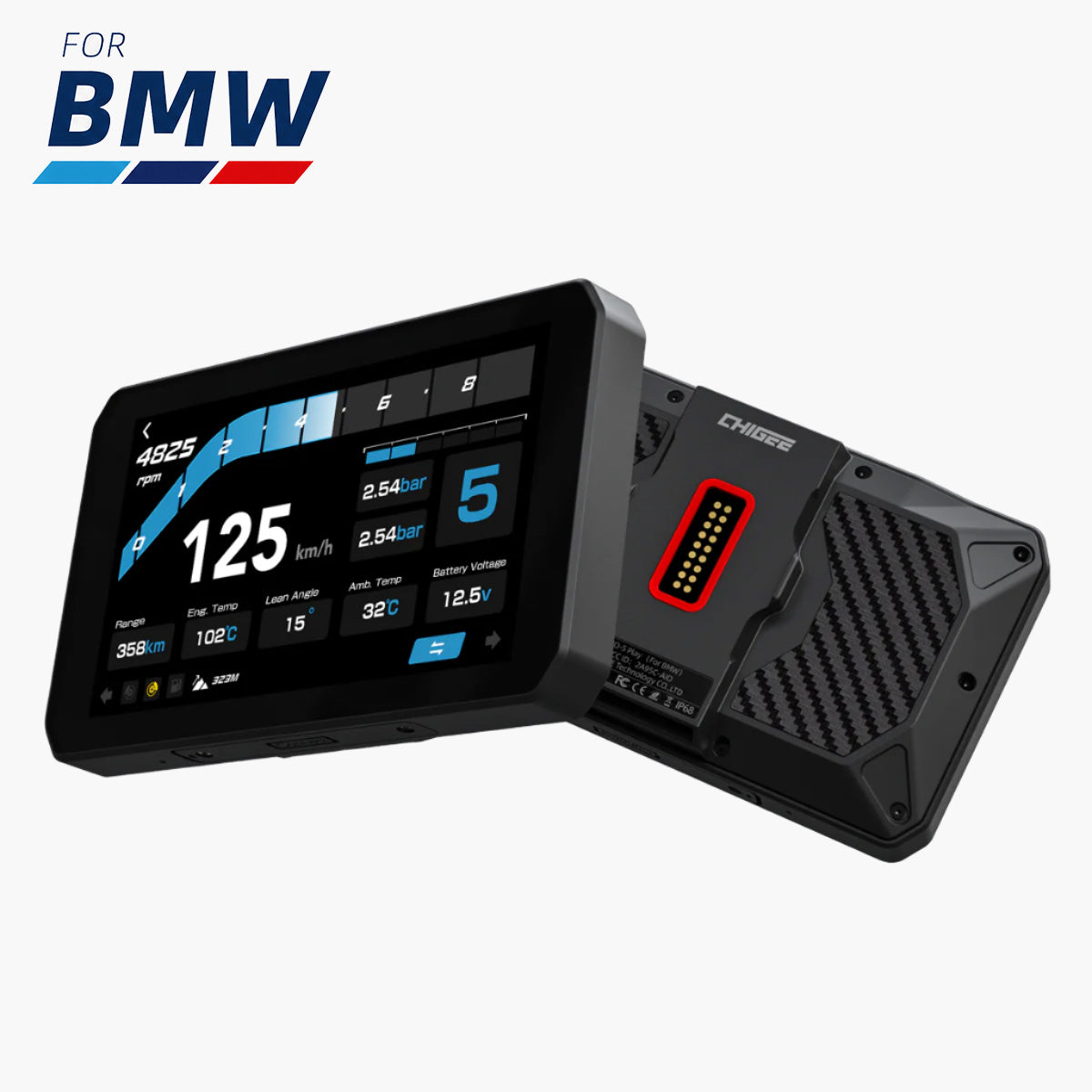
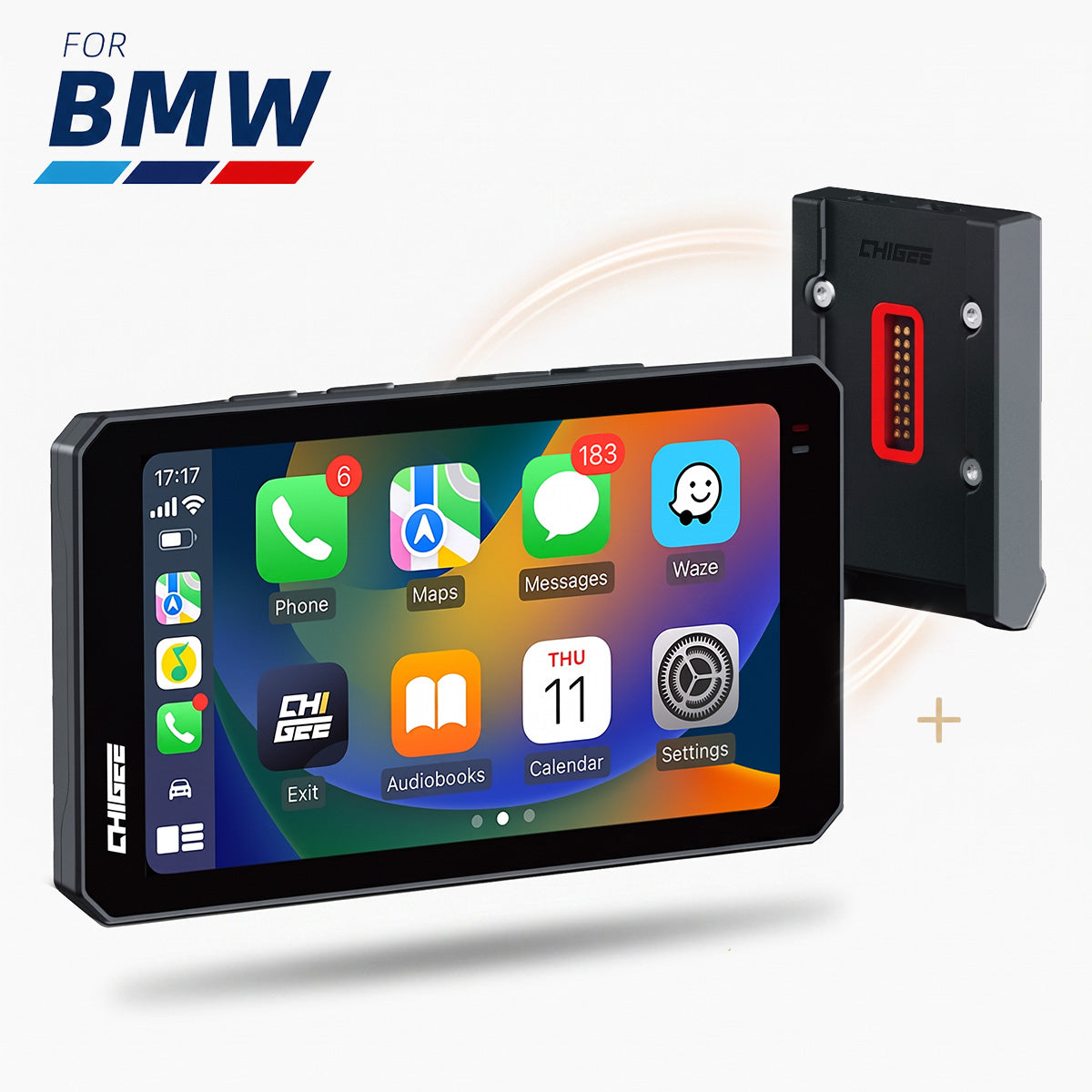
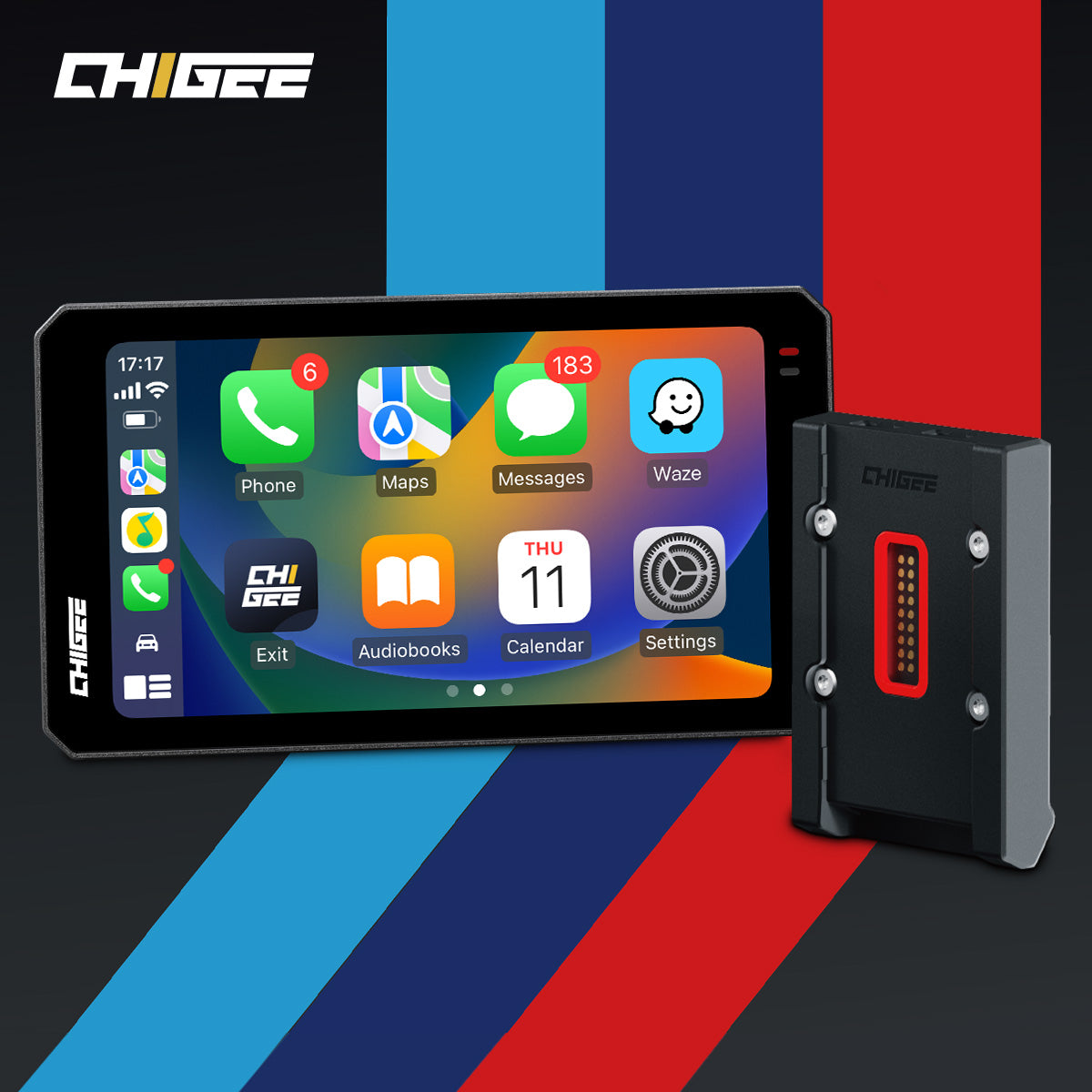
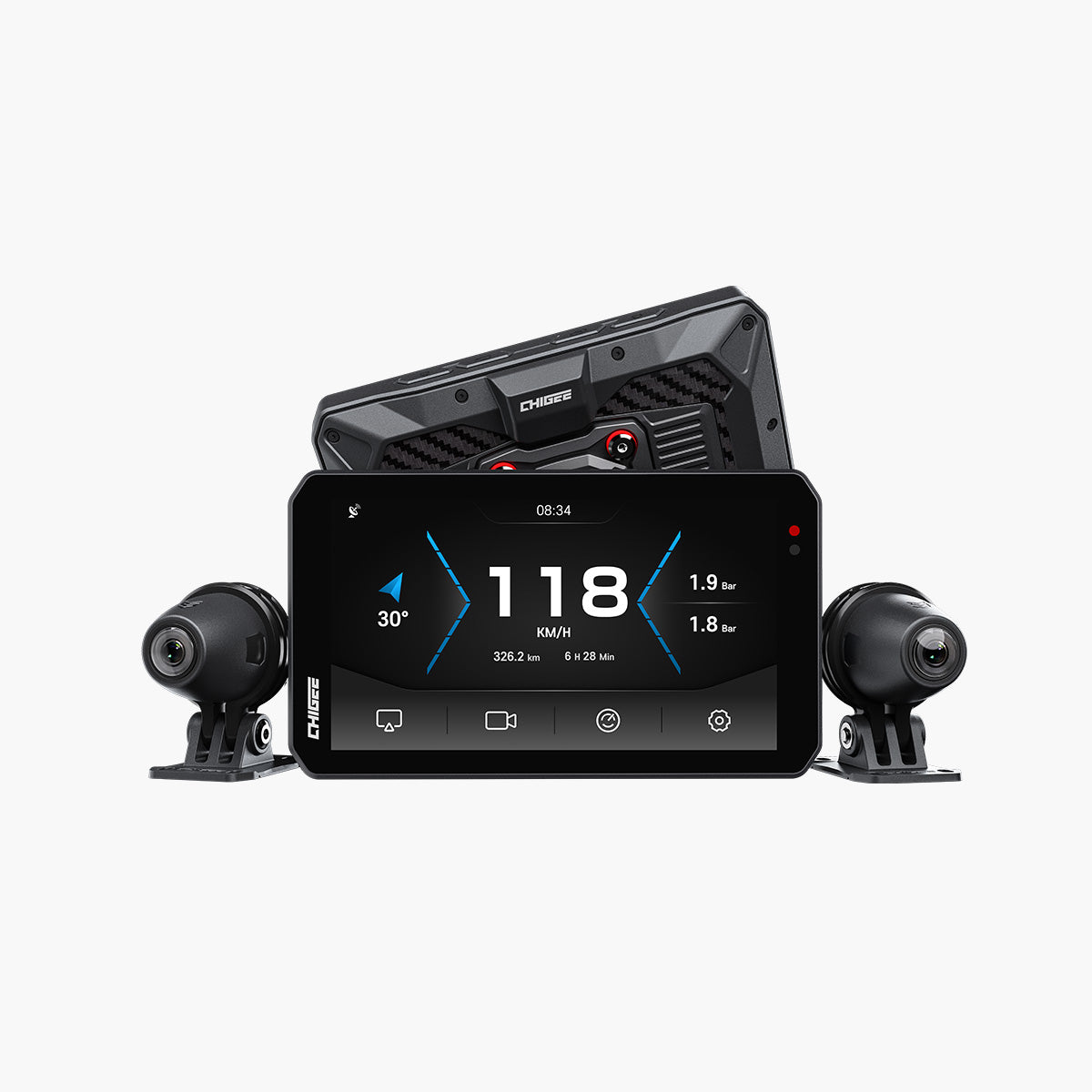
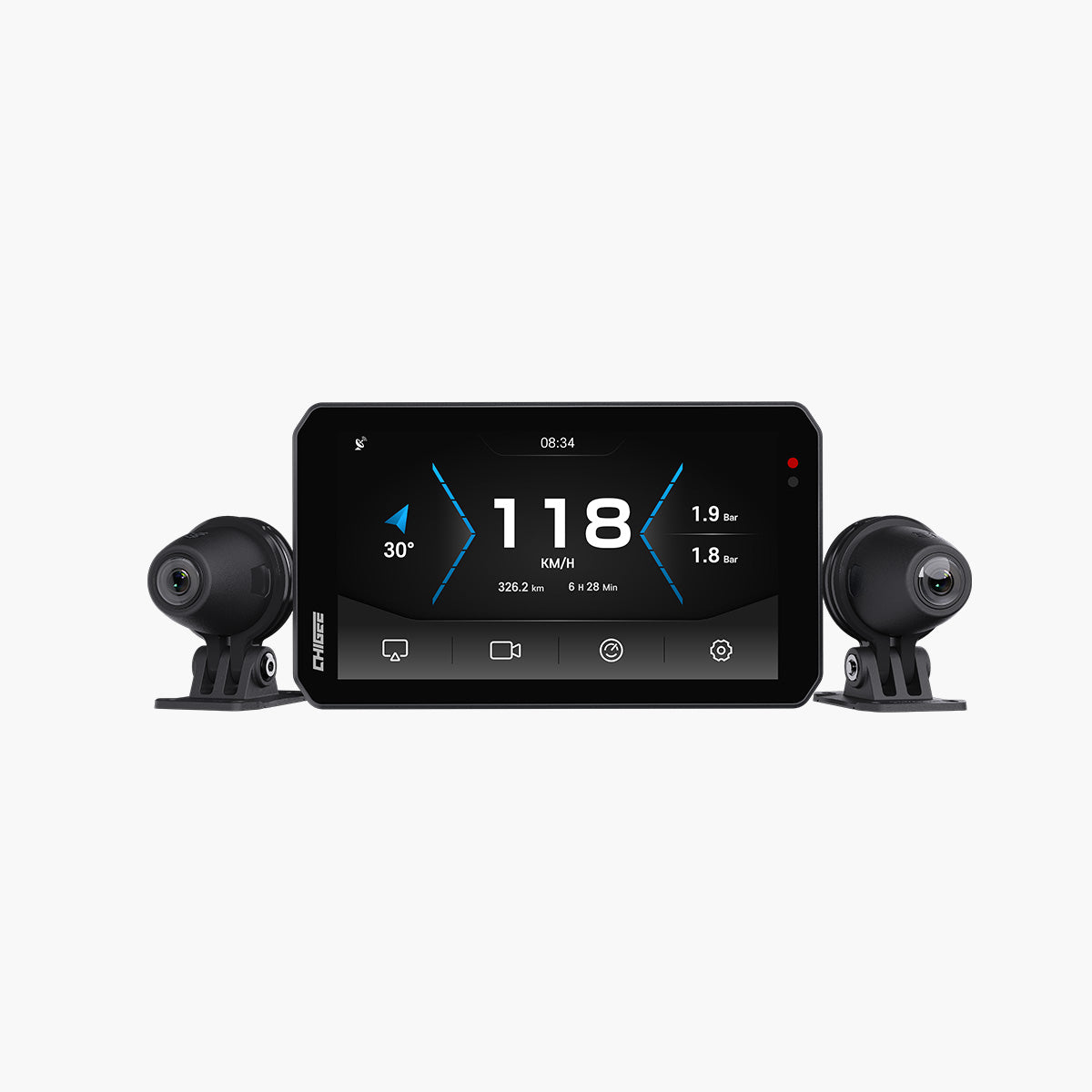
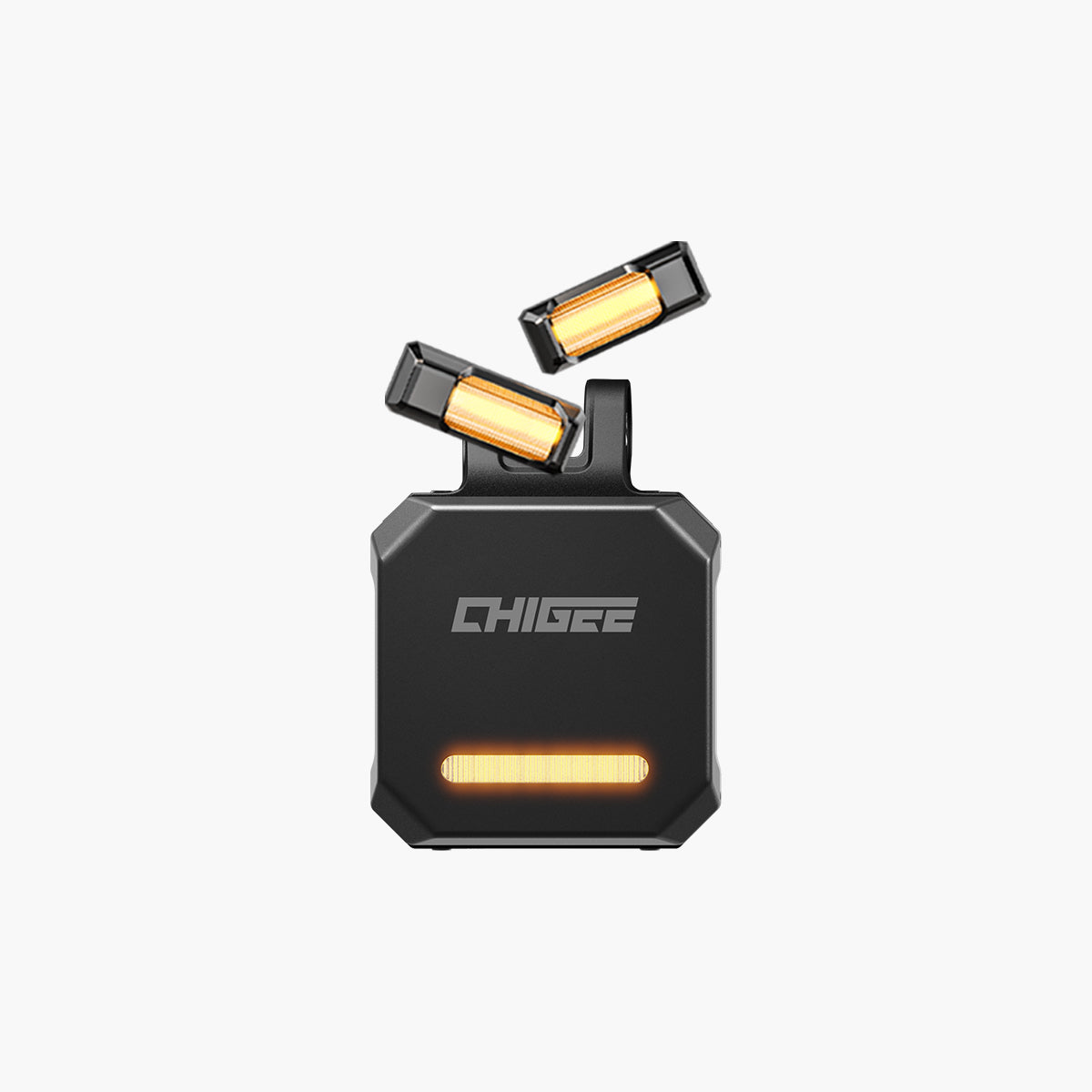
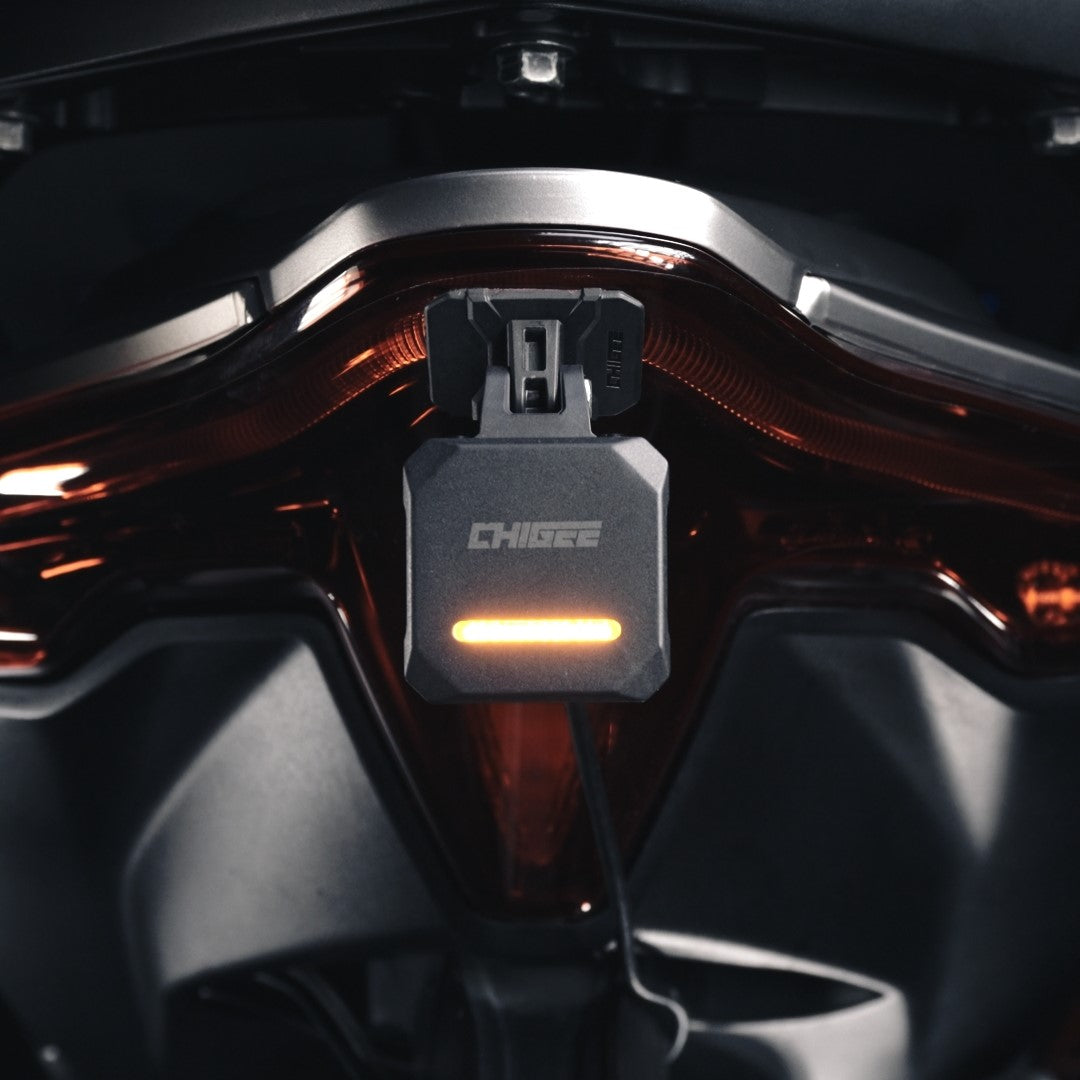
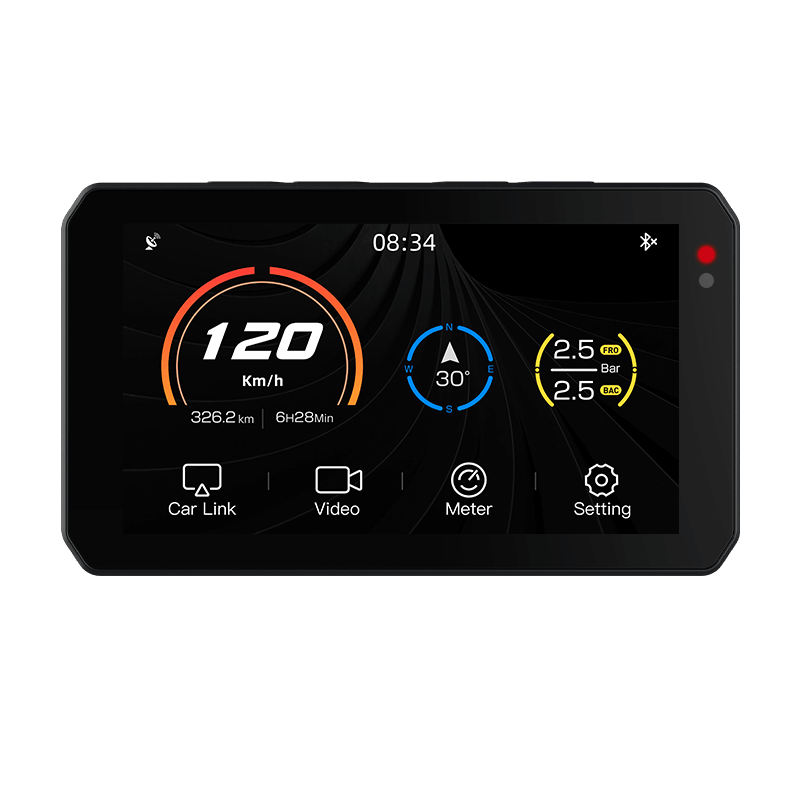
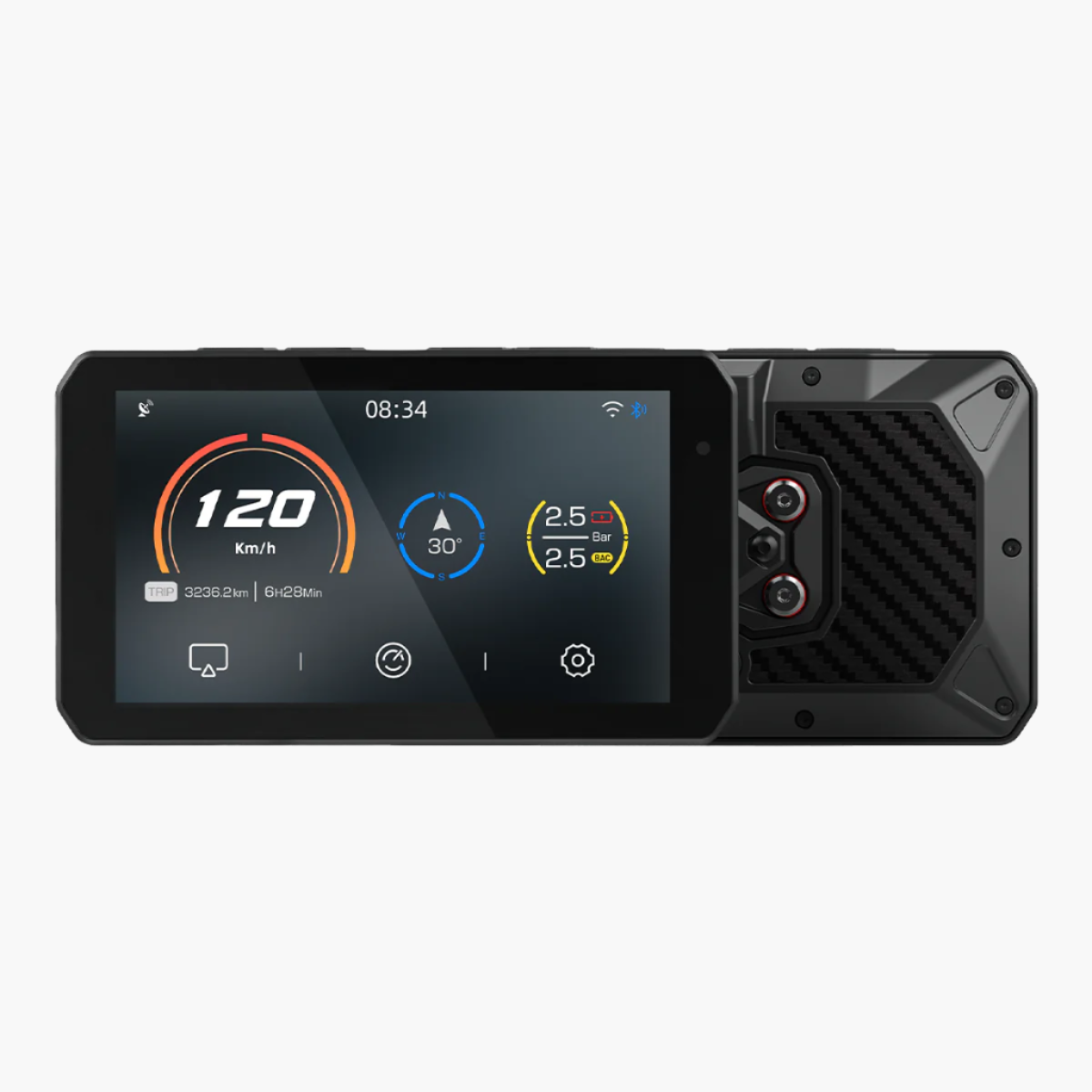
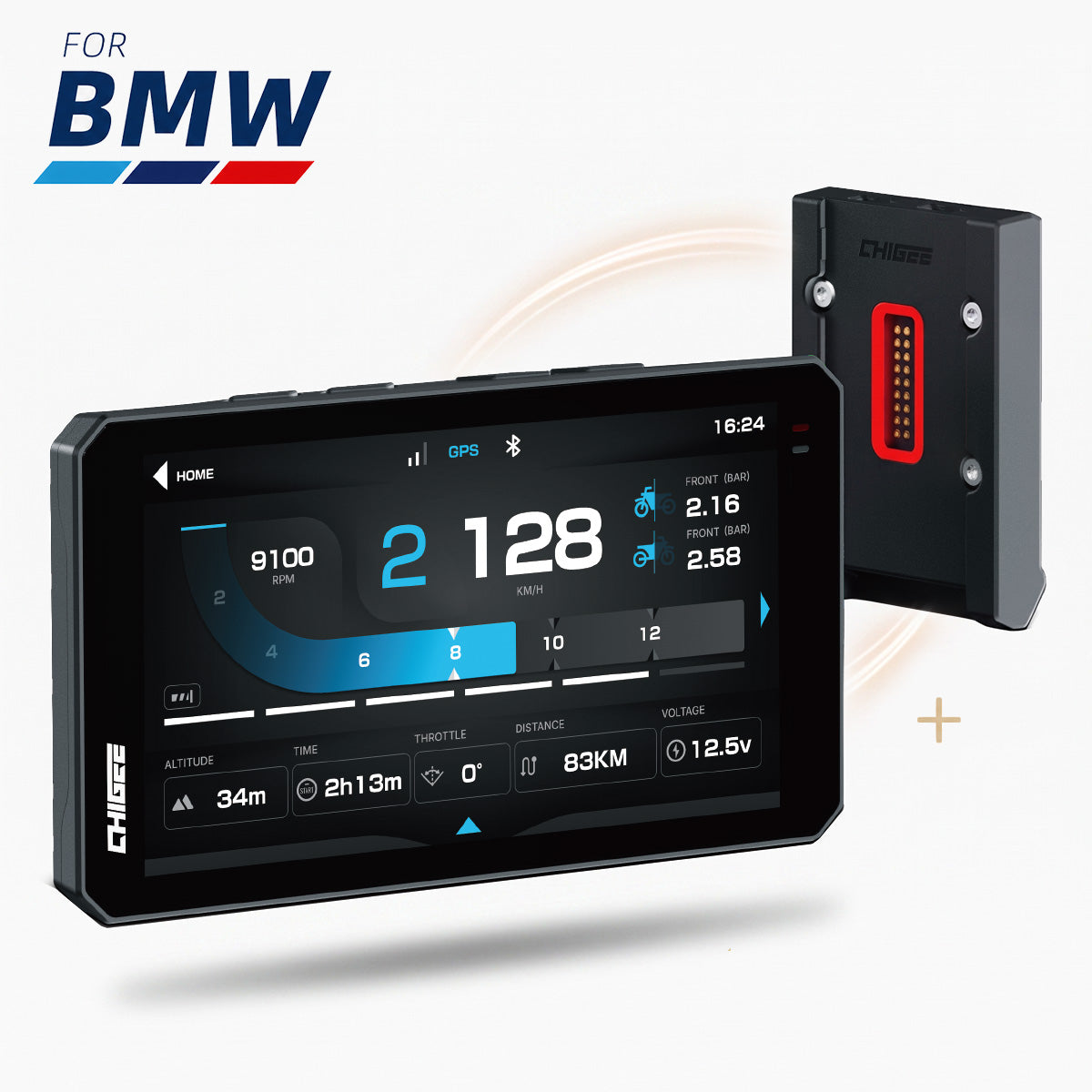
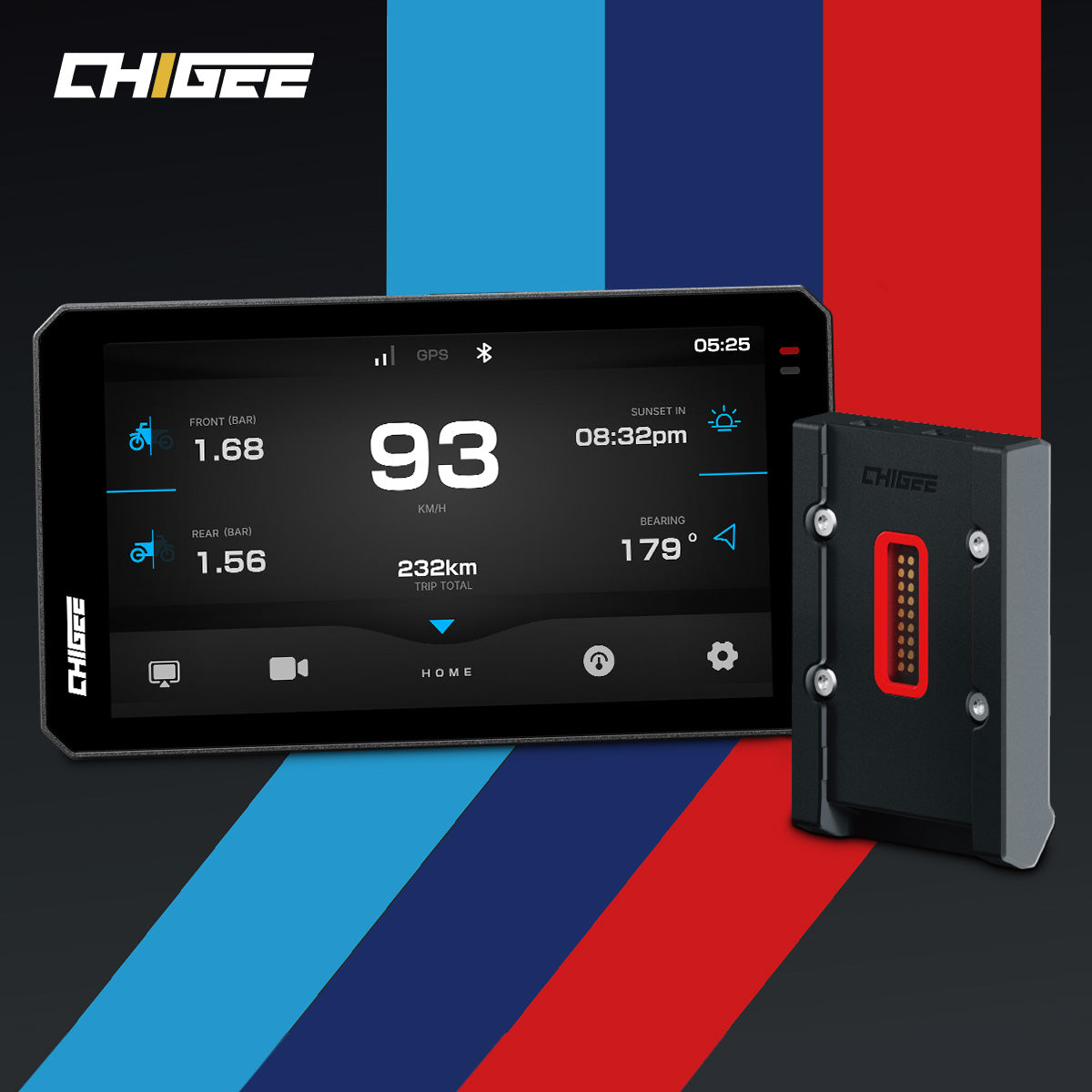
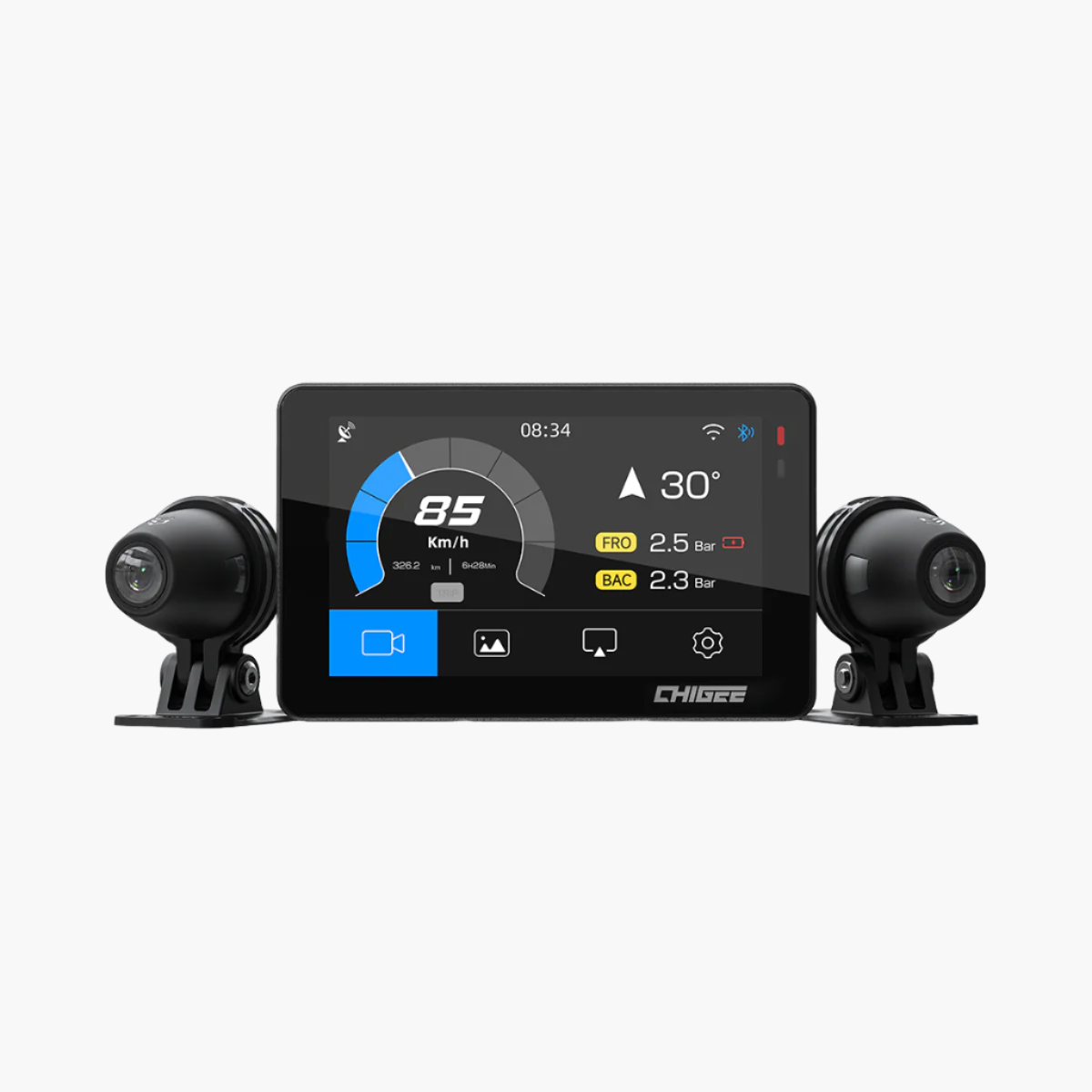
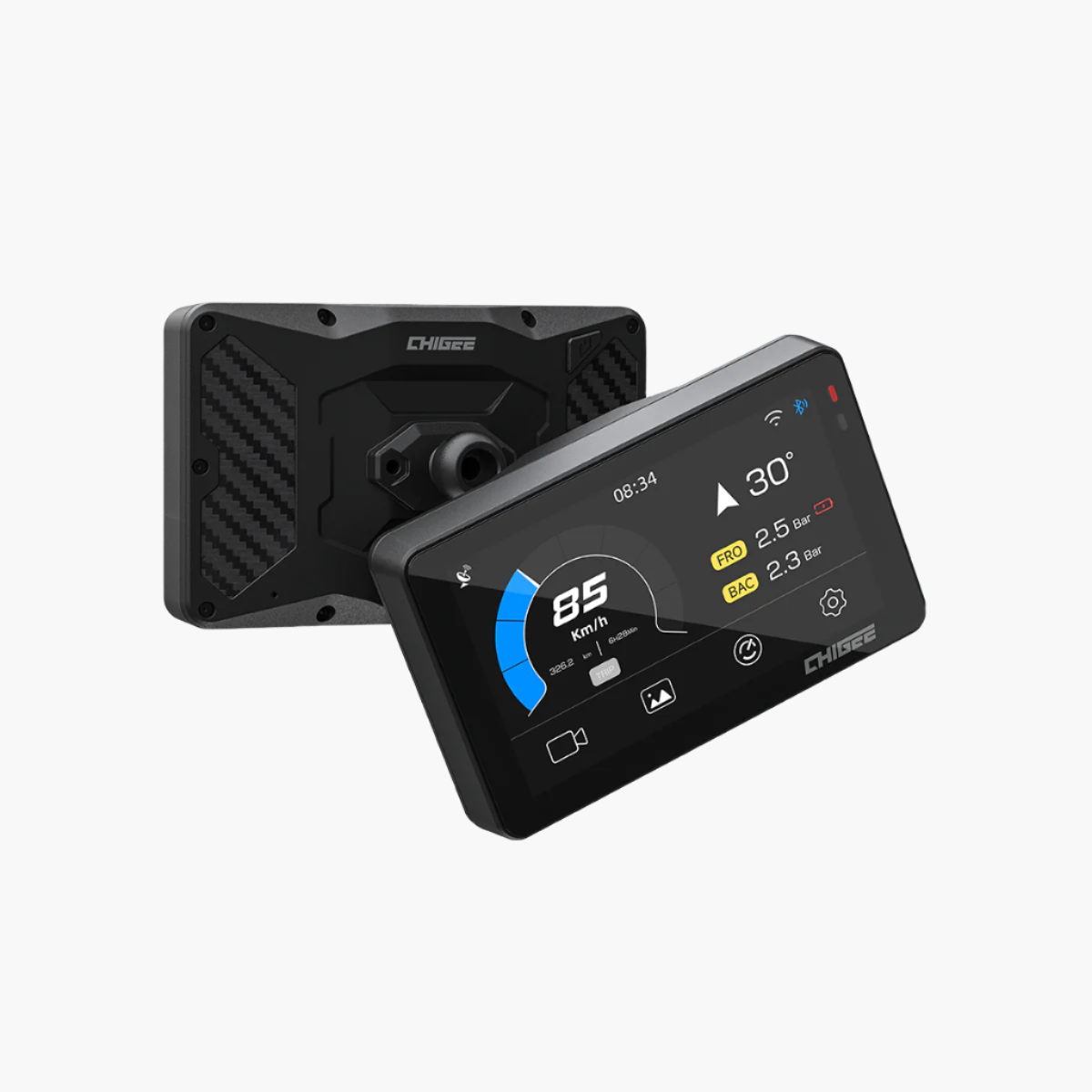
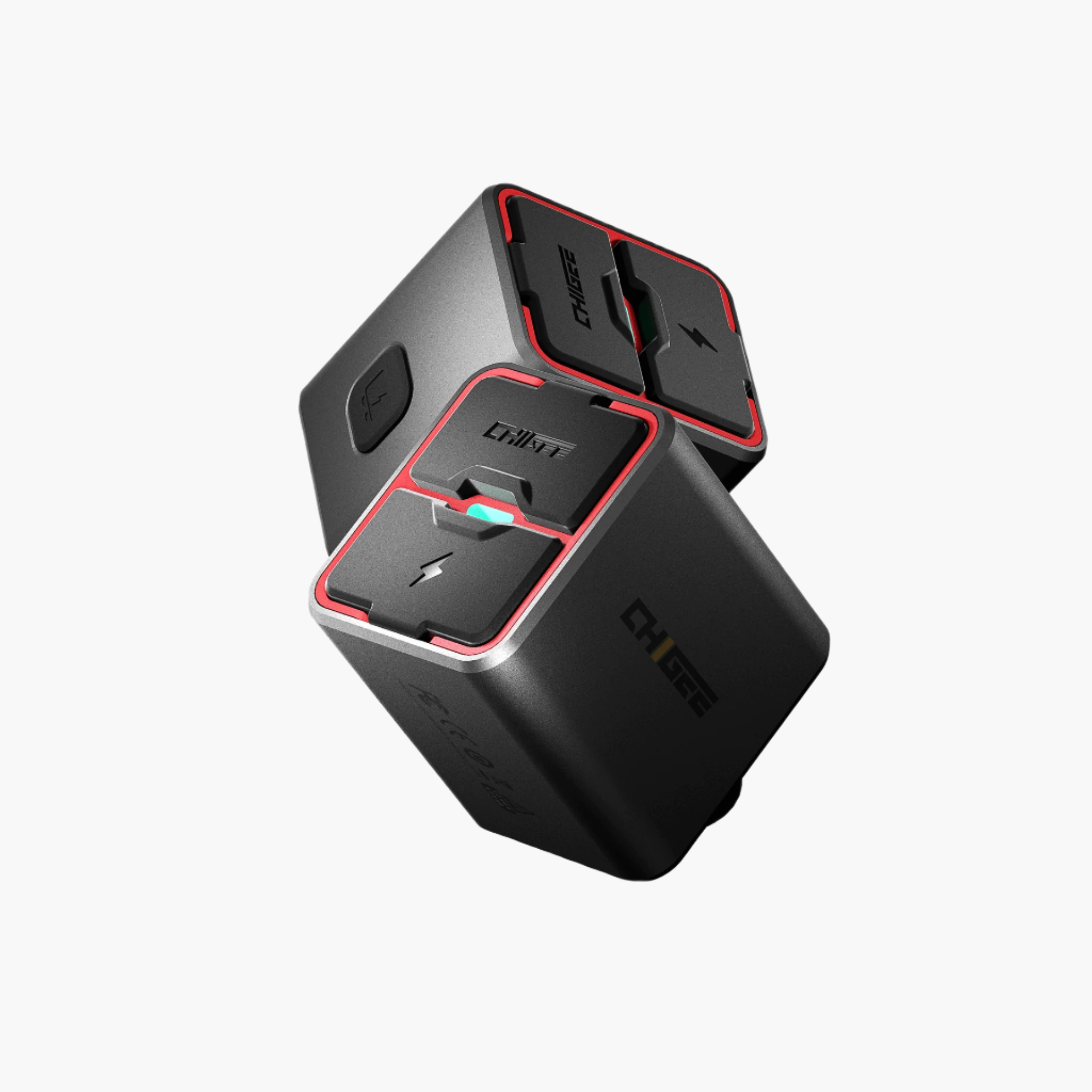
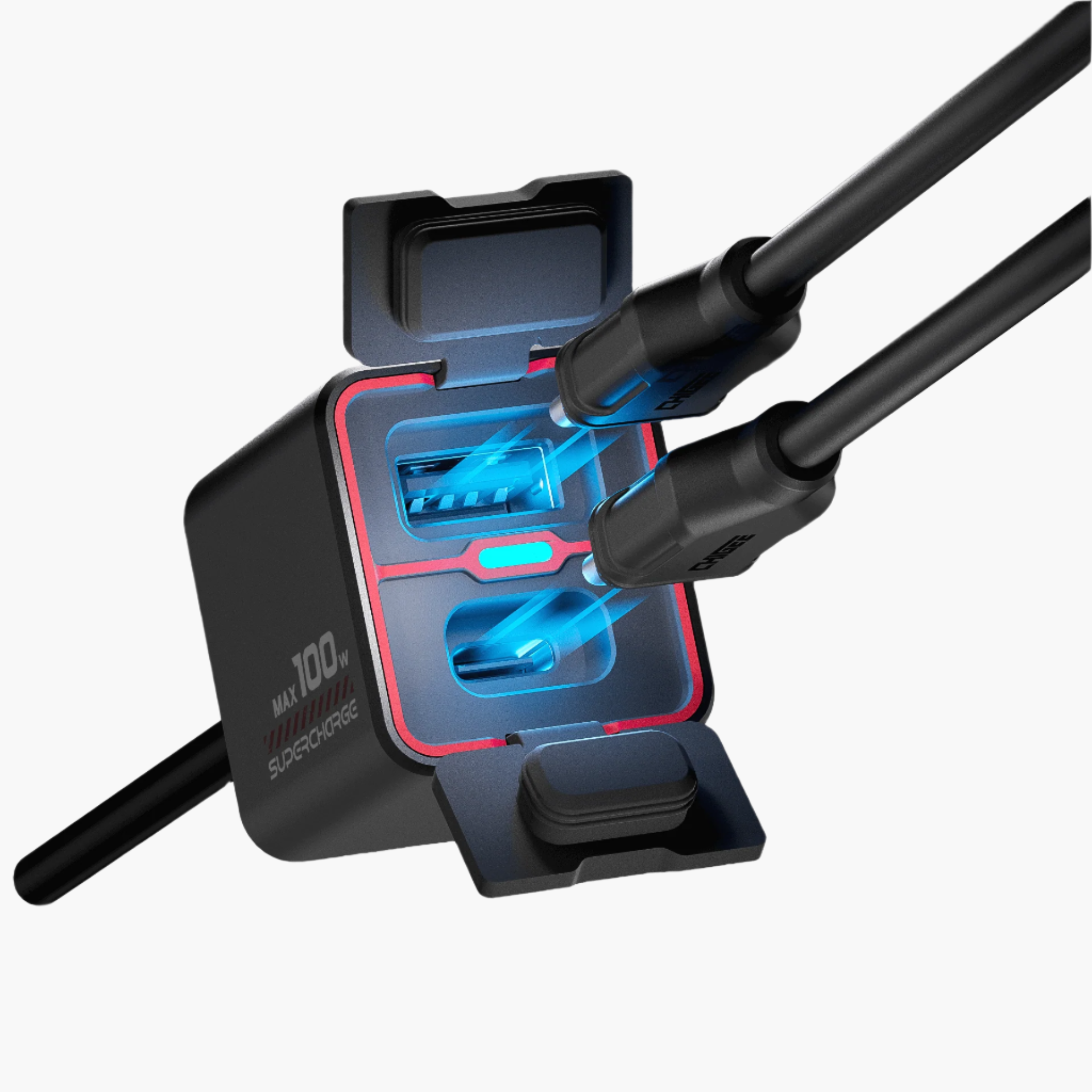
The CHIGEE AIO-5 EVO is a 5-inch 1080p smart motorcycle display with wireless Apple CarPlay and Android Auto, dual 1080p front and rear cameras, Blind Spot Detection, 10Hz GPS, and an IP69K dust and waterproof rating – the highest available on a CHIGEE unit. That combination of camera coverage and navigation in a single compact housing means one mount on the bar handles what would otherwise require two or three separate devices.

The CHIGEE AIO-5 EVO adds bright navigation, BSD safety, and dual-camera coverage to the Z900RS in one compact unit.
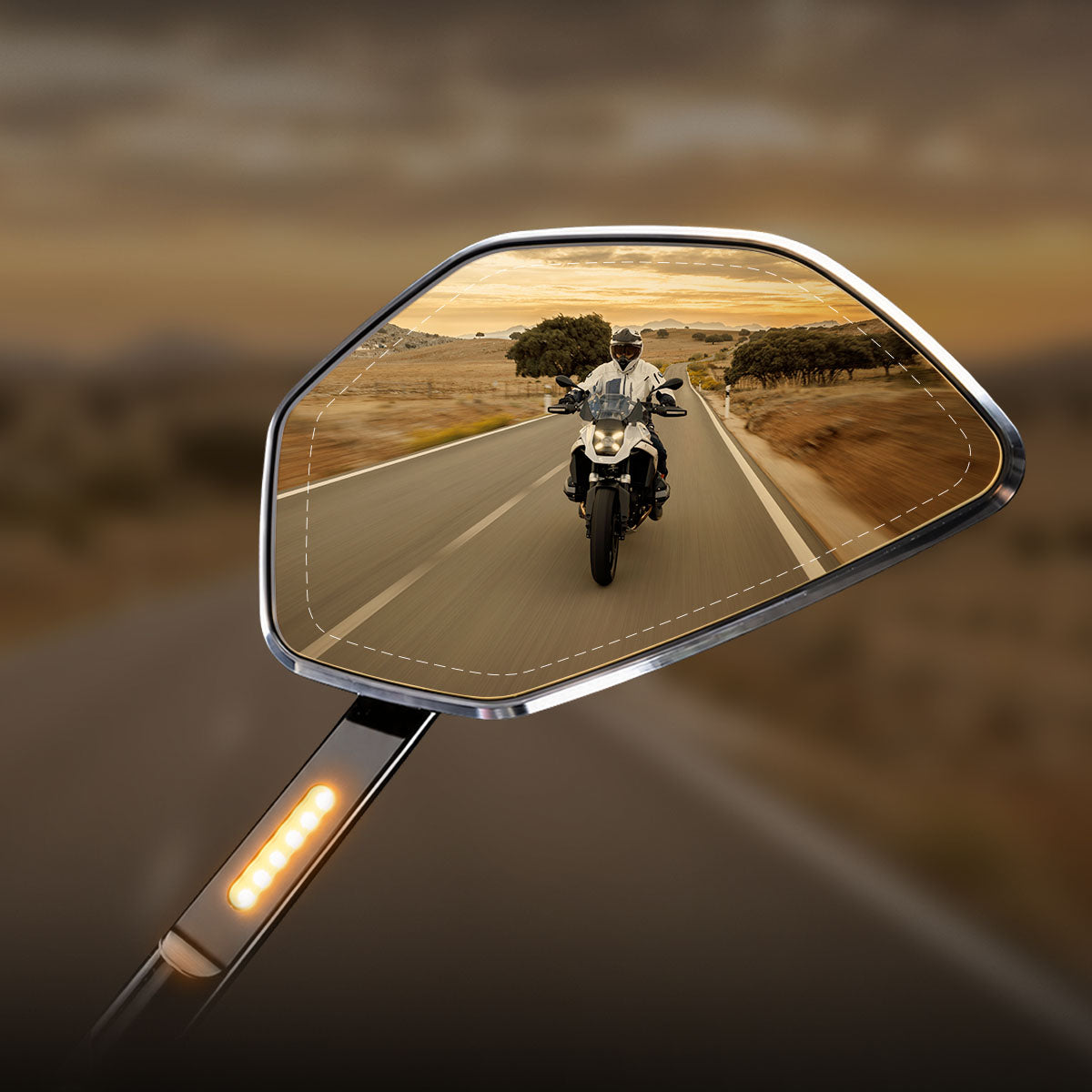
What this does to the Z900RS riding experience is transfer the navigation load from the phone to the handlebar in a way that actually stays there. The 1200-nit display stays readable in direct sun without the shade-cupping move that phone mounts require. The BSD system adds lane-change awareness that the Z900RS's mirrors, like most standard-format mirrors, do not give you at speed. Wireless pairing means no cable to route across the tank, no plug to forget.
Practical Tips for Installing the AIO-5 EVO on the Z900RS
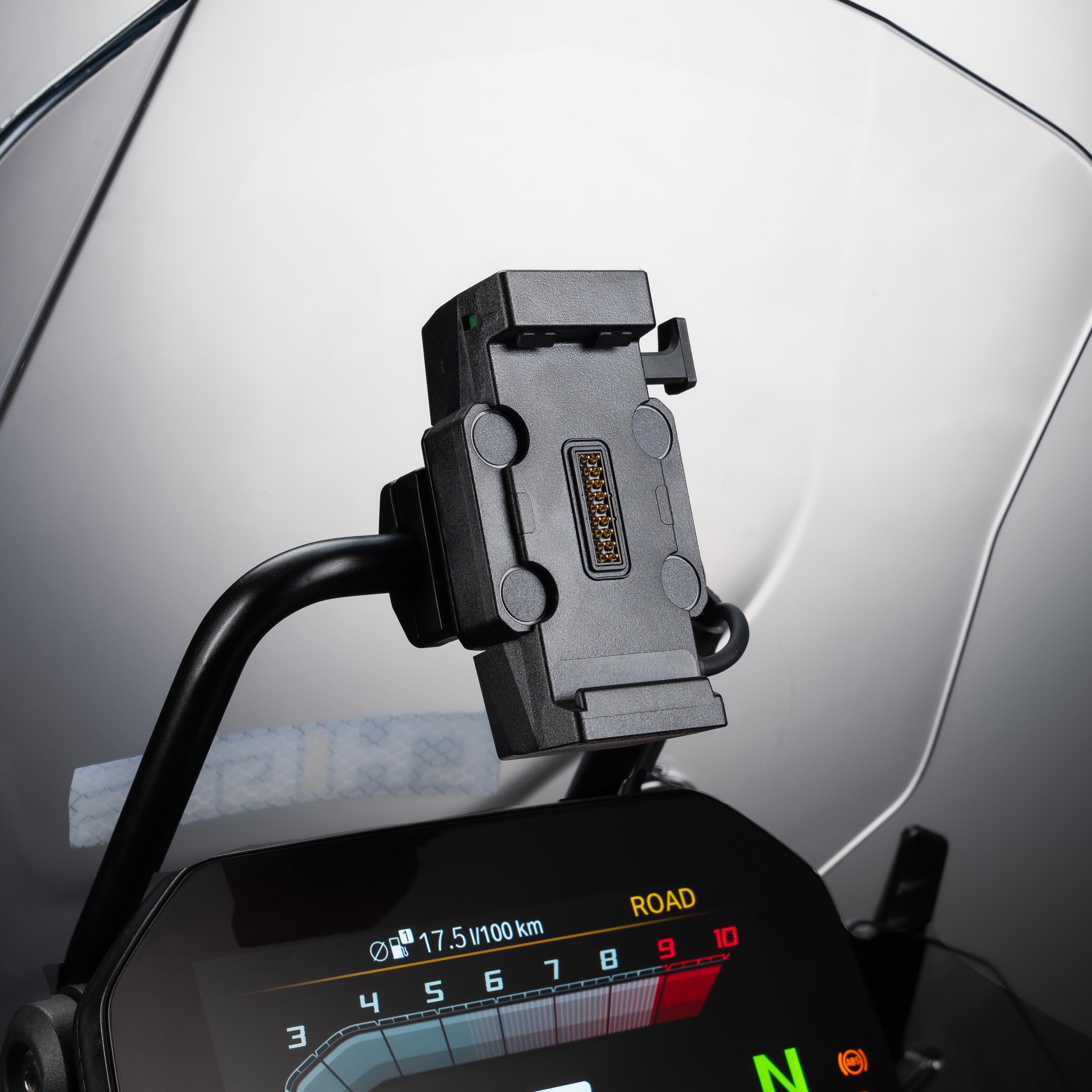
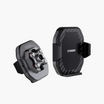
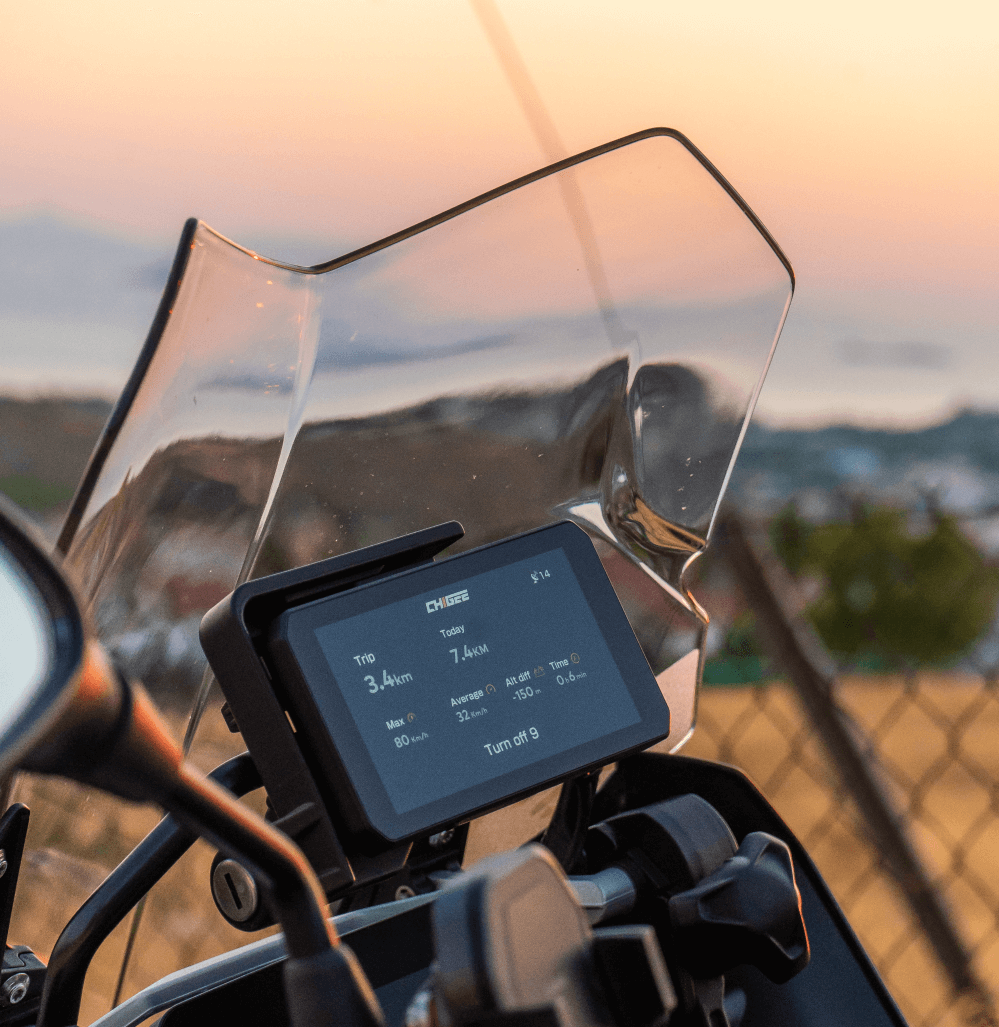
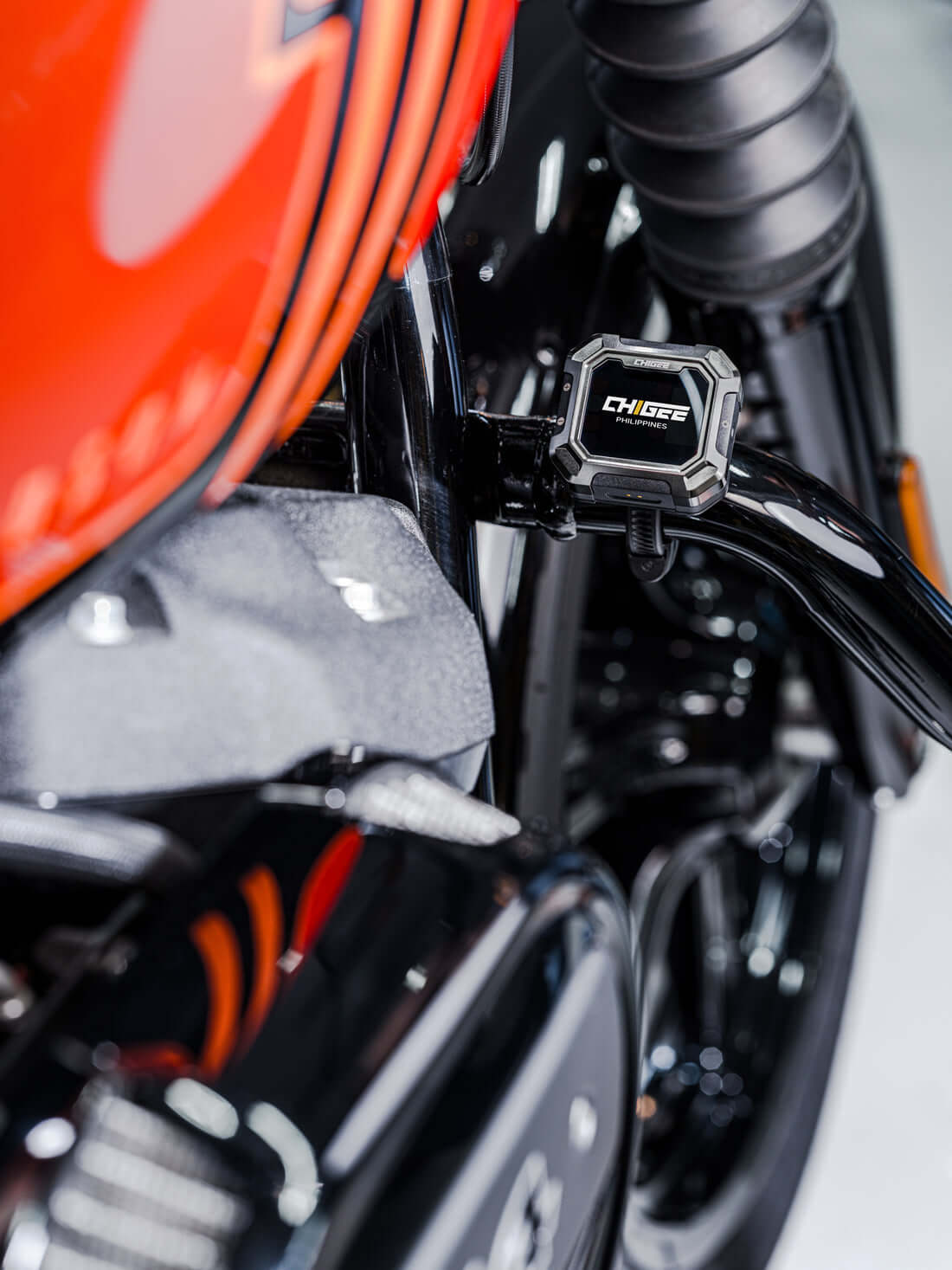
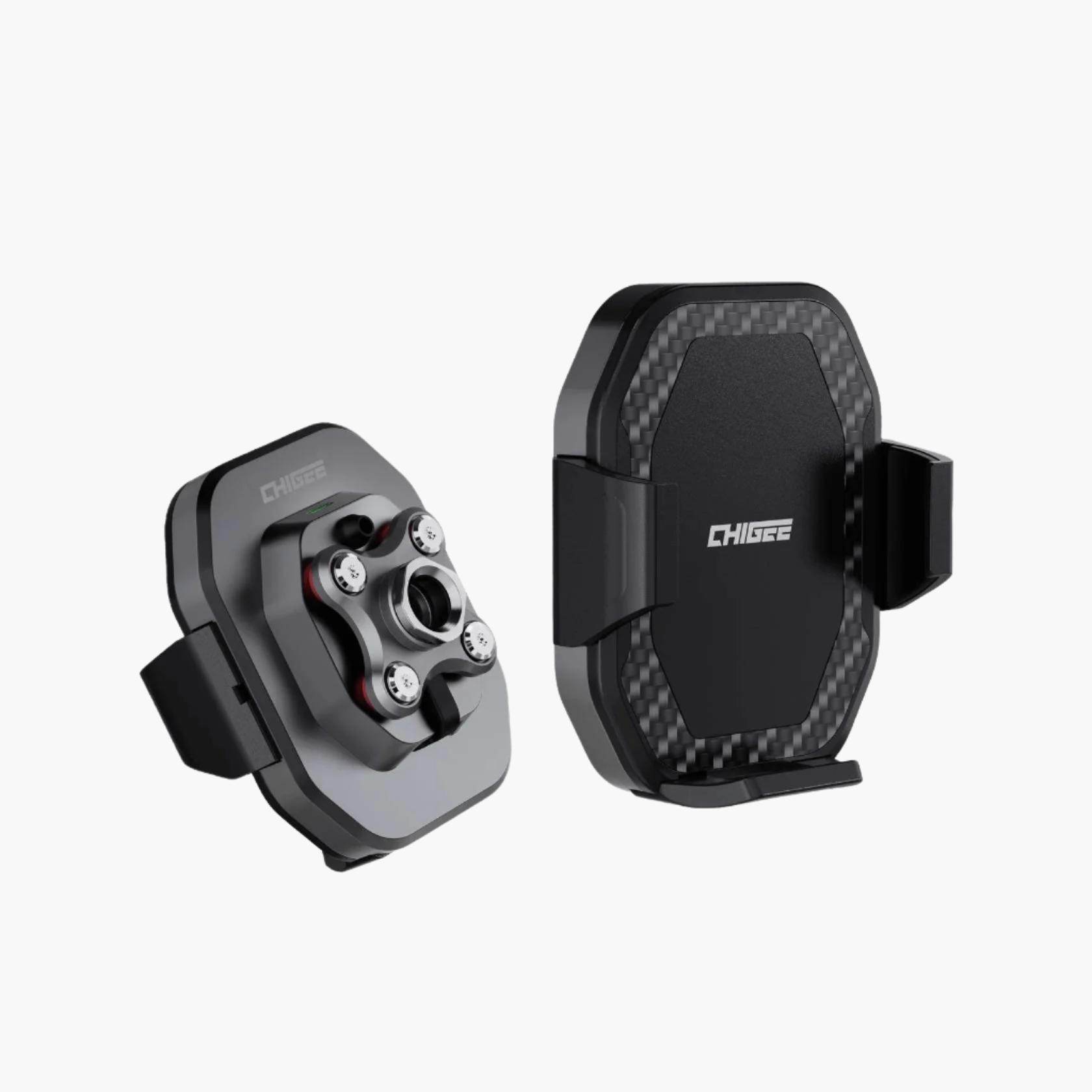
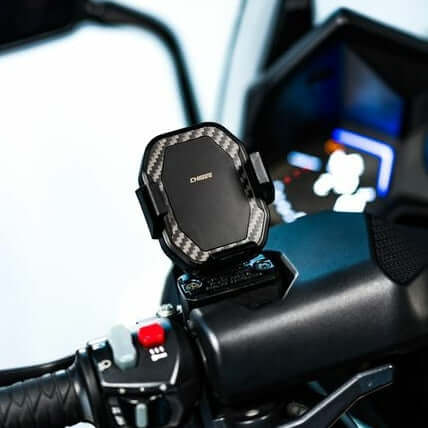
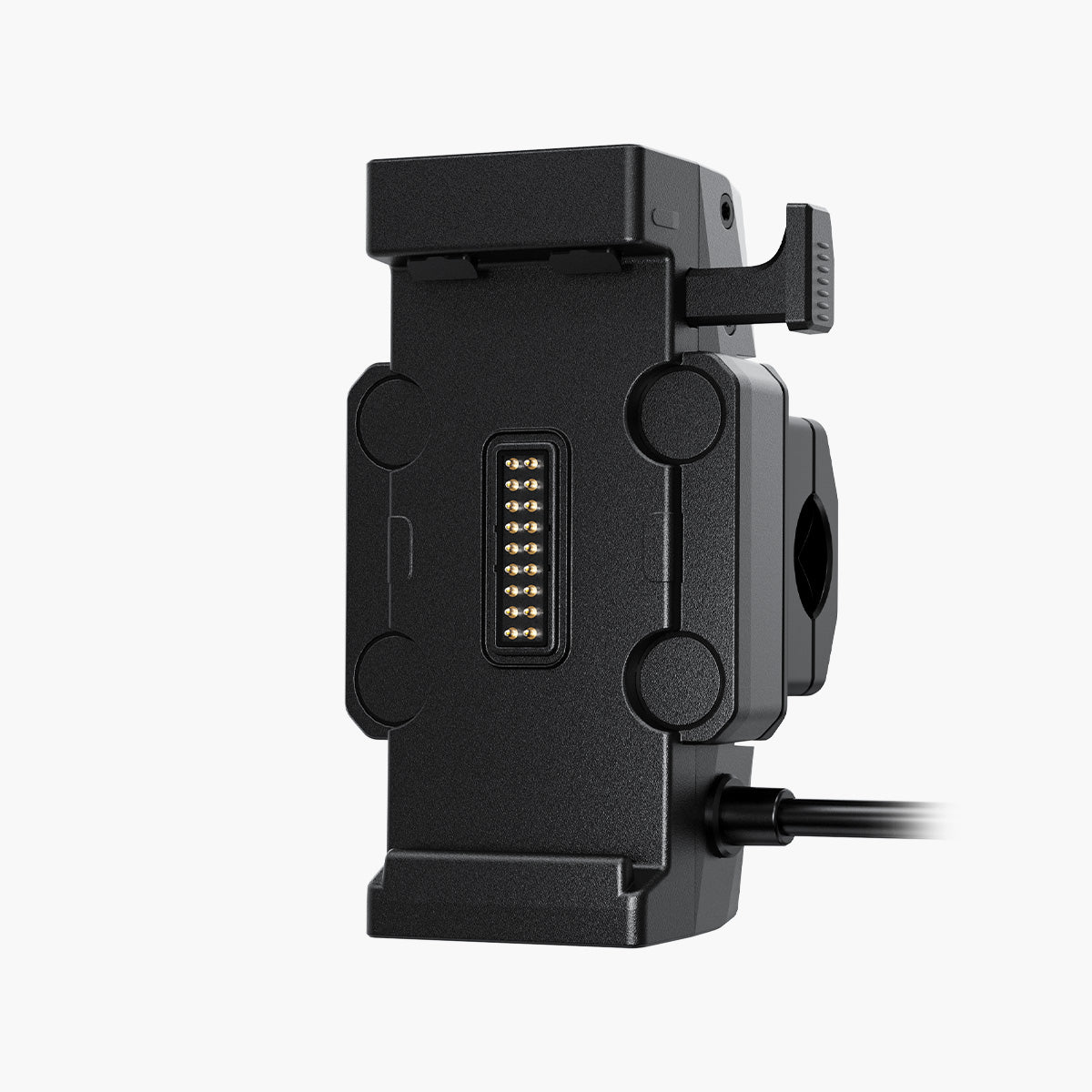
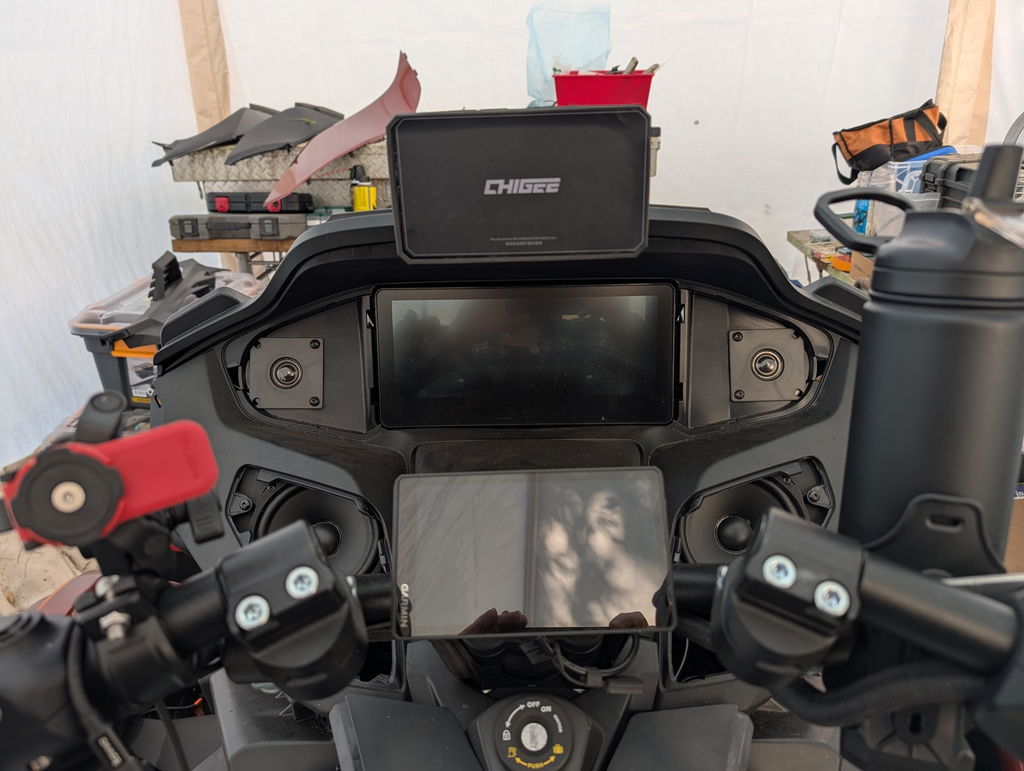
The Z900RS handlebar is a standard-diameter round bar, which means aftermarket mounting hardware fits without modification. Position the AIO-5 EVO inboard of the clutch lever on the left side, or center it above the instrument cluster using a stem riser mount – the centered position is cleaner visually and keeps the screen directly in the forward sightline.
For power, the EVO requires a hardwired connection to the battery for the cameras and BSD to function properly. Route the cable under the tank-side fairing and through the headstock, keeping it away from the steering lock range. A black braided sleeve over exposed runs keeps the retrofit looking considered rather than cobbled together on a bike this visually clean.

Mount the AIO-5 EVO centered above the Z900RS gauges, hardwire power cleanly, and position the rear camera low for BSD.
The rear camera should mount low on the tail unit, angled to capture the lane behind rather than the seat – the BSD system needs a clean rearward field to read approaching vehicles reliably.
FAQ
Does the 2026 Kawasaki Z900RS have built-in navigation?
No. The Z900RS uses a dual analog gauge layout with a central LCD for instrument data, paired with Bluetooth for the Rideology app. The app provides ride data and connectivity functions but does not include turn-by-turn navigation. Riders who want maps need an aftermarket display or a phone mount.
Will a 5-inch display look out of place on the Z900RS?
Not if it is mounted correctly. The Z900RS cockpit has more handlebar real estate than it might appear, and a 5-inch display in a compact housing reads closer to the instrument cluster scale than a 6-inch unit would. A low-profile mount that keeps the screen below the upper triple tree line reads as integrated rather than bolted on.
Does the CHIGEE AIO-5 EVO work with both iPhone and Android?
Yes. The AIO-5 EVO supports both Apple CarPlay and Android Auto wirelessly, connecting via Bluetooth with dual-band Wi-Fi. Setup runs once during initial pairing, and the unit reconnects automatically on subsequent power-on cycles.
What is the IP69K rating and why does it matter for motorcycle use?
IP69K is the highest standard waterproof rating, meaning the unit is sealed against high-pressure, high-temperature water jets. For motorcycle use it means rain rides, pressure washing the bike, and prolonged wet conditions are not concerns – unlike phone mounts, which typically carry no waterproofing at all.
Does the Blind Spot Detection work at highway speeds?
Yes. The BSD system uses the rear camera's field of view and AI processing to flag vehicles entering the blind zone alongside the bike, and it is designed for highway-speed detection where the risk is highest. Alert sensitivity and display behavior are configurable through the EVO's settings menu.
Is the Z900RS SE ABS worth the premium over the standard?
For riders who cover regular distance, yes. The SE adds the Öhlins rear shock, Brembo M4.32 calipers, stainless braided brake lines, and the handlebar USB-C outlet. The $14,599 MSRP versus $12,899 for the standard is a $1,700 gap – whether that premium is justified depends on how much of the riding involves backroads and loaded overnight runs versus local weekend loops.
About the Author
Reuben Cabrera is a content writer, software engineer, and motorcycle rider based in the Philippines. He is the founder of phtoll.com – Power. Handle. Throttle. On Long Roads. – a Philippine motorcycle media site covering gear reviews, ride stories, and motorcycle technology. Reuben has logged 60,000+ kilometers across Philippine roads, testing gear in 35°C heat, monsoon rain, mountain cold, and coastal humidity.






Leave a comment
All comments are moderated before being published.
This site is protected by hCaptcha and the hCaptcha Privacy Policy and Terms of Service apply.